‘That’s Actually an Upgrade From Factory:’ Toyota Tech Works on RAV4. Then He Tries Twisting the Sway Bar Links
'Those links beefy.'
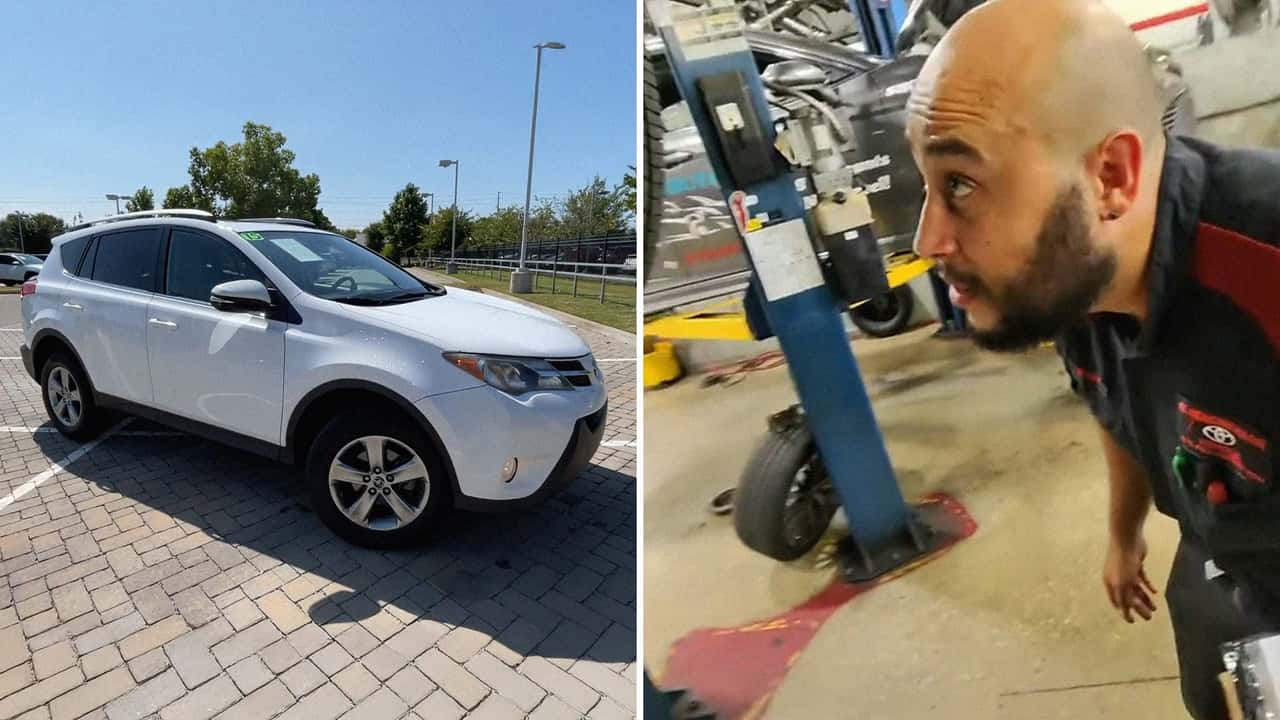

Most Toyota RAV4s are built for errands, school pickups, and the occasional gravel road. But the one in a viral TikTok looks ready to survive a war zone, thanks to sway bar links so oversized that a tech dubbed them “military grade” with genuine awe.
Creator and automotive repair technician Zoe Zpectrum (@zoezpectrum) takes us underneath the RAV4 to share his disbelief at the massive suspension upgrade in a clip that’s been viewed more than 486,000 times.
“I can't even twist them. … They like military grade,” he says.
Sway bar links, also known as end links or stabilizer bar links, attach the sway bar—or anti-roll bar—to a vehicle’s suspension components. The sway bar itself is a torsion spring stretching across your car's underside, connecting opposite wheels to counter body roll during turns. When a vehicle corners, the sway bar twists, redistributing force from one side to the other and helping to keep the cabin level and controlled. The links transmit that twisting force by bridging the gap between the bar and control arms or struts.
Now, enter the aftermarket world. These beefed-up versions boast stronger shafts, tougher bushings, and corrosion-resistant coatings. These are key upgrades for vehicles tackling rough terrain, lifted setups, or high-performance handling conditions. Where factory links are designed for standard daily drives, these are built for abuse.
The Fun of “Overkill” Mods
There’s good reason to question just how much sway bar beef a RAV4 really needs. Most of these SUVs aren’t seeing rock crawls or Baja rallies. But the spectacle lies in that absurd contrast—suburban sleigh meets tactical tank parts. And on social platforms like TikTok, nothing ignites engagement faster than that “wait, what?” moment when a routine oil change turns into a jaw-dropping underbody inspection.
The sway bar links seen in the video are likely aftermarket heavy-duty units designed for lifted or off-road-ready vehicles. A set of performance or adjustable sway bar links typically costs anywhere from:
- $100–$300 for a quality set of links (e.g., from brands like Whiteline, Moog HD, SuperPro, or JBA Offroad).
- $50–$200+ for professional installation, depending on labor rates and local shop pricing.
If the owner upgraded the sway bars and the links (common in performance setups), the full sway bar system upgrade could push costs to $500–$1,000+, depending on the brand, vehicle fitment, and whether front and rear bars are replaced.
And if the RAV4 is lifted, which would explain the need for longer, beefier links, it’s possible we’re looking at a more involved suspension mod that includes:
- Lift kit: $1,000–$2,500.
- Alignment and recalibration: $150–$300.
So, while the links themselves aren’t a bank-breaker, they’re often just one part of a larger build.
Could These Mods Backfire?
For the gearheads who want more than flash, a serious question looms: Can overbuilt sway bar links actually hurt handling?
The short answer is yes. Swapping in stiffer or longer links without adjusting the rest of the suspension can throw off the car’s balance. Improperly sized aftermarket sway bars and linkages can induce extreme oversteer or understeer and degrade the car's handling. Over-stiff sway bars may compromise independent wheel movement, roughening ride quality on uneven roads and reducing grip.
Motor1 reached out to Zoe via direct message.
Now Trending

RECOMMENDED FOR YOU

Tennessee Judge Gets A Traffic Ticket. Then He Adjudicates Himself: ‘Are You Guilty?'
Ford Brings Back Veteran Engineers After AI Falls Short: 'It's Only As Good As The People Using It' (Update)
Man Takes His Car To The Mechanic. Then He Claims They Took $20,000 From Him—And Refused To Give It Back: ‘I Had To Call The Cops’
Hyundai Sales Are Soaring Thanks To Hybrids
Woman Gets $1,251 Ticket For Using Her Phone While Driving. Then She Sees The Photo: 'Meanwhile Teslas Are An iPad With Wheels'
McMurtry's $1.3-Million Hypercar Is Finally Here
Man Goes To Take 5. Then His Car Won’t Start. Then The Worker Pushes It Out Of The Shop... Because It’s In The Way