Fiat Croma (1985-1996): The first generation turns 40
We look back at the brother of the Alfa Romeo 164, Saab 9000 and Lancia Thema
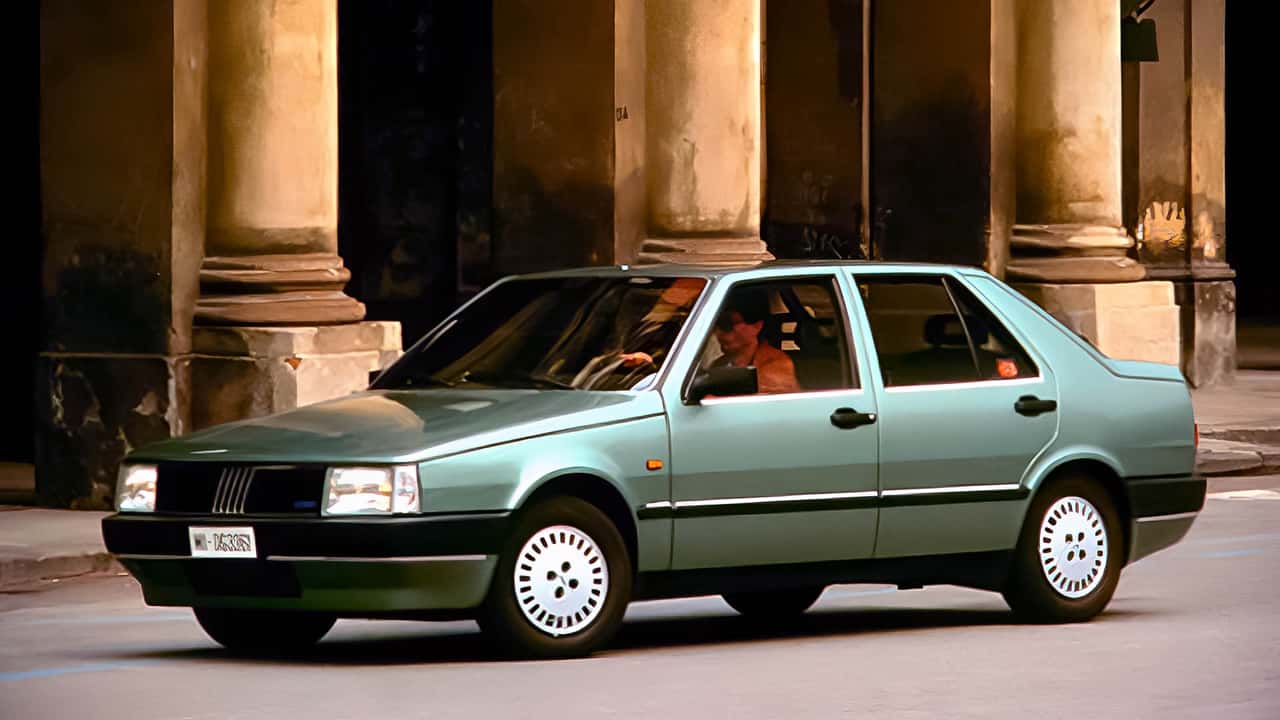

Fancy an automotive fun fact? There is a car whose first and second generation were eleven years apart. And yet both were created by the same designer, Giorgetto Giugiaro. It is the Fiat Croma.
For most fans of the brand, there is only one true Fiat Croma, the first one of course from 1985, which is now 40 years old. The last Fiat flagship that many would consider instead of a German car back then - and not just for obvious price reasons.
Gallery: Fiat Croma (1985–1996)

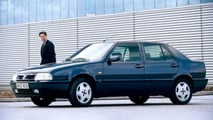
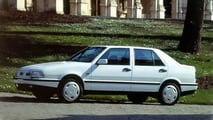
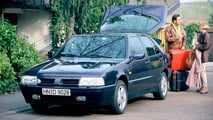
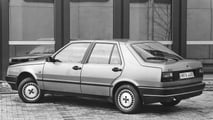
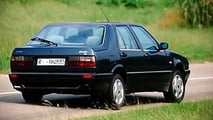
Together with Alfa Romeo 164, Lancia Thema and Saab 9000, the Croma is the result of a joint project, the outcome of which is the so-called Tipo 4 platform. This means that the doors of Fiat, Lancia and Saab fit together. Alfa Romeo, still independent at the time, only used the chassis and the technology.
The Croma owes a small part of its high reputation to its predecessor: the Argenta. To put it mildly, it was a completely outdated and unattractive car that dated back to the Fiat 132. In direct comparison, the Croma seemed like a quantum leap. Shiny like chrome, hence the name. Matching Argenta, silver in Italian.
The strength of the Croma? Undoubtedly its spaciousness and load capacity, which is emphasised by a large tailgate, although it looks like a notchback. Similar to the first Seat Toledo later on, it is also a Giugiaro design. The dimensions of the Croma are 4.50 metres long, 1.76 metres wide, 1.43 metres high and has a wheelbase of 2.66 metres.
Fiat Croma (1985-1996)
The body, designed by the Fiat Style Centre in collaboration with Giugiaro, has a transverse engine and front-wheel drive. The engine range initially comprised six units, four petrol and two diesel. The entry-level unit is a 1.6-litre petrol engine with 85 PS, followed by three 2.0-litre DOHC units. The turbo i.e. with 155 PS was specially designed for Italy, where engines with a displacement of over two litres cost a lot of tax. Starting price in Italy in 1985: 18,551,000 lire for the 1600, the turbo i.e. cost 27,271,000 lire. The turbo cost DM 38,400 in Germany.
In 1988, the ADAC tested the "Super" with a displacement of 2.0 litres, 115 PS and catalytic converter. The lavish equipment, 500 litres of boot space and good seats were praised, but ergonomic weaknesses were criticised. The DOHC engine is described as lively, but rough and sluggish at low revs. ABS is available for an extra charge and the test consumption is 9.6 litres (29.4 mpg-UK).
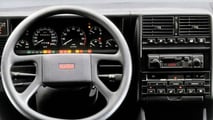
While today high-tech is displayed in the form of touchscreens and digital instruments everywhere, 40 years ago the cockpit was dominated by lights in all shapes and colours. In this respect, the Croma is a real eye-catcher: among the elements of the dashboard, the control unit on the left-hand side and the extensive row of lights in the instrumentation stand out.
Fiat Croma (1985-1996)
Galvanised sheet metal is also used, which is why the Croma rusts much less than the Argenta. However, the plastics inside are not exactly high quality and the workmanship is also rather mediocre.
The Croma's equipment is not bad for the mid-1980s, probably also a reaction to the success of the lavishly furnished Japanese models. Electric front windows, central locking, halogen headlights, heated rear window, front head restraints, front seat belts and a height-adjustable steering wheel are standard; only the diesels (for obvious reasons of engine weight) initially also have power steering.
Optional extras include ABS, a split rear seat, a sunroof, a rear-view mirror on the right-hand side and - only on the top models - air conditioning, leather seats, electrically adjustable and heated exterior mirrors and self-levelling suspension.
Fiat Croma (1985-1996)
In June 1988, a diesel engine was presented that would go down in history: the 1,929 cc four-cylinder engine of the Croma TD i.d. as the first series-produced direct-injection diesel engine.
Without a pre-chamber and with direct diesel injection into the cylinders, it consumes 20 per cent less fuel than a comparable engine with indirect injection; the glow plugs only work at temperatures below minus 15 degrees Celsius.
However, one problem remains unresolved with the premiere of the diesel direct injection engine: the loud combustion noise of the engine - especially at low engine speeds. A disadvantage which, together with the stricter emissions standards, quickly revealed the limits of the new diesel engine. Fiat also scored an own goal by only offering the Croma TD i.d. in Italy as a precautionary measure. This meant that Audi could later take the credit for its TDI.
Fiat Croma, the facelift from 1991
In April 1989, the Croma had more power as the 2.0-litre CHT (Controlled High Turbulence) with carburettor, equipped with two intake ducts of different cross-sections, now produced 100 PS instead of 90 PS. The output of the 2.5-litre turbodiesel increased from 100 to 118 PS. Certain detailed changes to the car, such as more legroom in the rear, are intended to increase the level of comfort.
Following various improvements to details, the Croma received its first major facelift in February 1991. Externally, the front end in particular was redesigned, inspired by newer models such as the Tempra and Tipo, while the interior featured a redesigned dashboard. The engines were also optimised, all more powerful and efficient.
The Croma became sadly famous when the anti-mafia judge Giovanni Falcone fell victim to a bomb attack in an armoured vehicle of this type in May 1992.
Fiat Croma (1985-1996)
Another minor facelift took place in 1993. New was the Croma V6 with a 2.5-litre engine from Alfa Romeo, which was available with an optional 4-speed automatic gearbox: it produced 160 PS, reached 134 mph and accelerated from 0 to 62 mph in 8.3 seconds. In addition, there is finally a driver's airbag.
The year is 1995: Lancia replaces the Thema with the Kappa, Alfa Romeo prepares to replace the 164 (which is delayed until 1998, the year in which the 166 comes onto the market). And Fiat? Here, Croma production ended at the end of 1996 to avoid cannibalisation within the Group. Over 450,000 units were produced in eleven years.
In 2005, the Croma celebrated its comeback with a completely different formula - part estate, part MPV. The second generation shares the platform with the hardly less strange Opel Signum and the Saab 9-3.
More classics from Fiat:
RECOMMENDED FOR YOU
A Fiat Topolino Abarth Sounds Ridiculous, But It Could Happen
Car Salesman Says Customer Catfished Him—And Walked Away With The ‘Best Price Out The Door’
The Fiat Topolino Is America's Cheapest New 'Car' At Just $15,000
Woman Tries To Rent A Car From Enterprise. Then She Checks Out Her Options At Costco: ‘I Was Literally Shocked’
Winners And Losers From June Auto Sales
Tow Truck Driver Discovers Yet Another Car With Stolen Wheels. Then He Shares A ‘100% Guaranteed’ Way To Stop Tire Theft: 'Hurts'
'A Tribute To The Very Beginnings:' McLaren Rebuilt Its First Road Car To Absolute Perfection