Renault Laguna (1994-2001): The first generation turns 30
At that time, the French brand was still an established name in the mid-range segment
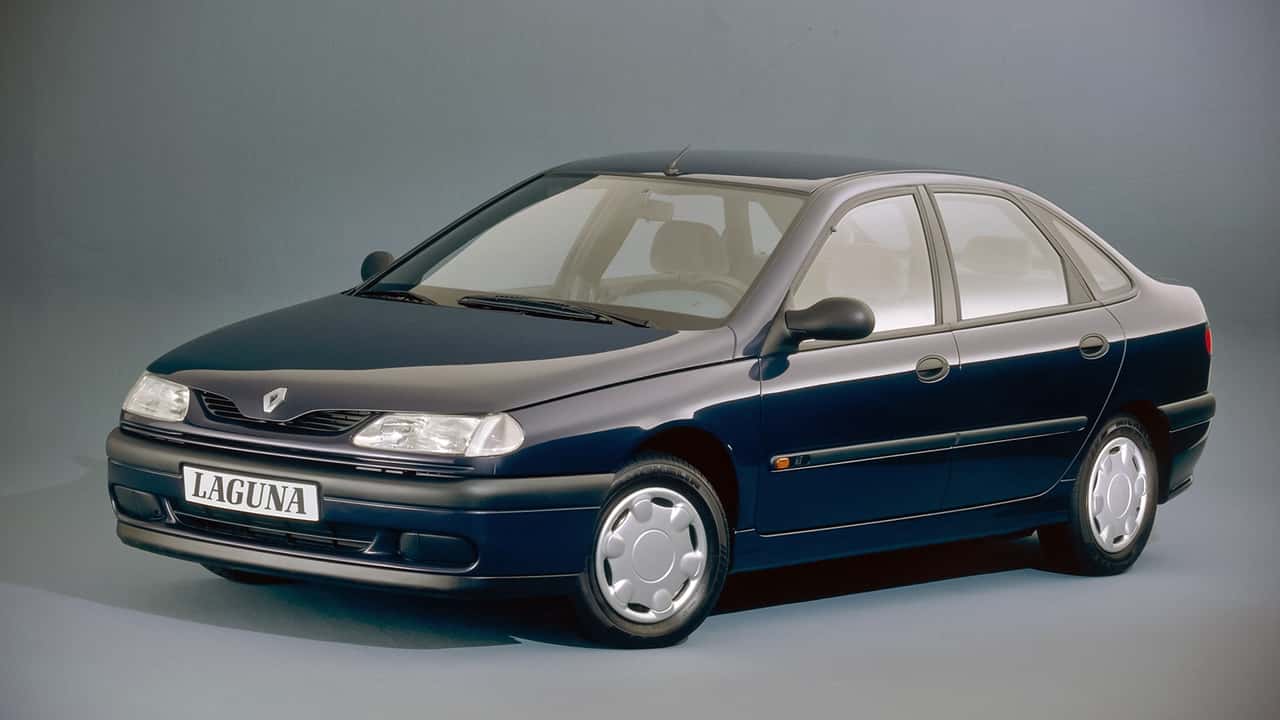

Three decades ago, SUVs did not yet rule the automotive world. At the end of 1993, Renault presented its new mid-range model. Instead of the usual number abbreviation, the successor to the Renault 21 was given a melodious name: Laguna. And unlike its predecessor, the newcomer is no longer available with a classic notchback.
The fashion for organic design
Instead, Renault builds a fashionable hatchback saloon. The Laguna was launched on 14 January 1994. The lines of the newcomer were inspired by the Safrane. The name Laguna was already emblazoned on a Renault study in 1990. However, it had nothing in common with the late production model.
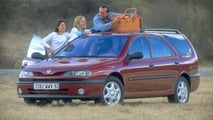
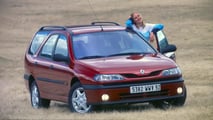
The estate followed in September 1995. While in France it was called the "Nevada", modelled on the Renault 21, in Germany it was given the name "Grandtour", which later became established internationally and across all models. The fashionably rounded organic design also contrasts with its angular predecessor.
Gallery: Renault Laguna I (1994-2001)

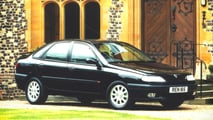
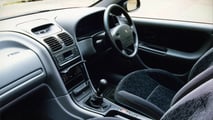

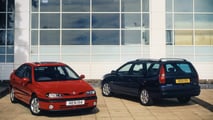
In addition to three four-cylinder engines, Renault also offers a 167 PS 3.0-litre V6 petrol engine for the Laguna for the first time in the segment at market launch, which enables a top speed of 137 mph. With the 1998 model upgrade, the power output increased to 190 PS and the top speed to 146 mph.
The quality of the Laguna was significantly improved, after the reliability of many Renault models had previously been heavily criticised. As a result, the service intervals were extended to 15,000 km (9,320 miles) at the end of 1995.
Improved ergonomics
The Laguna is characterised by its very ergonomic interior, with a very original dashboard with all the controls within easy reach. A striking feature is the extension of the dashboard into the door panels with the ventilation grilles integrated into the doors.
Renault Laguna I (1994-2001)
The horn controls are located in the steering wheel bell housing (a first for a French car) and the hazard warning lights are more easily accessible for the passengers in order to avoid the recurring criticism from German buyers. However, to avoid offending French customers, Renault opted for two controls for the horn: in the steering wheel and the usual control at the end of the light lever.
No more notchback
In contrast to the Renault 21, the notchback is no longer there, allegedly because customers want it that way. In terms of quality and reliability, the Laguna came second in a 1995 survey by the French institute SOFRES, just behind the Toyota Carina and well ahead of the Audi 80, the Opel Vectra, the Ford Mondeo, the Volkswagen Passat and the Citroën Xantia.
Renault Laguna I Grandtour
However, a corrosion problem in the rear wheel arches and the side skirts was not recognised by customers until late and necessitated the withdrawal of a considerable number of vehicles. This issue was not resolved until the end of 1995. From phase 2 in 1998, Renault continued to improve corrosion protection. Apart from problems with the 1.9 dTi and 1.9 dCi diesel engines, the first Laguna of this name is a model renowned for its reliability.
The model range is initially built around four trim levels: RN, RT, RXE and V6. The equipment is very limited on the basic models, but becomes very decent once you reach the middle of the model range.
Luxury in the Laguna
The traditional "Baccara" version is soon added to this range, offering a luxurious beige interior with half-leather and half-linen upholstery and ABS from September 1995. From the 1998 model year, this is replaced by the exclusive and less common "Initiale" version, which offers a full leather interior and a light grey interior, while the metallic grey "Initiale Paris" monograms are placed next to the indicator lights.
Renault Laguna Baccara
Finally, the Laguna will also be fitted with an extremely luxurious interior, named "Pozzoti" after an Italian designer. This version with a mixture of leather and lightly felted velvet is only available in a limited edition of seven units and is reserved for the luxury market in Singapore.
Sport from gentle to fast
The Laguna's gently sporty orientation becomes known as the "2.0 S" or "RTi", with 16V monograms on the front doors and the 2-litre 16V petrol engine (1,948 cc) from Volvo (type N7Q) with 140 PS (the engine of the Volvo S40/V40). In July 1999, this Volvo block is replaced by a more modern Renault "F engine" in the form of a 2.0-litre 16V with 136 PS, but with more torque and lower fuel consumption (-13%).
An even more powerful version was introduced in 1995 as the Laguna Biturbo Hartge. The tuner German Hartge installed the V6 of the Safrane Biturbo here. The car reaches a top speed of 158 mph and accelerates from 0 to 62 mph in 7 seconds.
It delivers a maximum output of 280 PS at 5,500 rpm and a torque of 399 Nm at 3,000 rpm. It is equipped with a five-speed manual gearbox and power is transmitted to the front wheels. Only 5 to 7 units are said to have been built.
Renault Laguna BTCC beim Goodwood Festival of Speed
Speaking of the powerful Laguna: after a season with the 19, which ended with a disappointing seventh place and only one victory, Renault entered the Laguna in the British Touring Car Championship BTCC in 1994. Alain Menu and 1992 champion Tim Harvey, who were drivers in 1993, are retained. Menu and Renault finish runners-up to Gabriele Tarquini and his Alfa Romeo 155, and the season brings three victories (two for Menu and one for Harvey).
The Laguna in the press
What did the press say at the time? "What a performance," said the ADAC in 1995, recognising a small French revolution compared to its predecessor, the Renault 21. "The whole car makes a stiff, solid impression", they said, also praising the excellent gearstick. According to the testers, it fits perfectly with the "torquey, high-torque" 2.0-litre petrol engine with 113 PS.
The driving behaviour, including directional stability and steering, also made a big impression on the German journalists. However, the rather stiff suspension and the excessively soft front seats were criticised. The Laguna RT 2.0 costs DM 34,400, while the basic model with 90 PS costs DM 29,500.
Renault Laguna I facelift from 1998
In April 1998, the Laguna gets a facelift. In addition to new equipment variants (RNE, RTE, RXE, RXT) and air conditioning as standard, the front end is fitted with new headlights, while the entire rear fascia is renewed and is orange at the top and red at the bottom.
The front bumper is also redesigned and fitted with round fog lights, which are also used on the Mégane I Phase 2, Scénic I Phase 2 and Twingo I Phase 3 models. The characteristic spoiler with "gills" is abandoned in favour of a simple plastic strip, which increases the ground clearance at the front.
More Renault history:
On a technical level, new petrol engines are introduced. A 1.6-litre 16-valve engine with 110 PS, a 1.8-litre 16-valve engine with 115 PS and a 2-litre 16-valve engine with 136 PS. The diesels were also revised, with the large 2.2-litre dT getting a turbo that improved power and torque. The very first version of the 1.9-litre dCi with 107 PS then appeared, introducing the principle of common-rail high-pressure injection at Renault. In 2001, production of the first Laguna ends after 1.52 million units.
RECOMMENDED FOR YOU
How Renault Outsmarted Cheap Chinese EVs, And Profited
Audi Caught Flogging Its Tiny Electric Hatchback On The Nürburgring
This Lovely Mercedes 190 Evo II Restomod Packs 765 Horsepower
Man Gets His Toyota Worked On. Then His Mechanic Finds The Car's Secret Screen: 'You May Not Know'
This Is One Of The Rarest Mercedes G-Classes Ever Made, And It Just Sold For $143,000
Is AAA Still Worth It? Why Millions Of Drivers Keep Paying For It
Morgan's Best Performance Car Is Coming To America Without An Important Feature