Hybrid motorhomes become a reality thanks to Bedeo and Trigano
The union of these two specialists has created the ElectriX, an environmentally friendly recreational vehicle with a range of around 435 miles.
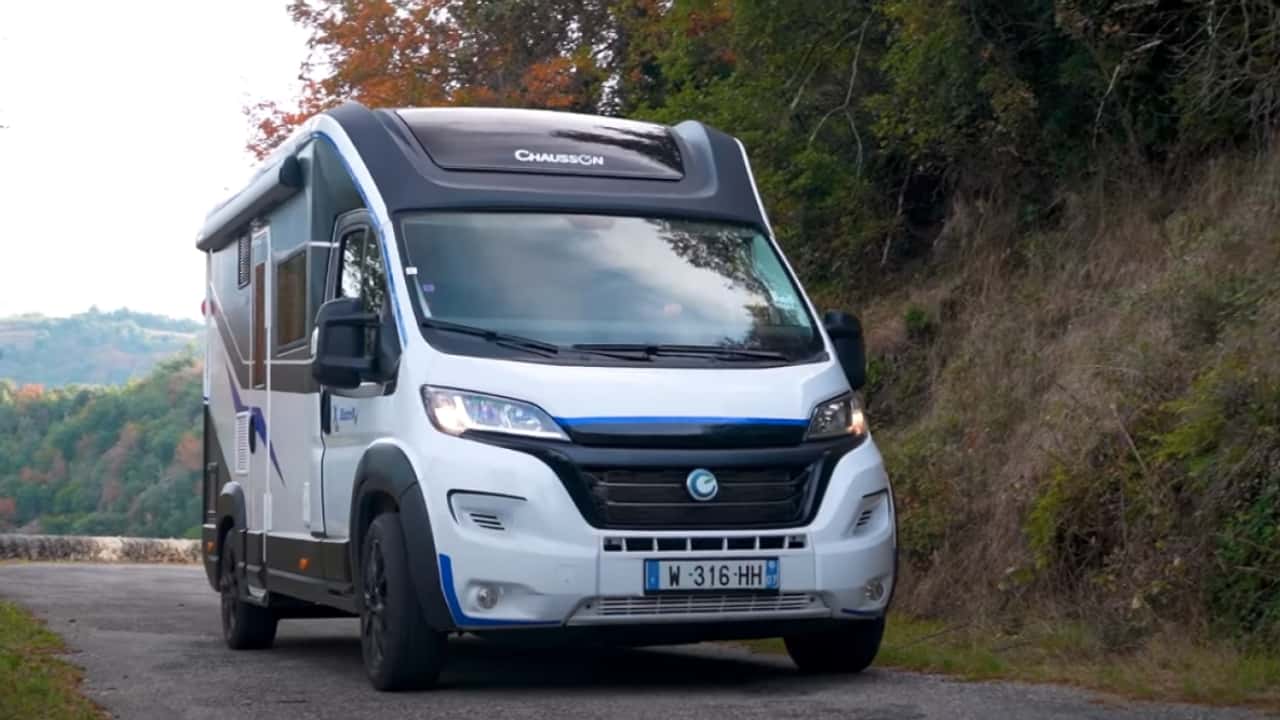

If the automotive industry's evolution towards electric technology seems unstoppable, in the recreational vehicle sector this trend also seems to be moving in the same direction, although it is still taking its first steps.
In this respect, the British group Bedeo and the French motorhome specialists Trigano have just unveiled an eye-catching hybrid motorhome. Called ElectriX, it is a model that offers more than 435 miles of range with the option to operate entirely in electric mode at the touch of a button.
Gallery: Bedeo and Trigano, electric motorhome






In this way, it is one of the world's first hybrid motorhomes (we think the first, honestly) with in-wheel motors that also fuses the design of a traditional motorhome and a smaller camper van.
Bedeo has long experience in transforming light commercial vehicles with internal combustion engines into fully electric and range-extended hybrid vehicles. In the latter case, it uses what it calls the Range Extender (RE) system, a pair of hub motors and a battery pack that electrify the rear wheels without the need to modify the internal combustion propulsion system. In this way, drivers can use the all-electric rear-wheel drive at the touch of a button without losing the range of the front-wheel drive engine.
If the appearance of the motorhome you are looking at looks familiar, that's not surprising. Bedeo has been working for some time on converting Stellantis vans, from brands such as Fiat, Peugeot and Citroën. The idea is that the vans retain the range of their internal combustion engines for longer journeys, combined with the advantages of electric mobility when accessing low-emission areas, for example.
Bedeo has already produced a series of small motorhomes, in cooperation with the X-series of compact Class B+ motorhomes from Trigano, Challenger and Chausson brands. The final models have 156 PS hub electric motors at the rear wheels and mount a 37 kWh battery pack under the motorhome floor so as not to reduce living and storage space. This combination gives the motorhome up to 62 miles of range without polluting emissions.
To look for analogies with other systems implemented by other manufacturers, instead of using a motor-generator like the one used by Thor Industries, Bedeo keeps the front engine of the Fiat Ducato. Thus, when the battery runs out of power or the driver decides to conserve electric power, he can switch back to the 140 PS 2.2-litre MultiJet turbodiesel engine, enjoying an estimated total range of between 435 and 560 miles. The battery is charged by regenerative braking and external charging.
Challenger takes advantage of the X150's wider, squarer cab to house a two-bench dinette that is more spacious than the typical front dinette of a camper van. This dinette converts into a real double bed measuring 190 x 140 cm. This convertible bed joins the double pull-out bed of the same dimensions to accommodate a total of four people.
The floor plan includes a full-width rear bathroom which seems to add a little more space and comfort compared to the small bathrooms of many camper vans. The Challenger X150 and Chausson X550 will be available with the Bedeo RE dual-mode system, as will the Challenger X250 and Chausson X650, larger alternatives with a length of 6.36 metres.
The ElectriX models are available now for a base price of €99,990 (approx. £83,500). That's a significant increase on the €74,990 (£62,700) for the standard Challenger X150 equipped only with Fiat's 2.2-litre Multijet turbodiesel engine.
More motorhome news:
RECOMMENDED FOR YOU
This Adorable Buggy Is Street-Legal But Costs More Than A Corolla
The 10 Fastest Cars At Goodwood This Year
These New Lowrider Stamps From The US Postal Service Rule
Man Walks Into The Dealership. Then He Asks For The Buy Rate: 'Finance Manager Is Under No Pressure To Tell You'
duPont Registry Group Launches duPont Registry Live, Creating a New Era for Luxury Car Auctions
Roush Built The V8-Powered Ram The RHO Should Have Been
US Luxury Automotive Market Set to Surpass $200 Billion by 2035, First Comprehensive Data-Backed BCG Study Finds