Home
Skoda
News
Vrchlabi: Skoda's most efficient DSG gearbox factory
This Czech plant has eliminated its carbon dioxide balance

By: Filippo Einaudi
Published by: Brian Potter
Jan 23, 2024 at 3:00am ET
Add Motor1.com as a preferred source in Google
- (https://twitter.com/intent/tweet?url=https%3A%2F%2Fwww.motor1.com%2Fnews%2F705628%2Fskoda-vrchlabi-transmission-factory-decarbonises%2F&text=Vrchlabi%3A%20Skoda%27s%20most%20efficient%20DSG%20gearbox%20factory&via=motor1com)
- copy
Share
Comment
Although the large factory in Mlada Boleslav is Skoda's most important and representative plant, on the road to sustainability it was not the first to achieve carbon dioxide-neutral status.
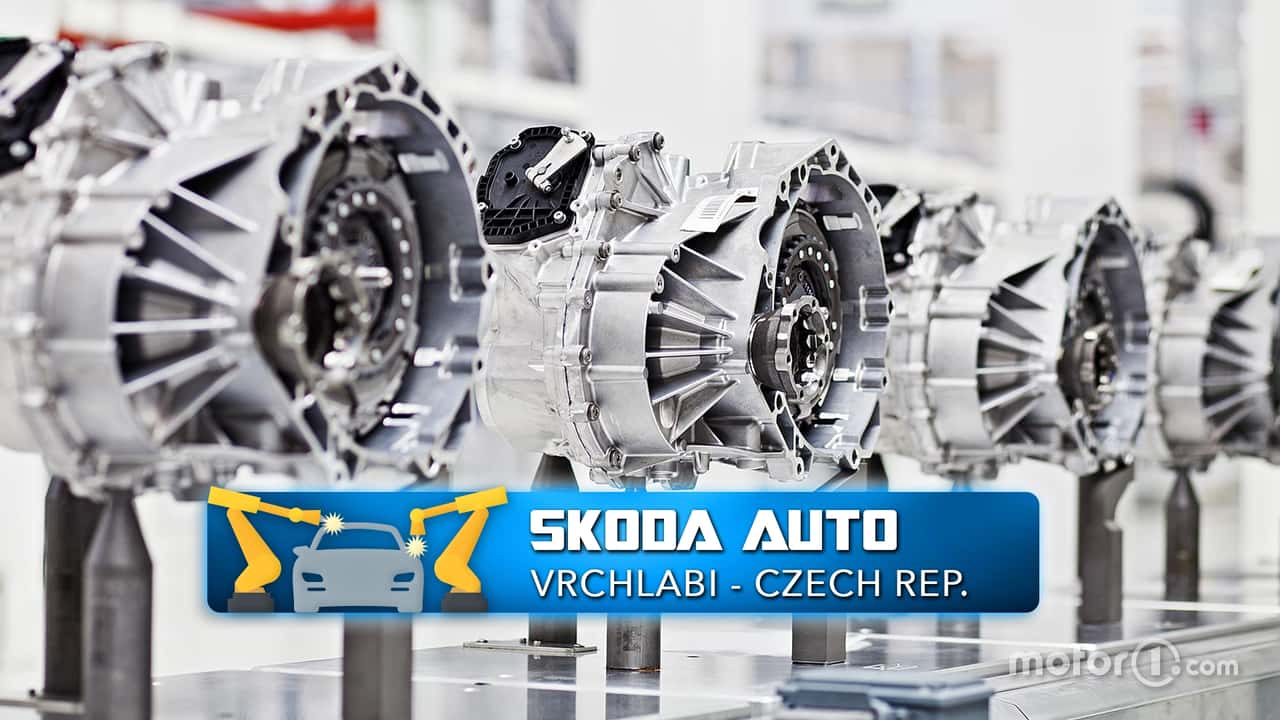
This record goes to the Vrchlabi plant in the north of the Czech Republic, which has been producing transmissions for the entire Volkswagen Group since 2012 and in 2023 completed an emissions balancing process in anticipation of becoming an electric parts factory.
Precisely in view of this major conversion, the company has announced that the same plant has been undergoing a major revolution in recent weeks in terms of internal and external logistics processes, thanks to the ONE Log Project for the entire Volkswagen Group.
From Favorit to double clutch
The Vrchlabi plant is located in the Hradec Králové region and was originally built in 1908 by a car body manufacturer. It passed to Skoda in 1946 and produced components until 1987, when it was chosen to house the production lines of the Favorit, the last model produced alone by the Czech company before the arrival of the Volkswagen Group.

Aerial view of the factory in 2019
The Favorit gave way to the Felicia and then to the new Octavia, Fabia, Superb and Roomster on the German group's platforms. In 2012, following a reorganisation, it stopped producing cars to concentrate on manufacturing the increasingly popular DSG dual-clutch gearboxes, in particular the 7-speed DQ 200 version, of which it produces 2,300 units per day and more than four million over these ten years.
The various targets achieved in the production of DSG gearboxes. The latest (4 million units) dates from last February.
Digitisation
Project ONE Log, as expected, is a large-scale project which, on a Volkswagen Group-wide basis, will gradually extend to many other plants as well. The aim of the entire company is to bring digitalisation to logistics processes, to make them more efficient than they are today.
All this will happen in the coming months and years with the gradual introduction of one of the most advanced SAP (Systems, Applications and Products) systems in the world. For Skoda Auto, this is the biggest system change at the plant in the last 25 years and is expected to mean a substantial reduction in operating costs.
CO2 control in 12 areas
Speaking of emissions, the fact that Vrchlabi is a 'simple' component plant, which lacks critical parts such as those for body and paint production (among the most complex to simplify), is not enough to explain how it has changed to become Skoda's first zero-emission plant by 2020.
In fact, this plant has been adopted as a pilot site for a complex programme to reduce consumption, waste and all forms of pollution that includes 12 different areas of intervention, from the recycling of hydraulic oils used to run the machines to electrostatic filtering systems.
Some of the fully automatic conveying and assembly systems
Advances in energy management saved more than 2,000 MWh of thermal energy and almost 1,500 MWh of electricity by 2020, a savings that has also been achieved by isolating unused circuits and implementing an intelligent temperature regulation plan.
However, the most important element was the purchase of energy produced from green sources, such as photovoltaic and hydroelectric, which now covers 90% of the site's total needs. This has reduced CO2 emissions from 45,000 to just 3,000 tonnes per year, offset by funding certified environmental activities and initiatives. A model that Skoda is replicating in Mlada Boleslav and Kvasiny.
Added to this is a high level of automation: entire production phases are handled entirely by robots, as well as the transport of parts and complete transmissions, which move on trolleys towed by autonomous tractors along pre-established routes.
As in the other factories, a total recycling programme for production waste, from scrap materials to packaging, has also been adopted here. In addition, methane has been replaced by biogas produced by a dedicated plant.
2020: A team of 29 Vrchlabi employees aims to plant trees in the Krkonose National Park.
What do you think?
View
Comments
A tree for every car
Turning to compensatory measures, the first initiatives that the Czech manufacturer adopted in-house was to promote reforestation in the areas of the factories themselves.
The commitment to plant a tree for every new car sold has already contributed to an increase of more than one million green areas in the Czech Republic by 2020, of which 1,400 are around the three factories, along with 27,000 square metres of shrubs and hedges.
Vrchlabi fact sheet
Inauguration 1908. Owned by Skoda since 1946 Owned by Volkswagen AG
Location
Vrchlabi, Hradec Králové municipality and region, Czech Republic Total area - Number of employees More than 800 employees Production capacity Up to 2,300 transmissions per day Other activities - Main models produced DSG DQ 200 transmission Most important historic models produced Favorit, Felicia, Fabia, Octavia, Superb and Roomster Future models -
Other Factory Features:
AutoAlliance Thailand Rayong, the headquarters of Ford and Mazda in the East
Nitra: Land Rover's soon to be 100% electric factory
BMW: Munich plant will produce only electric vehicles from 2027
Madrid: From diesel engines to Citroën's electric crossovers
Gallery: Skoda's Vrchlabi plant
11


We want your opinion!
What would you like to see on Motor1.com?
Take our 3 minute survey.
- The Motor1.com Team
Share this Story
- (https://twitter.com/intent/tweet?url=https%3A%2F%2Fwww.motor1.com%2Fnews%2F705628%2Fskoda-vrchlabi-transmission-factory-decarbonises%2F&text=Vrchlabi%3A%20Skoda%27s%20most%20efficient%20DSG%20gearbox%20factory&via=motor1com)
- copy
GO TO COMMENTS
(
)
Got a tip for us? Email: tips@motor1.com
View all comments ( )
Popular
12 Cars With Names That Make Absolutely No Sense
BMW Kept This Hatchback A Secret For Decades
Bugatti Restores One-Off Veyron With A Mirror-Like Aluminum Body
The Gas BMW M3 Isn't Dead: Next-Gen Prototype Roars
latest articles
- Subaru Built A 510-HP Electric Wagon Without Toyota's Help Oct 20 - Official -
- The Strange Reason The Golf GTI Had A Golf Ball Shifter Oct 20 - Motor101 -
- Photos: Porsche's Mission S Concept Takes Over New York City Oct 20 - Design -
- The 2027 Honda Passport TrailSport Looks Noticeably Taller Next To Last Year's Model Oct 20 - Off-Road -
- 12 Cars With Names That Make Absolutely No Sense Oct 20 - Lists -
- The Ford Ranger Is Getting A Bigger V6 For 2027: Report Oct 20 - Rumors -
- BMW Already Has A Deal On The New i3. But It's Not Cheap Oct 20 - Pricing -
RECOMMENDED FOR YOU
Skoda Wants You To 3D Print Pieces Of Your Car At Home
Subaru Built A 510-HP Electric Wagon Without Toyota's Help
AI Is Getting So Good Even Skoda's Designers Are Worried
The Strange Reason The Golf GTI Had A Golf Ball Shifter
Analyst Says Skoda Is The New Porsche Of VW Group, And The Data Backs It Up
Photos: Porsche's Mission S Concept Takes Over New York City
RIP: Subaru's Boxer Engine Is Dead In Europe After 2027