What Those Little Weights On Your Wheels Actually Do
Those tiny metal blocks aren't random—they're precisely placed to stop your wheels from shaking, vibrating, and wearing unevenly.
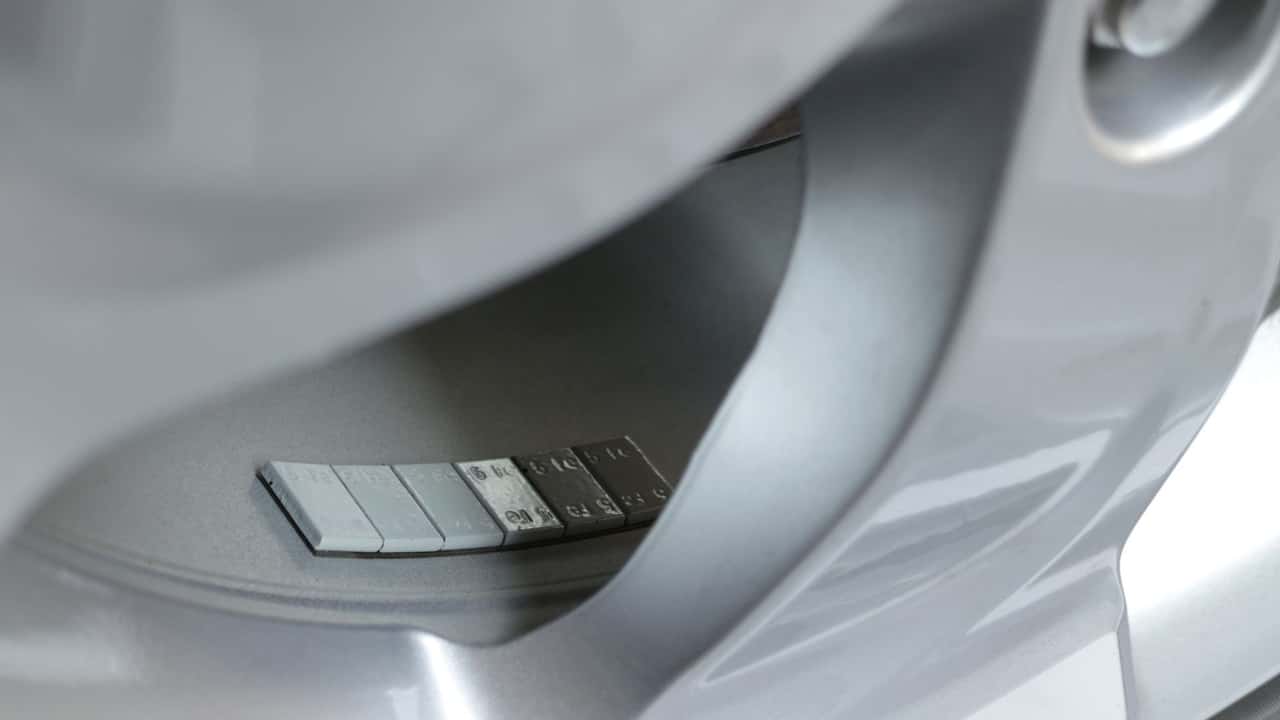

Those tiny metal blocks stuck to your wheels are easy to overlook. Some are clipped onto the rim, while others are tucked behind the spokes or attached to the inside of the wheel. But they serve an important purpose: they help balance the entire tire-and-wheel assembly.
Without them, even a small difference in how the weight is distributed around the tire and wheel can create noticeable vibrations as the assembly spins faster. Wheel balancing is designed to counteract those differences and help the assembly rotate smoothly. And despite their simple appearance, those little weights can tell you quite a bit about what's happening with your tires.
Your Wheel Is Not Perfectly Balanced
It might seem like a tire and wheel should naturally spin perfectly evenly. In reality, neither component is perfectly uniform.
Small variations in the tire's rubber, the wheel itself, the valve stem, and even the way the tire seats against the rim can create slightly heavier or lighter areas. Once the tire and wheel are mounted together, those differences combine to create an imbalance.
At low speeds, you might not notice much. As rotational speed increases, however, the effects of that imbalance become more pronounced because the centrifugal forces increase. An unbalanced assembly can produce vibrations that are felt through the steering wheel, seat, or vehicle body.
There are also two basic types of imbalance that technicians look for: static imbalance, where a heavy spot causes the wheel to move up and down, and dynamic imbalance, where uneven weight distribution across the width of the wheel can cause a side-to-side wobble.
How Wheel Weights Fix The Problem
A tire and wheel assembly isn't perfectly uniform, so small differences in the rubber, wheel, valve stem, and how the tire sits on the rim can create an imbalance. That's where wheel weights come in.
A technician places the tire and wheel on a balancing machine, which spins the assembly and identifies where the imbalance occurs. The machine then determines how much corrective weight is needed and exactly where it should be placed.
Adding a small weight to the appropriate location counteracts the heavier section of the assembly, essentially creating a carefully calculated counterbalance. That's why weights can't simply be attached anywhere on the rim—their position is just as important as their size.
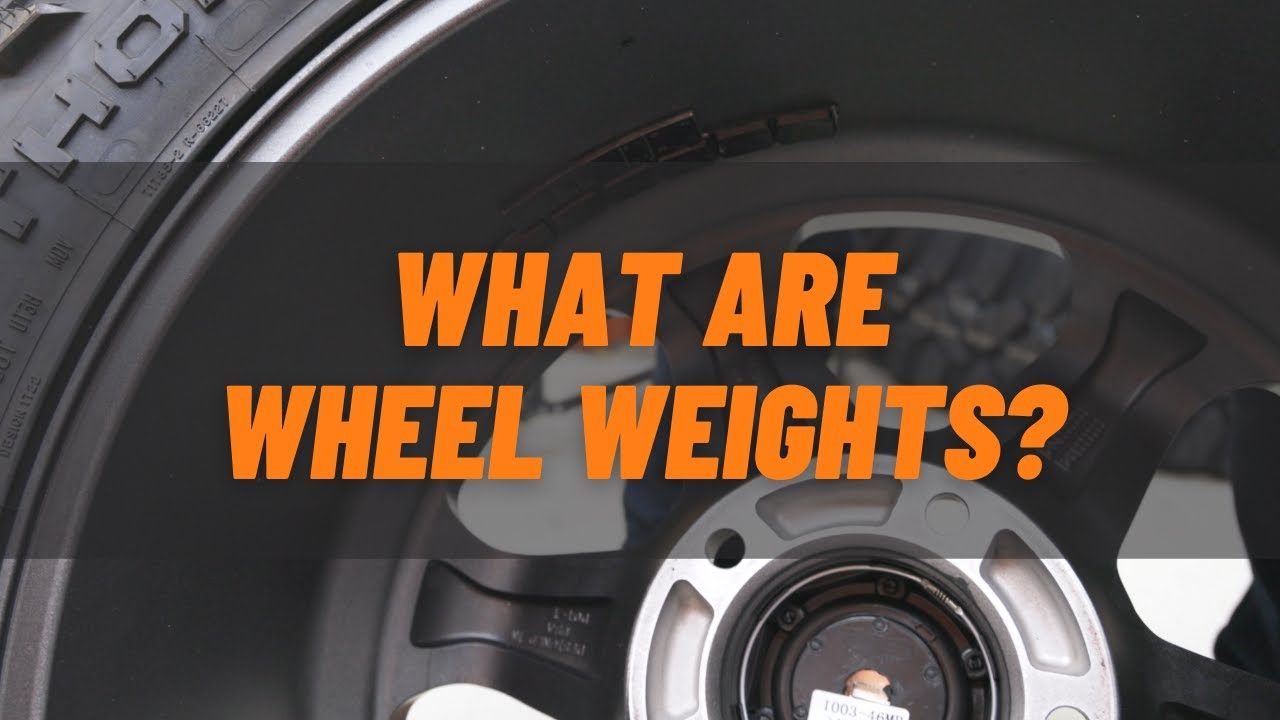
Some wheels use clip-on weights, while many modern alloy wheels use adhesive weights attached to the inside of the rim. This keeps the weights largely hidden while still allowing technicians to achieve the necessary balance.
Modern balancing machines can also account for factors beyond simple weight distribution, including wheel runout and variations in the tire and wheel assembly. In some cases, a technician may reposition the tire on the wheel to reduce vibration rather than simply adding more weight.
What Happens If A Wheel Needs A Lot Of Weight?
A few small weights are completely normal. But if a technician needs to cover a large section of the rim with weights, that can be worth investigating. An excessive amount of corrective weight can indicate that something beyond ordinary imbalance is happening. Possible causes include:
- A bent wheel that isn't rotating perfectly true.
- A tire that's out of round or has an internal defect.
- The tire isn't seated correctly on the wheel.
- Uneven tire or wheel variation that creates a larger imbalance.
- A tire-and-wheel combination that needs repositioning to reduce the amount of corrective weight required.
Modern road-force balancing equipment can go beyond simply finding a heavy spot. It can measure variations in the tire and wheel assembly under simulated load and help technicians determine whether repositioning the tire on the wheel could reduce vibration.
So, seeing a few weights on your wheel isn't a problem. Needing an unusually large amount of weight, especially repeatedly, is when it makes sense to have the tire and wheel inspected more closely.

Why Your Car Needs Them
Proper wheel balancing isn't just about making the ride feel nicer. A balanced tire-and-wheel assembly helps the vehicle maintain predictable behavior as the wheels rotate, particularly at highway speeds.
Balanced wheels can also help reduce unnecessary stress on suspension and steering components. When a wheel is constantly vibrating, those forces are being transmitted through components such as wheel bearings, shocks, and other parts of the suspension system.
An imbalance can create vibrations and contribute to irregular tire wear. At higher speeds, the vibration can become particularly noticeable and can be transmitted through the steering and suspension. In more severe cases, persistent vibration can contribute to uneven or irregular tire wear.
That's why wheels are typically checked and balanced when new tires are installed or when a tire or wheel is removed and remounted. Those tiny pieces of metal may not look important, but they're doing a surprisingly precise job every time the wheel spins.
What Drivers Think About Wheel Weights
Reddit's tire communities generally agree that seeing some weights on a wheel is completely normal. A recent r/tires discussion asked whether a wheel with numerous weights was excessive, and commenters pointed out that the amount needed depends on how far out of balance the particular tire-and-wheel assembly is.
The bigger debate is what happens when one wheel needs dramatically more weight than the others. In another r/tires thread, a driver posted a wheel with more than 20 small weights and reported vibration at around 80 km/h. Commenters suggested possibilities including an incorrect balancing job, a poorly matched tire and wheel, or a bent wheel.
There's also a useful reminder that losing a weight can actually create a new vibration. In a recent discussion about a Golf GTE, commenters connected a vibration that appeared after new tires were installed with the possibility that an adhesive balancing weight had fallen off.
The Reddit takeaway is pretty straightforward: a few weights aren't anything to worry about, but an unusual amount—or a new vibration after a weight falls off—is worth having checked. The number of weights alone doesn't prove that a wheel is damaged or that a shop did a bad job, but an unusually large correction can be a reason to investigate the tire, wheel, and balancing process.
Should You Be Worried About Wheel Weights?
Not at all because having weights on your wheels is completely normal. In fact, having the right amount of weight in the right place is evidence that the tire-and-wheel assembly has been balanced.
What deserves attention is a sudden vibration, a weight that has fallen off, or a wheel that repeatedly requires an unusually large amount of corrective weight.
Those little blocks attached to your rims are not just random pieces of metal. They're tiny counterweights working to keep your tires spinning smoothly—and your ride free from unwanted vibration.
RECOMMENDED FOR YOU

Why Do Jeeps Actually Have Seven Slots In The Grille?
Woman Drives KIA Sorento On The Highway. Then Her Sunroof Explodes: 'I Didn't Feel Safe'
These Car Wash Mistakes Could Seriously Damage Your Vehicle
Man's Toyota Keeps Honking Randomly. Then The Mechanic Finds Where The Noise Is Coming From: ‘What In Tarnation?'
Can You Really Replace Just One Tire?
Is Ford Considering A Cheap Rally Car? Sure Sounds Like It
How Did The Toyota 4Runner Get Its Name?