Why Is It Called a 'Pit Stop' In Racing?
It sounds like a simple stop, but in racing, those few seconds can make or break an entire race. Here's where the name came from.
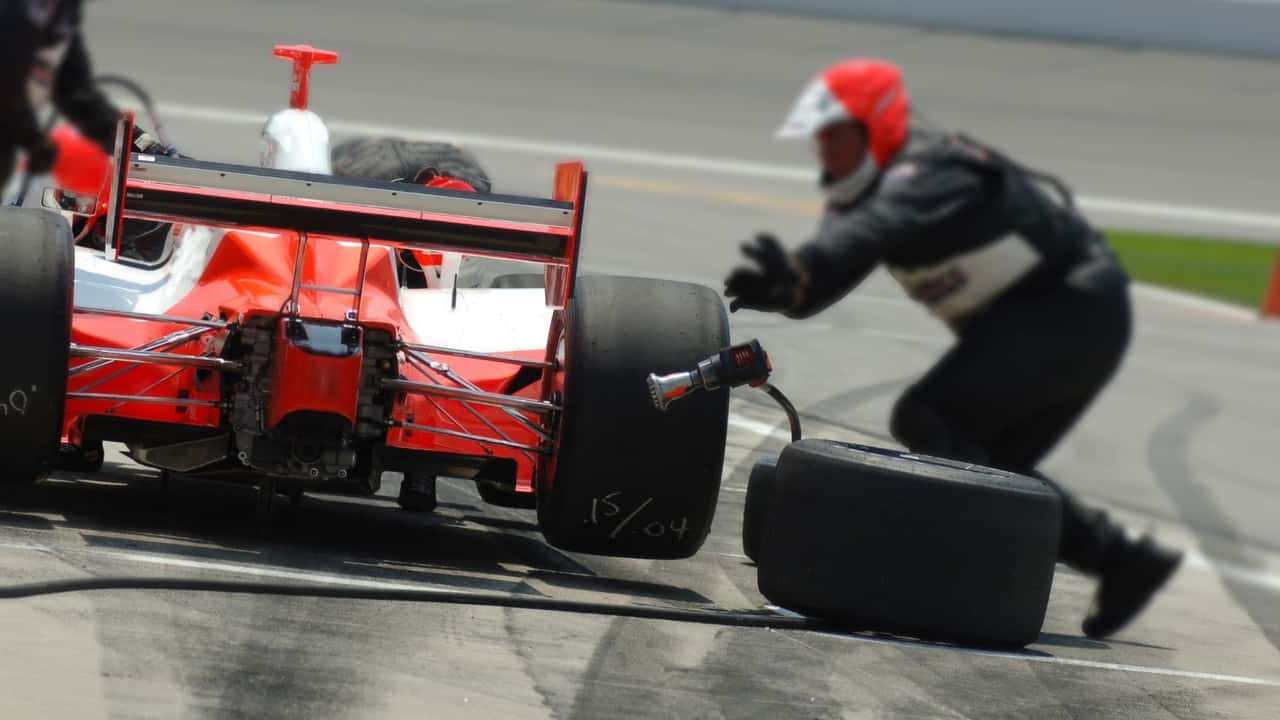

Few racing terms are as familiar as “pit stop.” Even people who rarely watch motorsports know what it means: a race car pulls off the circuit, a crew swarms around it, and seconds later, it heads back into the action.
But why is it called a pit stop in the first place? There aren't any holes in the ground involved, and modern Formula 1 pit lanes look more like high-tech garages than anything resembling a pit. The answer is rooted in the layout and language of early motor racing—and the name has stuck around even as pit stops have evolved dramatically.
The 'Pit' Is Where The Race Car Gets Serviced
In modern racing, the pits are the area alongside the track where teams have their garages and service their cars. The pit lane provides access between the racing circuit and those garages, giving crews a controlled space to work on the car while the race continues.
When a driver makes a pit stop, they're essentially pulling off the racing surface so the crew can perform work that would be impossible—or dangerous—to do on the track. That work can include changing tires, making repairs, adjusting the car, replacing damaged components, or refueling where regulations permit it.
In Formula 1, for example, pit stops are primarily associated with tire changes and repairs, while refueling during races has been prohibited since 2010. Formula 1 currently defines a pit stop as a stop in the pit box for tire changes or repairs.
The driver must pull over at a team's specific pit box and line up accurately so the crew can immediately get to work. That precision matters because entering the pits costs valuable time. The car is traveling much slower than it would on the main circuit as the driver also has to obey a pit-lane speed limit. A perfectly executed tire change can therefore still cost a significant amount of race time simply because the car has entered the pits.
Where Did The Word "Pit" Come From?
The exact history of the racing term isn't quite as dramatic as the name might suggest. There isn't a literal hole in the ground waiting for a race car to fall into.
In motorsports, a pit became the designated area where a team could stop and work on its car during a race. These service areas were generally positioned alongside the racing course, allowing cars to rejoin the action after being worked on.
Over time, “the pits” became the standard term for the area where teams worked on their cars during a race. The phrase “pit stop” dates back to the early era of automobile racing, with dictionaries tracing its first known use to the early 20th century. Merriam-Webster lists 1915 as the first known use of “pit stop.”
In other words, the term is much older than modern Formula 1 pit crews, pneumatic wheel guns, and sub-two-second tire changes.
Why Not Just Call It A "Garage Stop"?
Because the car doesn't necessarily stop inside the garage. In modern racing, the actual service is usually performed in a team's pit box, an assigned area along pit lane. The driver pulls into that marked position, the crew performs its work, and the car leaves again.
Formula 1 describes the pit lane as the section of track that provides access to the team's pit boxes and garages.
That distinction is important because “pit” has become a broader racing term. The pits can refer collectively to the garages, pit lane, pit wall, and surrounding team area.
So when a commentator says a driver is “coming into the pits,” they're not necessarily saying the car is going into a building. They're saying the driver is leaving the racing surface and entering the team's service area.
The Pit Stop Has Changed Dramatically
The name may be old, but the operation has become incredibly sophisticated.
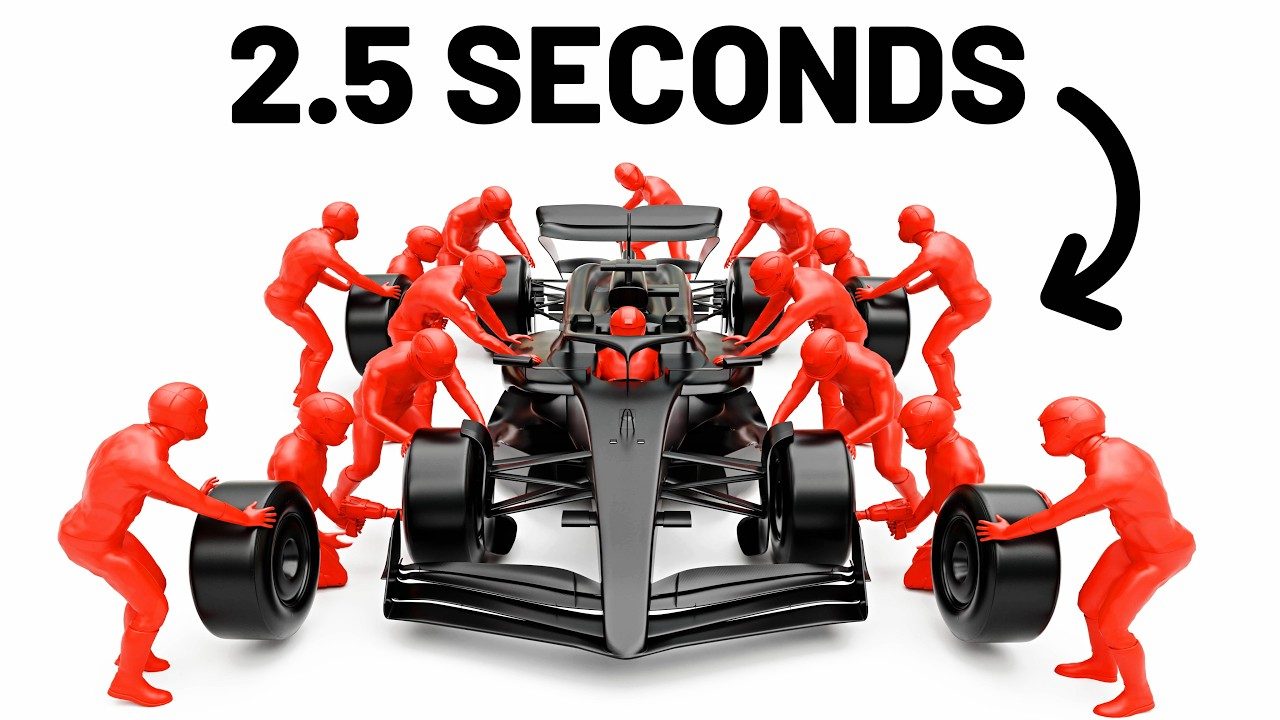
A modern Formula 1 pit stop can involve around 20 crew members working around the car, with individual people responsible for specific tasks such as lifting the car, removing wheels, installing new tires, operating wheel guns, and making adjustments. A typical stop can involve:
- Front and rear jack operators lifting the car off the ground.
- Wheel-gun operators removing and tightening the wheel nuts.
- Tire carriers taking the old tires away and bringing the new ones into position.
- Tire fitters mounting the new wheels onto the car.
- Front-wing and adjustment crew making aerodynamic changes when necessary.
- The driver stopping precisely in the team's designated pit box.
The best teams can change all four tires in roughly two seconds. McLaren's 1.80-second stop at the 2023 Qatar Grand Prix is recognized as the current F1 world record. That speed is the result of enormous amounts of preparation. Formula 1 teams practice pit stops repeatedly, with every crew member assigned a precise position and task.
The driver has an important job, too: stopping the car exactly on its marks so the crew doesn't have to adjust its position. So while “pit stop” sounds like a simple pause in the race, modern Formula 1 has turned it into a highly choreographed operation where every movement is measured and every fraction of a second matters.

What Motorsport Fans Says About Pit Stops
Formula 1 fans on Reddit often focus on the same thing that makes pit stops fascinating to casual viewers: a few seconds can completely change the outcome of a race.
A 2025 r/formula1 discussion analyzing pit-stop times attracted nearly 200 upvotes, with commenters debating why some stops were dramatically longer than others and how much driver positioning, wheel-gun work, and crew execution can influence the final time.
That obsession with tiny differences shows up elsewhere, too. In a 2023 discussion about Mercedes' relatively slow pit stops, one Reddit user questioned whether losing roughly 0.8 seconds compared with rival teams was significant enough to warrant concern. The thread quickly turned into a discussion about how consistently fast teams such as Red Bull had become at the process.
There's also a good example of how complicated a pit stop can become when something goes wrong. A Reddit discussion about Sergio Perez's 2021 Imola stop examined a situation involving a steering-wheel change and a time penalty, with commenters breaking down exactly why the crew couldn't simply perform every task simultaneously.
The Reddit consensus reinforces the main point of the story: a pit stop may look like a simple tire change on television, but it's actually a carefully choreographed operation where positioning, timing, strategy, equipment, and dozens of people can determine whether a driver gains or loses valuable track position.
Why Do Americans Say "Pit Stop" Outside Racing?
The phrase eventually escaped motorsports. Today, you can make a “pit stop” at a gas station, restaurant, rest area, or anywhere else you briefly stop during a journey.
That broader meaning is now recognized in dictionaries alongside the original racing definition. Cambridge, for example, defines a pit stop both as a stop during a motor race and as a short stop made during a longer road trip.
It's a fitting evolution. In racing, the idea is to stop briefly, take care of something necessary, and get moving again as quickly as possible. That's exactly what the phrase means when someone says they're making a quick pit stop on a road trip.
From Racing Necessity To Racing Highlight
The phrase “pit stop” may sound like a simple piece of racing jargon, but it has more than a century of history behind it.
What began as a practical necessity in early automobile racing has evolved into one of the most carefully choreographed parts of modern motorsport.
Today, a pit stop can involve dozens of people, specialized equipment, split-second timing, and strategic decisions that can determine the outcome of a race. The terminology, however, has remained remarkably consistent.
So while racing technology has changed almost beyond recognition, the name has stayed the same. A pit stop is still exactly what it sounds like: a stop in the pits—but one that can make or break a race.
More From Motor101
RECOMMENDED FOR YOU

What Does 'NASCAR' Actually Stand For?
Woman Notices Flock Cameras. Then She Does Something Drastic 'In The Name Of Privacy': 'From Amazon'
What Those Little Weights On Your Wheels Actually Do
Woman Gets Ford Bronco Inspected At Dealership Before Texas Road Trip. Then A Mavis Tech Can't Believe What He Finds
Why Do Jeeps Actually Have Seven Slots In The Grille?
Toyota Prius Hits Car In the Parking Lot. Turns Out It Was A Tesla. Now He’s Waiting For Her: ‘Hey…’
These Car Wash Mistakes Could Seriously Damage Your Vehicle