This New Mercedes Gas Engine Has An Electric Turbo, And It's Not For AMGs
The LS engine has nothing to do with GM's V8, so don't start planning that engine swap just yet.
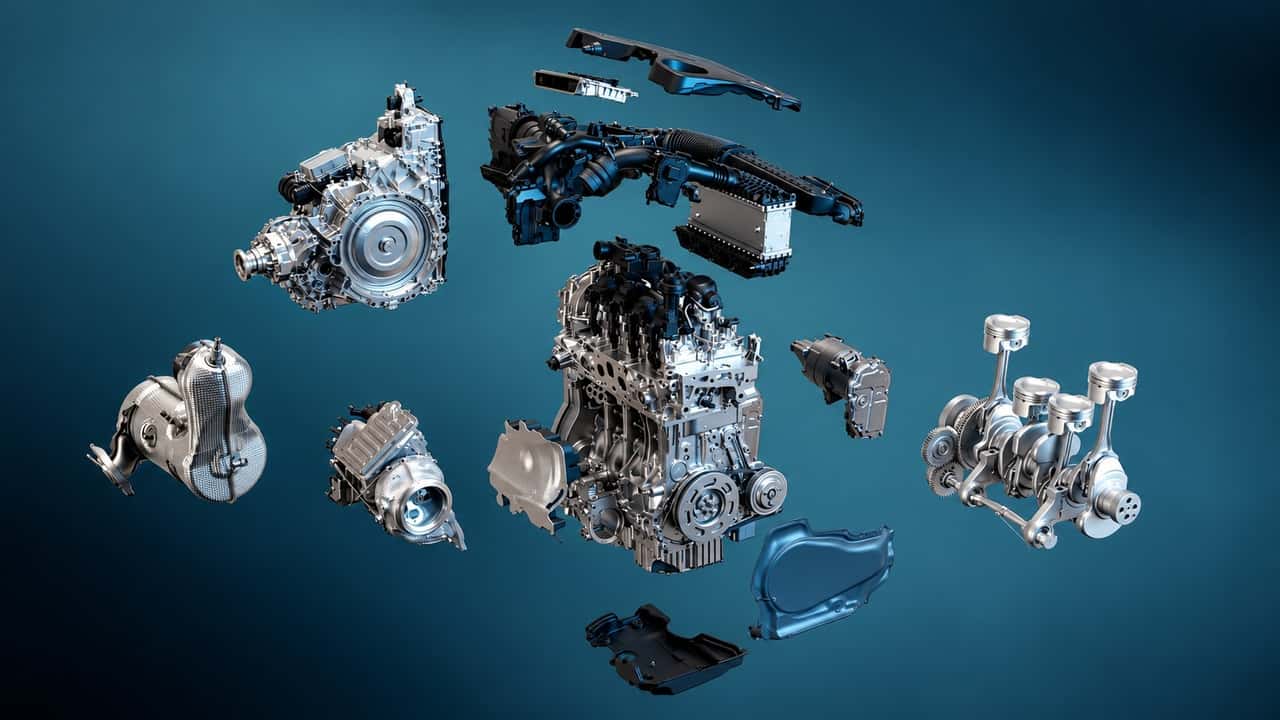

Mercedes is democratizing electric turbocharging. The technology first appeared in the wild AMG One hypercar, which borrowed heavily from Formula 1, before trickling down to more affordable AMG models from the 43 and 63 series. Now it's taking another step down the ladder, with the new M 252 LS bringing an electrically assisted turbocharger to regular Mercs.
That’s right. You no longer need to buy a performance car to get an electric turbo under the hood. It’s coming to regular Benz models, kicking off with the sensible GLB compact crossover. The last part of the engine's M 252 LS codename might ring a bell with American muscle-car fans, but don't rush to order a crate engine just yet. Unlike GM’s LS V8, Mercedes' LS has half the cylinders Chevy fans want. At least it has an electric turbo, though fitting it into a classic Camaro will be a challenge.
The new engine builds on the M 252 launched in 2025. Mercedes hasn't reinvented its small-displacement powertrain, but it has made a series of changes designed to improve performance, efficiency, and refinement. The company developed the electric turbocharger using know-how gained from its F1 program, working closely with Mercedes-AMG High Performance Powertrains (HPP), the British division responsible for developing and manufacturing power units for the Mercedes-AMG Petronas F1 team and its customer teams.

Mercedes electric exhaust gas turbocharger
Mercedes Wants To Make Turbo Lag History
The electric turbocharger aims to deliver more immediate throttle response across the rev range, helping the engine build power without the delay traditionally associated with turbocharging. Mercedes says the system also helps reduce fuel consumption, combining better performance with lower emissions. It’s basically a win-win situation. Well, once you exclude the added layer of complexity.
Another clever feature: the electric turbocharger can recover up to 2 kW of energy from the exhaust and convert it into electricity. That gives the system a role beyond simply boosting the engine's output. The four-pot produces 228 horsepower, plus an additional 31 hp from its electric turbocharging system.
If those figures don’t impress you, keep in mind that Mercedes has already engineered the most powerful four-cylinder engine ever installed in a production car. The M139l produces up to 469 hp in models such as the C63 and GLC63, although poor demand has prompted the company to switch to inline-six-powered 53 models.
Electric exhaust gas turbocharger for the Mercedes M 252 LS engine
The New Engine Brings Performance And Efficiency Gains
The German take on the LS engine debuts in the GLB 250, where it shaves a tenth of a second off the time to reach 62 mph (100 km/h). At the same time, it cuts CO₂ emissions by about 17 percent compared with the previous model and its M 260 engine, which had a larger 2.0-liter displacement.
As we explained in our deep dive into electric turbochargers, the technology does more than virtually eliminate turbo lag. An electric motor can spin up the turbo independently of exhaust-gas flow, delivering boost sooner, while also acting as a generator to recover energy that would otherwise go to waste. The downside? Electric turbos add cost, weight, and complexity, so Mercedes' move to bring the technology to a relatively mainstream 1.5-liter engine is surprising.
Interestingly, electric turbocharging can sometimes be energy neutral. As an engineer from Mercedes-AMG told us, the electricity the turbocharger generates while recovering energy can, under certain conditions, be enough to power its electric motor. In other words, the system can use recovered exhaust energy to keep the turbo spinning without necessarily drawing additional power from the car's electrical system. That's a neat trick that makes the technology even more appealing as automakers look for ways to improve combustion-engine efficiency without sacrificing performance.
Mercedes M 252 LS engine with electric exhaust gas turbocharger
Whether the added hardware pays off in everyday driving remains to be seen, but recovering energy that would otherwise go to waste is certainly a clever way to squeeze more out of a combustion engine.
Mercedes isn't the only automaker bringing electric turbocharging to production cars. Porsche also uses the technology in the 911 GTS and 911 Turbo S. This shows there's still room to improve combustion engines, even in 2026, as EVs continue to gain traction worldwide.
Gas Engines Are Still Relevant:
RECOMMENDED FOR YOU
F1 Star Kimi Antonelli Reverses Mercedes-AMG GT Into A Wall Before US GP
China's Zeekr Brand Wants To Give BMW And Mercedes A Run For Their Money: Interview
Mercedes Driver Goes To The Dealership For New Windshield. They Say It’ll Be $4,500: ‘Take Care Of It For Me’
The Toyota Crown Signia Finally Embraces The Wagon Look For SEMA
Man Buys 10-Year-Old Mercedes With Only 31,000 Miles. Then He Spots Something Fishy On The Tires
Nissan Employees Built A Race-Ready Z With The Perfect Throwback Livery
The Legendary AMG Hammer Might Be Making a Comeback