The Pope now drives electrically - with the Mercedes G-Class
However, the first electric Popemobile is not exactly economical
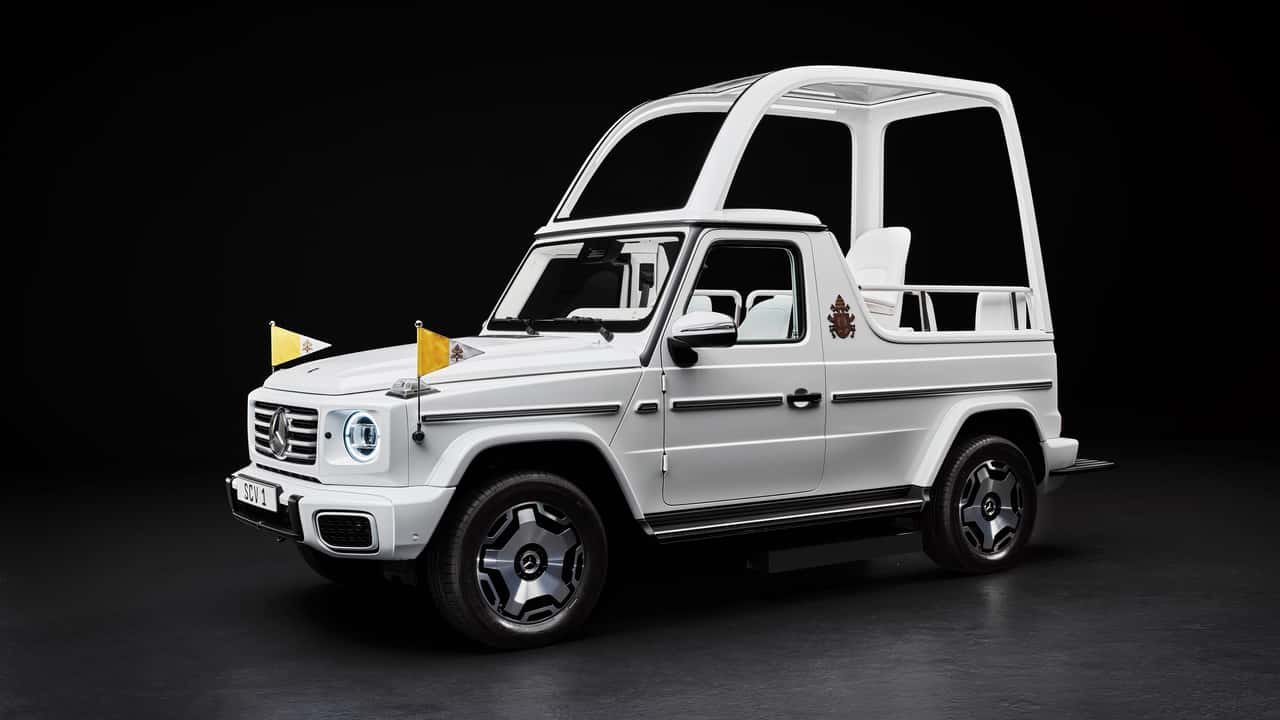

Mercedes has been supplying cars to the Vatican for 94 years and the Pope has been using Popemobiles based on the G-Class for around 45 years. Now, for the first time, the Popemobile will be powered purely by electricity. Mercedes CEO Ola Källenius and members of the development and production team today handed over a hand-built one-off vehicle based on the new electric G-Class to Pope Francis at the Vatican.
This means that the Pope will be travelling locally emission-free in a new electric Mercedes in time for the Holy Year 2025. According to the manufacturer, the vehicle was developed in close collaboration with the Vatican specifically for the Pope's purpose. The electric drivetrain has been adapted to the particularly low speeds required for the Pope's public appearances. The car "pays tribute to the encyclical 'Laudato Si'. In it, Pope Francis describes the need for sustainable development," writes Mercedes.
Gallery: Mercedes G 580 EQ as Popemobile

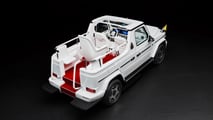
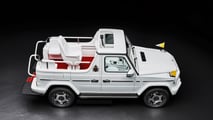
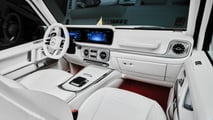
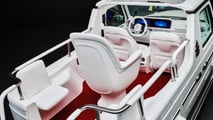
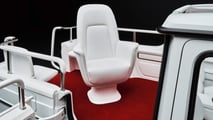
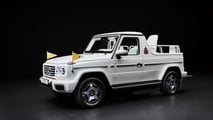
Källenius said: "With the new Popemobile, Pope Francis is the first pope to be travelling in a fully electric Mercedes-Benz during public appearances. This is a special honour for our company and I would like to thank His Holiness for the trust he has placed in us." The new Popemobile also sends a strong signal for electromobility and decarbonisation.
The Mercedes CEO was accompanied at the appointment at St Peter's Basilica by Head of Sales Britta Seeger and Marc Langenbrinck, Head of Mercedes-Benz Italia. The Holy Father also met those who developed and built his new car. Mercedes employees from the design, development, construction and sales departments were therefore also invited to the meeting, which was followed by a private audience.
The team from Graz, Sindelfingen and Rome had been working together for around a year. The project was managed by the team in Rome. The electric drivetrain was adapted by the team in Graz. The team from Sindelfingen produced the body, interior and customised equipment using traditional craftsmanship.
The car is based on the new G580 with EQ technology. The production model uses four electric motors close to the wheels with a combined output of 587 PS for the drive. This enables the G 580 EQ to sprint to 62 mph in 4.7 seconds. Each electric motor is assigned to a wheel and has its own two-speed gearbox and its own inverter. The two-speed gearboxes are used to realise the selectable off-road gear reduction - in the case of the Popemobile, this should enable the particularly low speeds of the motorcade. The 118 kWh battery ensures a WLTP range of 290 miles.
In the rear, the bench seat has been replaced by a centre-mounted, height-adjustable individual seat. This swivelling main seat makes it possible to move around flexibly and address the audience from different angles. Two individual seats for additional passengers were integrated behind the single seat on the left and right.
The roof was removed at the height of the B-pillar, and the B-pillar itself was "harmoniously transferred into the side wall to create an unmistakable side silhouette", writes Mercedes a little too flowery. In the event of rain or poor weather conditions, a pop-top roof offers protection for the occupants. The left-hand rear door was removed and the specialists - in traditional coachbuilding style - reproduced from a single piece and seamlessly welded into the body shell. On the right-hand side, the rear door was converted to a counter-rotating stop. Like the previous Popemobiles, the exterior of the vehicle is painted in classic pearl white.
Gallery: The cars of the popes

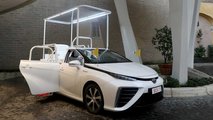

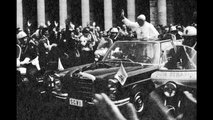
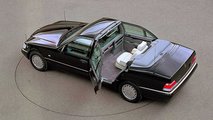
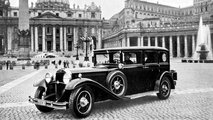
The picture gallery above shows that Mercedes was not the only company to supply Popemobilees. However, the Popemobile with the star was a Nürburg 460 Pullman saloon for Pope Pius XI from 1930, which allowed two dignitaries with folding seats and other personnel to travel in the car. In the 1960s, John XXIII was given a 300 Landaulet with automatic transmission and extended wheelbase. His successor Paul VI initially used a 600 Pullman Landaulet and later a 300 SEL - also a Landaulet.
In the 1980s, John Paul II used the first official so-called Popemobile for events in St Peter's Square, a modified G model from the 460 series. From 2002, he used a G 500 from the 463 series, which was also used by his successors Benedict XVI and Francis. Special vehicles based on the Mercedes M-Class and the GLE were also used from time to time.
More Pope-related stories:
The bottom line
So now the Pope also drives electrically, or rather: he can be driven without emissions. Mercedes naturally likes to sell this as a gesture of environmental friendliness. However, at 28 kWh per 100 kilometres, the power consumption of the series model is not exactly low. To be more precise: as far as we know, there is no other electric SUV that consumes this much, and the Rolls-Royce Spectre is no such power guzzler at 2.2 mi/kWh. But so be it. The world will not perish because of this one vehicle, but neither will it be saved.
Source: Mercedes
RECOMMENDED FOR YOU
The Best New Cars Coming Out In 2027
Maserati Could Bring Back The V8, Finally
This Is One Of The Rarest Mercedes G-Classes Ever Made, And It Just Sold For $143,000
Ford's Four-Door Mustang Is Getting Closer To Reality. And It'll Be Fast: Report
Woman Loses Key Fob To $15,000 Mercedes G Wagon. Then She Finds Out The Replacement Cost: ‘I Wish Somebody Would’ve Warned Me’
Bentley's Electric SUV Gets A High-Tech, High-Luxury Cabin
Man Finally Finds Mercedes G-Wagon Dealer Who Doesn't Do Mark Ups. Then He Realizes There's A Catch: '$60,000 Mark Up!'