Home
Cadillac
Reviews
Don't Buy A Blackwing. This 640-HP Cadillac Costs Thousands Less
Cadillac built a four-door Corvette Z06 with luxury-car comfort. Now you can get one for significantly less than its original price.
Jeff Glucker 
By: Jeff Glucker
Nov 12, at 10:30am ET
Add Motor1.com as a preferred source in Google
- (https://twitter.com/intent/tweet?url=https%3A%2F%2Fwww.motor1.com%2Freviews%2F814902%2Fused-cadillac-cts-v-why-buy%2F&text=Don%27t%20Buy%20A%20Blackwing.%20This%20640-HP%20Cadillac%20Costs%20Thousands%20Less&via=motor1com)
- copy
Share
Comment
Once upon a time, Cadillac was best known for cushy suspensions, comfortable seats, and carrying elderly people to early dinners. The CTS-V helped change all of that. And by the time the third-generation model arrived in 2016, Cadillac had built something genuinely terrifying for its German competitors.
The idea was pretty simple: Take a sharp-handling luxury sedan, shove a supercharged Corvette Z06 engine under the hood, and give it enough performance hardware to embarrass far more expensive machines. Voila!
The result was a 640-horsepower, rear-wheel-drive luxury sedan capable of hitting 60 miles per hour in just 3.7 seconds and reaching a claimed top speed of 200 mph. Even today, those numbers are still pretty incredible.
Now, though, CTS-Vs have depreciated enough that you can now pick one up for substantially less than the original six-figure asking price. It might not be cheap to own, but it's a wild amount of horsepower and performance for the money.
Why Buy a Used Cadillac CTS-V?

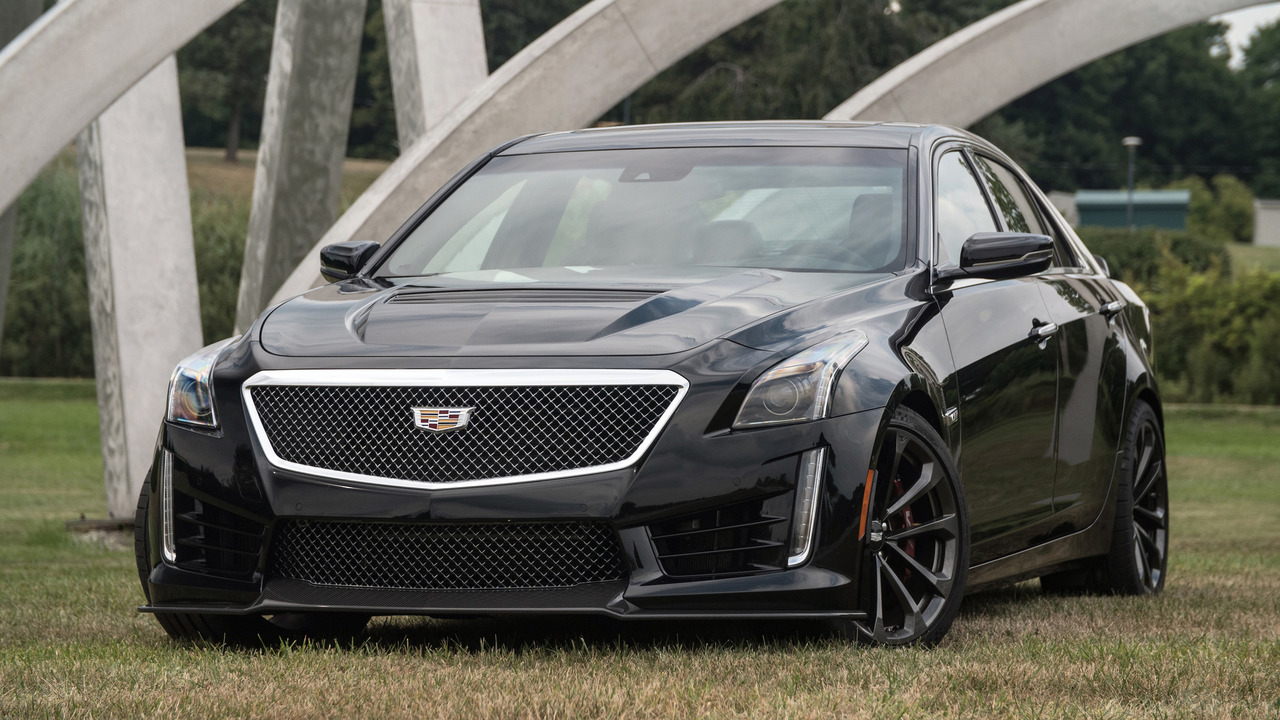
Under the CTS-V's vented carbon-fiber hood sits a supercharged 6.2-liter LT4 V8. It's essentially the same engine found in the C7 Chevrolet Corvette Z06, although Cadillac reduced output slightly to 640 hp and 630 pound-feet of torque. Cowards...
Regardless, this is one of the most powerful production sedans. And unlike many modern performance cars that bury their personality beneath complicated hybrid systems and all-wheel-drive hardware, the CTS-V delivers its power directly to the rear wheels.
An eight-speed automatic transmission handles shifting duties. There's no manual option on this generation, unfortunately, but the automatic is quick enough to make good use of all that power. Cadillac quoted a 3.7-second sprint to 60 mph and a 200-mph top speed. You can also blitz the quarter mile in under 12 seconds.
When we reviewed the 2016 CTS-V, we found ourselves chasing a Porsche 911 Turbo S Cabriolet on a Sunday afternoon drive:
- 'It occurred to me as we both played with the available corners and crossed our fingers about running into a cop: This Cadillac can run with just about anything in the world.'
- 'Outside of a track environment, there’s not much that can lose a 640-horsepower CTS as a tail.'
- 'I’ve loved every generation of the CTS-V, but none of them handle with such deftness and clarity of feedback as does this newest formula.'
How Much Is a Used Cadillac CTS-V?
According to Kelley Blue Book's late-2026 valuations, a typical used 2016 CTS-V has a Fair Purchase Price of approximately $53,400. Later examples command more money, with 2019 models sitting around $66,600.
- 2016: $53,400
- 2017: $56,700
- 2018: $63,800
- 2019: $66,600
That's a major discount over the original asking price, especially for the earlier cars. The 2016 model has lost more than $32,000 compared with its original base price. Just remember that you're buying a car that originally cost nearly $100,000.
Which Cadillac CTS-V Should You Buy?
For this generation, there isn't much separating the four model years mechanically. Every third-generation CTS-V uses the same 640-hp supercharged LT4 V8, eight-speed automatic, and rear-wheel-drive layout. The suspension, brakes, and fundamental character also remained largely unchanged throughout production.
The 2016 CTS-V is the value play. It's generally the least expensive way into third-generation CTS-V ownership, and you don't sacrifice any horsepower or meaningful performance by choosing the earliest model. For buyers who simply want the most speed for their money, that's a strong argument.
The 2018 and 2019 models are worth considering if you find a particularly clean example, but there's little reason to pay a substantial premium for a newer model based on performance alone. Options matter more.
The available Recaro performance seats are particularly desirable if you plan on driving your CTS-V aggressively. They provide more lateral support than the standard seats, although the additional bolstering isn't necessarily ideal for every body type.
Cadillac offered limited-run models such as the Carbon Black and Championship Editions, while the final 2019 model year included the Pedestal Edition celebrating the brand's V-Series heritage. These can add collector appeal, but their extra cost doesn't necessarily translate into better performance.
My pick would be a clean 2017 CTS-V with the Recaro seats, Carbon Fiber Package, and a documented maintenance history. But I'd take a properly maintained 2016 over a neglected 2019 every single time.
What Could Go Wrong?
As appealing as the CTS-V is, this isn't a car you should purchase without doing some homework. The LT4 V8 is a serious performance engine, and while its underlying architecture is well established, there's a lot of mechanical stress involved in producing 640 hp.
Start by inspecting the supercharger system. Listen for unusual noises, check the condition of the belts and associated hardware, and make sure the car produces consistent power without signs of overheating.
It's also worth reviewing the cooling system carefully, particularly if the car has spent time at a racetrack or has been modified for additional horsepower.
The eight-speed automatic transmission should be inspected. General Motors issued technical service bulletin 18-NA-355 addressing torque-converter-clutch shudder in certain vehicles equipped with its eight-speed automatics, including CTS models with the LT4.
The symptoms can include vibration or shuddering at light throttle during steady speeds. A revised transmission-fluid exchange procedure was among GM's prescribed remedies.
During a test drive, spend time cruising at moderate speeds rather than simply flooring the accelerator at every opportunity. A transmission that feels perfectly fine under hard acceleration can still exhibit problems during normal driving.
The Magnetic Ride Control dampers are another potential expense. They work brilliantly when everything is functioning properly, but replacement components can be considerably more expensive than ordinary shock absorbers. Inspect the suspension for leaks, abnormal noises, and uneven damping behavior.
Inside, pay attention to the Cadillac CUE infotainment system. Verify that the touchscreen responds properly, inspect it for signs of delamination, and test the climate controls, cameras, and other electronic features.
A thorough pre-purchase inspection should also include checking the differential, looking for accident damage, examining the underside for evidence of track use, and confirming that any applicable recalls have been completed.
None of these issues should automatically scare you away. They simply reinforce the importance of buying the right car rather than the cheapest one.
What Else Could You Buy?
The obvious rival is the BMW M5. The F10-generation model offers a twin-turbocharged V8, excellent performance, and a more traditional German luxury-car experience. It's fast, refined, and often available for less money than a comparable CTS-V.
But it also brings its own potentially expensive maintenance concerns, and it lacks the Cadillac's distinctive supercharged American V8 personality.
The Mercedes-AMG E63 is another natural competitor. Available with all-wheel drive in its later W212 configurations, the E63 offers enormous performance and an excellent interior. It's arguably the better all-weather performance sedan, although the Cadillac feels more like an oversized sports car.
If straight-line speed matters more than cornering precision, there's always the Dodge Charger SRT Hellcat. Its supercharged 6.2-liter V8 produces 707 hp in early examples, giving it even more power than the Cadillac. It also offers a roomier cabin and a more traditional muscle-car character.
The tradeoff is handling. The Charger is tremendously entertaining, but the CTS-V feels more sophisticated when the road starts twisting.
Then there's the Lexus GS F. Its naturally aspirated 5.0-liter V8 makes significantly less power than the Cadillac's supercharged engine, but it offers a fantastic soundtrack, distinctive character, and a compelling ownership proposition.
Why the Cadillac CTS-V Makes Sense
The third-generation Cadillac CTS-V arrived at an interesting time for the performance-sedan segment. BMW, Mercedes-Benz, and Audi were increasingly focused on sophisticated technology, complicated drivetrains, and all-wheel-drive traction. Cadillac approached the problem with a supercharged small-block V8, rear-wheel drive, and an exceptional chassis.
It's ludicrously powerful, surprisingly capable in corners, and comfortable enough to use every day. The styling has aged well, too. With its aggressive front end, vented hood, and relatively restrained proportions, the CTS-V still looks like something special without being overly flashy.
What do you think?
View
Comments
The interior might not match that of its European rivals, and ownership costs can be substantial. But those drawbacks become easier to accept when you consider what you're getting for the money.
A well-maintained 2016 or 2017 CTS-V offers genuine supercar performance in a usable four-door package for a fraction of what it cost new. And perhaps most importantly, it delivers the sort of driving experience that's becoming increasingly difficult to find.
More Why Buy
Forget The Z06. This Is The Used C7 Corvette You Should Buy
A Used Camaro SS Is Now A Surprisingly Good Deal
A Used Porsche Cayenne Is A Lot Of SUV For The Money: Why Buy?
You Might Finally Be Able To Afford An Aston Martin Vanquish
We want your opinion!
What would you like to see on Motor1.com?
Take our 3 minute survey.
- The Motor1.com Team
Share this Story
- (https://twitter.com/intent/tweet?url=https%3A%2F%2Fwww.motor1.com%2Freviews%2F814902%2Fused-cadillac-cts-v-why-buy%2F&text=Don%27t%20Buy%20A%20Blackwing.%20This%20640-HP%20Cadillac%20Costs%20Thousands%20Less&via=motor1com)
- copy
GO TO COMMENTS
(
)
Got a tip for us? Email: tips@motor1.com
View all comments ( )
Popular
12 Crossovers That Are Surprisingly Good At Off-Roading
Porsche's Boss Isn't A Fan Of Tesla's Marketing Stunts
Subaru Wants To Save The Gas Engine With A More Efficient Boxer
Honda Secretly Showed Dealers Its Future Models, Including The Element. Here's What They Said
Scout Is Finally Building Real Vehicles At Its $2-Billion Factory
Latest Stories
- Don't Buy A Blackwing. This 640-HP Cadillac Costs Thousands Less Nov 12 - Why Buy? -
- Next Honda CR-V Is Going Hybrid-Only. Here's The First Teaser Nov 12 - Teasers -
- Nearly 37,000 Lincoln Navigators Recalled Over Phantom Passenger Seat Movement Nov 12 - Recalls -
- Theon Design Expands US Presence As It Celebrates A Decade Of Porsche Restomods Nov 12 - Aftermarket / Tuning -
- Honda Secretly Showed Dealers Its Future Models, Including The Element. Here's What They Said Nov 12 - Industry -
- Scout Is Finally Building Real Vehicles At Its $2-Billion Factory Nov 12 - Manufacturing / Production -
- Ferrari 499P Modificata Makes Auction History With $9.9 Million Sale Nov 12 - For Sale -
RECOMMENDED FOR YOU
From Detroit To Tokyo: Where Every Major Automaker Calls Home
Next Honda CR-V Is Going Hybrid-Only. Here's The First Teaser
GM Recalls 67,000 Chevy Blazer EVs And Cadillac Lyriqs Over Dangerous Brake Issue
Nearly 37,000 Lincoln Navigators Recalled Over Phantom Passenger Seat Movement
Cadillac's F1 Team May Already Be For Sale. The Asking Price? $3 Billion
Theon Design Expands US Presence As It Celebrates A Decade Of Porsche Restomods
Cadillac’s Blacked-Out Escalade Is Limited To Just 20 SUVs