Home
News
Patents & Trademarks
It Sure Looks Like GM Is Copying Lucid's Homework
The Detroit automaker has a design for a new drive unit that incorporates one of Lucid's key mechanical concepts.
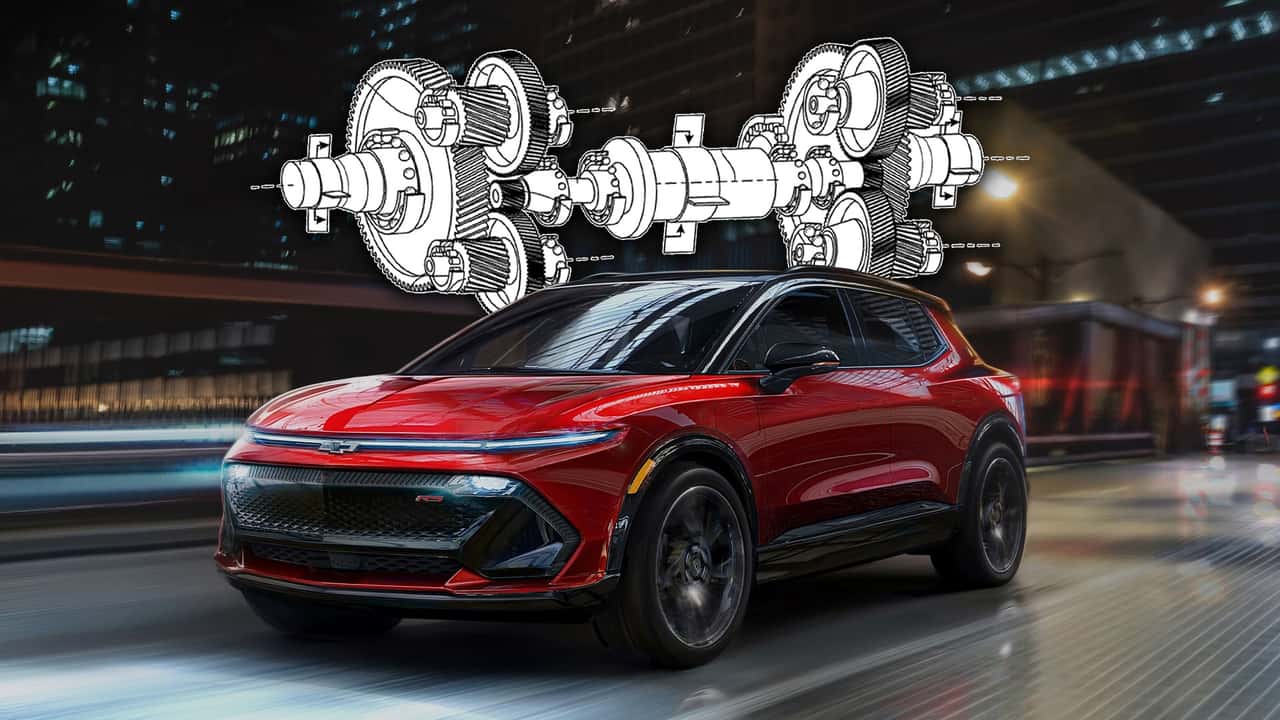
Photo by: General Motors
Peter Holderith 
By: Peter Holderith
Oct 31, 2024 at 1:45pm ET
Add Motor1.com as a preferred source in Google
- (https://twitter.com/intent/tweet?url=https%3A%2F%2Fwww.motor1.com%2Fnews%2F739460%2Fgm-lucid-drive-unit-patent%2F&text=It%20Sure%20Looks%20Like%20GM%20Is%20Copying%20Lucid%27s%20Homework&via=motor1com)
- copy
Share
Comment
Lucid Motors builds the most efficient electric vehicles in the world, and the rest of the auto industry wants a piece of that efficiency. Some, like Aston Martin, see fit to simply purchase the automaker's tech. Others want to develop it for themselves. One of those companies appears to be General Motors, which recently applied for a patent on a compact electric drive unit that uses one of Lucid's key architectural features: the differential-in-rotor design.
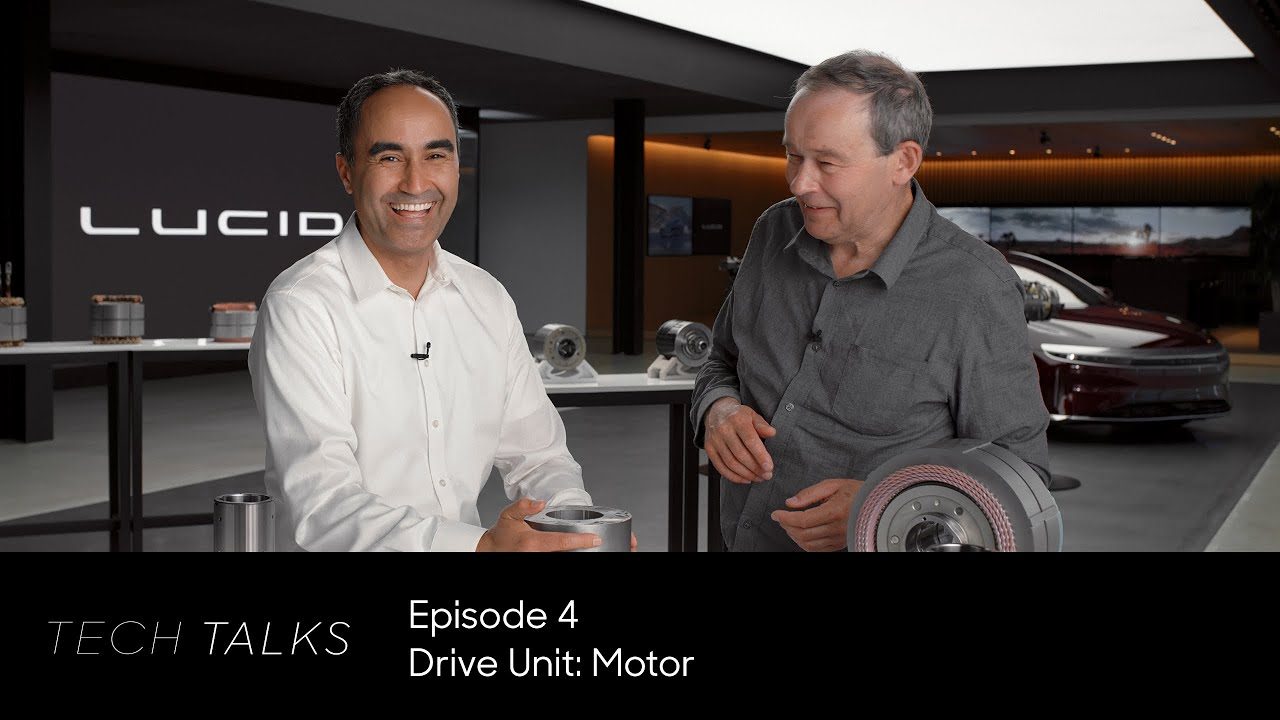
For those unfamiliar, Lucid pioneered a unique structural approach to building compact and efficient electric drive units. In most cases, an electric motor consists of an outside stator and an inside rotor, the latter of which spins. Many electric vehicles have solid rotors, but the inside of this structure doesn't actually produce much torque. Lucid miniaturized its drive unit by making the rotor donut-shaped and putting the differential inside. Since it doesn't experience wheel torque directly, this diff can be much smaller, lighter, and more efficient. This tiny differential drives two coaxial planetary gearsets, which drive the wheels. The 49:30 mark in this video from Lucid explains this very smart innovation better than I can via text:
General Motors' patent application takes this core differential concept and applies it to a slightly different system. Interestingly, the automaker is cagey in the document about explicitly saying it's putting a small differential inside of the rotor. In fact, the three-dimensional drawings provided with the patent omit both the electric motor and differential completely. The two-dimensional illustrations provided with the patent make it clear that's what's going on, though.
The only real hint in the document text that the differential sits inside the rotor happens near the end of the patent, where it's stated that it sits "upstream" from the rest of the geartrain. Other than that, no other mention of the differential or rotor in the text describes their nested nature.

In the diagram, 301 is the rotor, 501 is the stator, and 600 is the differential.
To be clear, there are several differences between Lucid's drive unit and the one described in GM's patent. The first big difference is that GM's unit is not coaxial. The rotor, intermediate reduction gears, and axle outputs are all on different axes. GM's unit is likewise a locking differential. This means it could be used in a performance or off-road setting where locking the diff would be advantageous. Lucid's electric drive units do not have a mechanical locking feature, although the company's dual-motor drive units offer complex torque vectoring.
What do you think?
View
Comments
The crux of the patent is that this new design would be compact and extremely efficient, which is naturally the same concept Lucid is chasing. The document claims that "In certain embodiments, the drive unit architecture described herein provides for up to 95% efficiency." That's very impressive, if its true.
Until such a drive unit is released—this is just a patent, after all—we won't know if GM actually plans to do anything with this design. It's an appealing unit on paper, if not quite so theoretically compact as Lucid's, and chasing efficiency is everything for automakers building EVs.

Get the best news, reviews, columns, and more delivered straight to your inbox, daily.
back
Subscribe For more info, read our Privacy Policy & Terms of Use.
More Electric Tech
How the Corvette E-Ray and Porsche 911 Do Hybridization Differently
GM's Novel Axial Flux Motor Could Be Key to Smaller, Cheaper EVs
We want your opinion!
What would you like to see on Motor1.com?
Take our 3 minute survey.
- The Motor1.com Team
Share this Story
- (https://twitter.com/intent/tweet?url=https%3A%2F%2Fwww.motor1.com%2Fnews%2F739460%2Fgm-lucid-drive-unit-patent%2F&text=It%20Sure%20Looks%20Like%20GM%20Is%20Copying%20Lucid%27s%20Homework&via=motor1com)
- copy
GO TO COMMENTS
(
)
Got a tip for us? Email: tips@motor1.com
View all comments ( )
Popular
BYD Better Watch Out: Koenigsegg Is Still Chasing A 330-MPH Jesko Run
12 Underrated Performance Cars That Nobody Bought
Honda Shows Several New Hybrids Under Covers, Details All-New Modular Platform
Driven: New Audi Q7 And SQ7 Bring The Power And The Tech
Infiniti's New Manual Sports Sedan Could Bring Back A Beloved Name
Latest Stories
- All-Season Vs All-Weather Tires: What’s The Difference? Nov 23 - Motor101 -
- I Designed My Dream Ferrari 296 Challenge Stradale. It's Ridiculous Nov 23 - Design -
- Apple CarPlay Problems Are Annoying. Here's How To Fix Them Nov 23 - Motor101 -
- Infiniti's New Manual Sports Sedan Could Bring Back A Beloved Name Nov 23 - Rumors -
- 12 Underrated Performance Cars That Nobody Bought Nov 23 - Lists -
- Hyundai Isn't Giving Up On Sedans Nov 23 - Manufacturing / Production -
- This Corvette Sat Abandoned For 25 Years. Then It Got Its First Deep Clean Nov 23 - Classics -
RECOMMENDED FOR YOU
Volkswagen Secures ID. UP Name As New Electric City Car Takes Shape
All-Season Vs All-Weather Tires: What’s The Difference?
Lamborghini Trademarks Two Outlandish Names, Hinting At Its Next Supercars
I Designed My Dream Ferrari 296 Challenge Stradale. It's Ridiculous
Jaguar May Already Have A Name For Its Next Car
Apple CarPlay Problems Are Annoying. Here's How To Fix Them
Sony Wants Your Car To Smell Like Whatever Ad You're Driving Past