Home
Features
Motor101
Your Car's Front And Rear Tires May Need Different Pressure. Here's Why
Different pressures aren't a mistake. Automakers fine-tune each axle for weight distribution, handling, safety, and everyday driving.
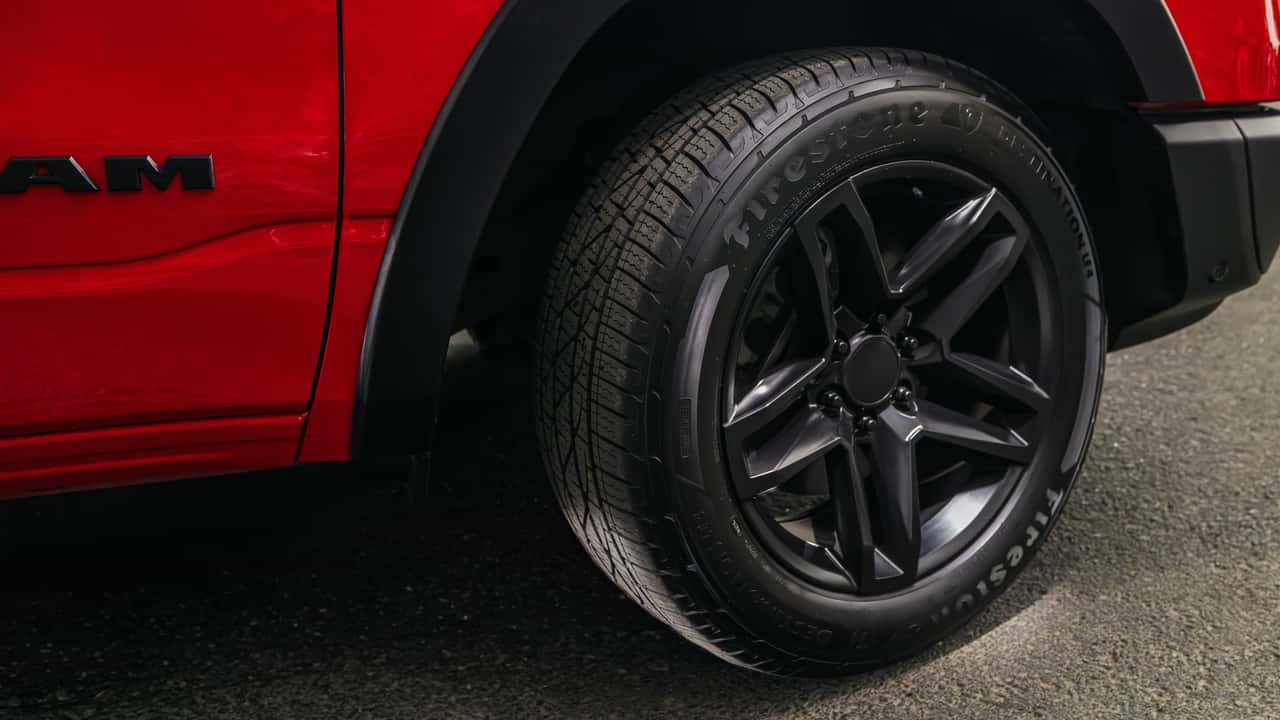
Photo by: Firestone
Dan Mihalascu 
By: Dan Mihalascu
Nov 28, at 6:00pm ET
Add Motor1.com as a preferred source in Google
- (https://twitter.com/intent/tweet?url=https%3A%2F%2Fwww.motor1.com%2Ffeatures%2F816977%2Fwhy-front-and-rear-tires-need-different-pressure%2F&text=Your%20Car%27s%20Front%20And%20Rear%20Tires%20May%20Need%20Different%20Pressure.%20Here%27s%20Why&via=motor1com)
- copy
Share
Comment
Checking tire pressure is one of the simplest maintenance tasks drivers can perform, but there's a detail that often catches people off guard: the recommended pressure is not always the same for all four tires. Some vehicles call for higher pressure in the front tires, while others require more air in the rear. It might seem like an arbitrary decision by the automaker, but there's a good reason behind it.
Tire pressure plays a major role in how a vehicle handles, brakes, carries weight, and wears its tires. Engineers consider everything from weight distribution and suspension geometry to passenger capacity when determining the correct pressures. Using the same pressure at all four corners when the manufacturer specifies otherwise can affect how a vehicle behaves, even if the difference seems small.
Front And Rear Tires Don't Always Carry The Same Weight
One of the biggest reasons for different tire pressure recommendations is weight distribution, Michelin notes. In many front-engine vehicles, the engine, transmission, and other major components sit toward the front axle. This means the front tires carry a larger share of the vehicle's weight, particularly when the car is stationary or carrying only its driver.
More weight pressing down on a tire means its structure has to support a greater load. Increasing inflation pressure helps the tire carry that weight without excessive sidewall deflection. That's why some vehicles specify higher pressure for the front tires.
However, not every vehicle is front-heavy. Rear-engine cars, mid-engine sports cars, and some electric vehicles can have very different weight distributions. In those cases, the rear tires may require more pressure than the front ones.
Tire Pressure Also Affects Handling And Stability
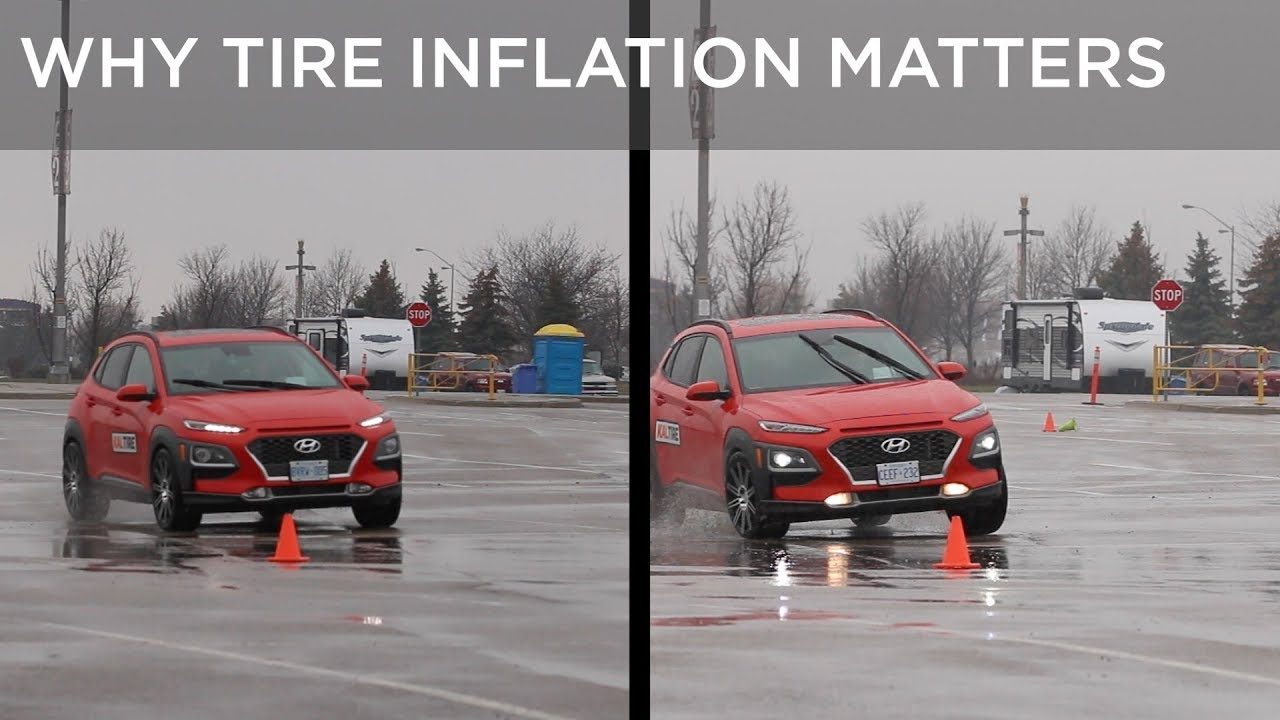
Automakers don't choose tire pressures based on weight alone. They also consider how the vehicle behaves during cornering, braking, and sudden maneuvers. Tire pressure affects the shape of the contact patch, the tire's sidewall stiffness, and how it responds to steering inputs.
A vehicle's front and rear tires have different jobs. The front tires generally handle steering and a large share of braking forces, while the rear tires help maintain stability and follow the vehicle's direction. Engineers can use different pressures to fine-tune how each axle responds.
Incorrect pressure can upset that balance. Underinflated tires tend to flex more, generate additional heat, and respond less precisely. Overinflated tires can become stiffer and may provide less consistent grip, depending on the tire and conditions.
The effects aren't always immediately noticeable during everyday driving, but they can become more important during emergency maneuvers or when the vehicle is heavily loaded.
Passenger And Cargo Loads Can Change The Recommended Pressure
A car's weight distribution is not fixed. Adding passengers, luggage, or equipment can significantly increase the load on the rear axle, especially in sedans, SUVs, and hatchbacks.
That's why some manufacturers provide separate pressure recommendations for normal driving and fully loaded conditions. Depending on the vehicle, the recommended pressures may change when carrying:
- Several passengers: Additional occupants increase the load on the suspension and tires, particularly at the rear.
- Heavy luggage: A fully loaded trunk or cargo area puts extra weight over the rear axle.
- Towing equipment: A trailer adds substantial load and can change how weight is distributed across the vehicle.
- Roof cargo: Roof boxes and other equipment increase overall vehicle weight and raise the center of gravity.
Some vehicles require higher rear tire pressure when fully loaded, while others specify different adjustments depending on the axle and tire setup. Drivers should always consult the owner's manual or tire information placard rather than guessing.
Some vehicles also have different recommendations depending on the wheel and tire combination. Larger wheels, different tire sizes, and performance-oriented setups can all influence the manufacturer's specifications. Drivers should therefore avoid assuming that the pressure listed for one trim level or wheel option applies to every version of the same model.
The Wrong Tire Pressure Can Cause Uneven Wear And Reduce Safety
Incorrect inflation affects more than ride comfort. It can also shorten tire life and compromise vehicle safety.
Underinflation generally causes increased wear along the outer shoulders of the tread, while overinflation can accelerate wear in the center. These patterns aren't universal diagnostic rules, since alignment, suspension condition, and driving habits also affect tire wear, but they can provide useful clues.
Low pressure also increases rolling resistance, which can reduce fuel economy or electric vehicle range. More importantly, excessive tire flexing generates heat, increasing the risk of tire failure, particularly at highway speeds or under heavy loads.
Running the front and rear tires at the same pressure when the manufacturer specifies different values can therefore create an imbalance that affects handling, tire wear, and efficiency.
Drivers Are Often Confused By Different Front And Rear Tire Pressures
Different tire pressure recommendations can be confusing, even for experienced drivers. In one r/tires discussion, a car owner wondered whether a front-wheel-drive vehicle should have higher pressure in its front tires because they carry more weight. Other users recommended starting with the figures on the driver's door-jamb sticker rather than guessing based on the drivetrain.
Another Reddit discussion highlighted a common misconception about tire pressure. A driver questioned a mechanic's advice after being told not to follow the different front and rear pressures listed by the manufacturer. Several commenters pointed out that the numbers on a tire's sidewall indicate its maximum pressure, not the recommended setting for a particular vehicle.
A particularly interesting r/MechanicAdvice thread involved a Honda Civic whose front tires had been inflated to 52 PSI, despite the door sticker recommending 33 PSI at the front and 32 PSI at the rear. The discussion highlighted why blindly inflating tires to a higher pressure can be a mistake. Ultimately, these conversations reinforce a simple rule: follow the vehicle manufacturer's recommendations.a
The Correct Pressure Is On The Door Sticker, Not The Tire Sidewall
The easiest way to find the correct tire pressure is to check the vehicle's tire information placard. It's usually located on the driver's door jamb, although some manufacturers place it inside the fuel-filler flap or elsewhere in the vehicle. The owner's manual also provides the recommended figures.
One important distinction is that the pressure printed on the tire's sidewall is not necessarily the recommended pressure for your car. That number generally refers to the maximum inflation pressure associated with the tire's rated load, not the automaker's preferred operating pressure, as NHTSA informs.
What do you think?
View
Comments
Check tire pressure when the tires are cold, ideally before driving or after the vehicle has been parked for several hours. Remember to account for changes in outside temperature, since air pressure drops as temperatures fall and rises as they climb.
Ultimately, different front and rear pressure recommendations aren't a manufacturing quirk. They're part of how automakers tune a vehicle to carry its weight, maintain stability, and deliver predictable handling. Following those figures is a simple way to keep your tires working as intended.
More From Motor101
 What Happens To Concept Cars After The Auto Show Is Over? Sadly, Not All Of Them Survive
Android Auto Keeps Disconnecting? Here's What Might Be Wrong
Why The 24 Hours Of Le Mans Is Exactly 24 Hours Long
Volvo Invented The Modern Seatbelt. Then Gave Away The Idea For Free
We want your opinion!
What would you like to see on Motor1.com?
Take our 3 minute survey.
- The Motor1.com Team
Share this Story
- (https://twitter.com/intent/tweet?url=https%3A%2F%2Fwww.motor1.com%2Ffeatures%2F816977%2Fwhy-front-and-rear-tires-need-different-pressure%2F&text=Your%20Car%27s%20Front%20And%20Rear%20Tires%20May%20Need%20Different%20Pressure.%20Here%27s%20Why&via=motor1com)
- copy
GO TO COMMENTS
(
)
Got a tip for us? Email: tips@motor1.com
View all comments ( )
Popular
12 Underrated Performance Cars That Nobody Bought
The On-Again-Off-Again TVR Griffith Is Back
This Massive Off-Road Camper Has a Washing Machine. And Two Kitchens
What Happens To Concept Cars After The Auto Show Is Over?
BBC Wanted Richard Hammond Back On Top Gear. He Refused
Latest Stories
- Your Car's Front And Rear Tires May Need Different Pressure. Here's Why Nov 28 - Motor101 -
- Where Did BMW's Iconic Kidney Grille Come From? Nov 28 - Motor101 -
- A Car Dealer Spent 40 Years Collecting Muscle Cars. Now He's Ready To Sell Nov 28 - Classics -
- Michelin's Winter Tires Were Put To The Test. The Results Reveal Some Surprising Differences Nov 28 - Tires -
- This Massive Off-Road Camper Has A Washing Machine. And Two Kitchens Nov 28 - Motorhomes -
- Jeep Wrangler Rubicon Vs Ford Bronco Badlands: Which Off-Roader Is Actually Better? Nov 27 - Comparisons -
- Michael Schumacher’s Porsche Carrera GT Is Going to Auction With A Remarkable Paper Trail Nov 27 - For Sale -
RECOMMENDED FOR YOU
Where Did BMW's Iconic Kidney Grille Come From?
A Car Dealer Spent 40 Years Collecting Muscle Cars. Now He's Ready To Sell
Android Auto Keeps Disconnecting? Here's What Might Be Wrong
Michelin's Winter Tires Were Put To The Test. The Results Reveal Some Surprising Differences
What Happens To Concept Cars After The Auto Show Is Over? Sadly, Not All Of Them Survive
This Massive Off-Road Camper Has A Washing Machine. And Two Kitchens
Volvo Invented The Modern Seatbelt. Then Gave Away The Idea For Free