Home
Features
Motor101
Why The 24 Hours Of Le Mans Is Exactly 24 Hours Long
Born to prove vehicle reliability, this legendary endurance race pushes drivers, engines, and engineering to their absolute limits.
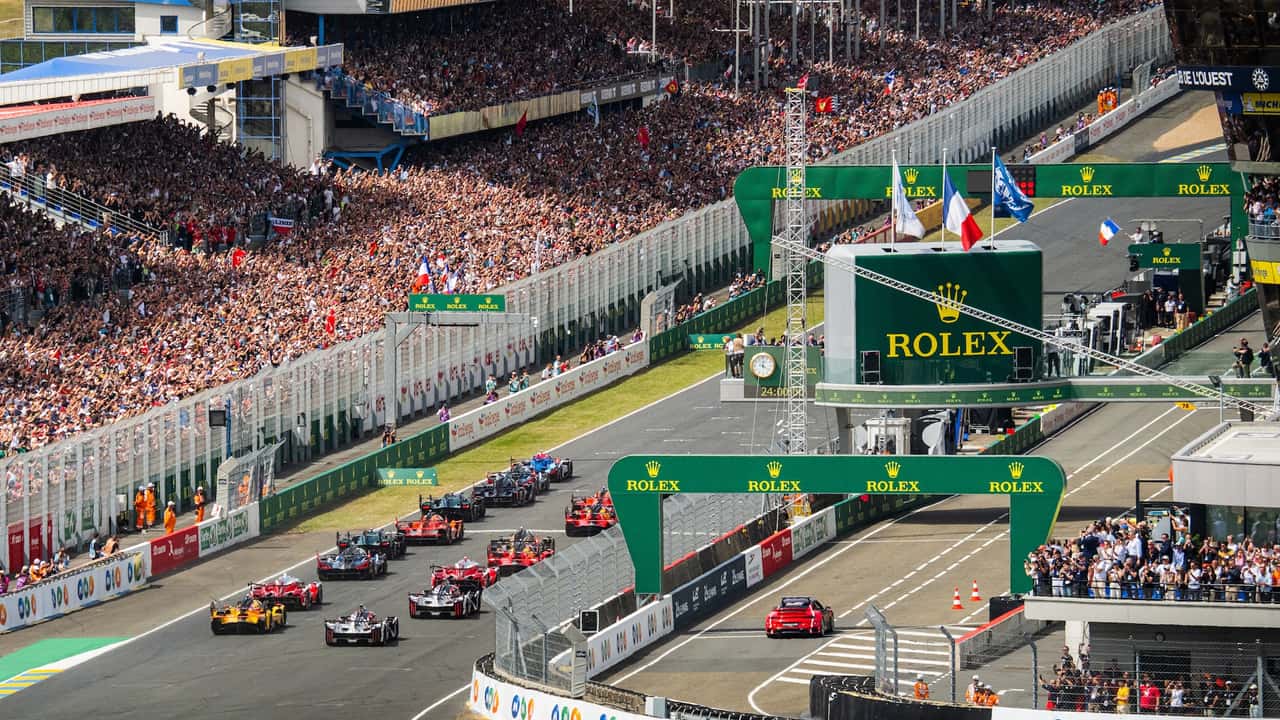
Photo by: Genesis
Dan Mihalascu 
By: Dan Mihalascu
Nov 25, at 7:00am ET
Add Motor1.com as a preferred source in Google
- (https://twitter.com/intent/tweet?url=https%3A%2F%2Fwww.motor1.com%2Ffeatures%2F816610%2Fwhy-le-mans-cars-have-to-run-for-24-hours%2F&text=Why%20The%2024%20Hours%20Of%20Le%20Mans%20Is%20Exactly%2024%20Hours%20Long&via=motor1com)
- copy
Share
Comment
The 24 Hours of Le Mans is one of the toughest challenges in motorsport, and its name tells you exactly why. Unlike Formula 1 or most other racing series, where drivers compete over a predetermined number of laps or a relatively short period, Le Mans asks teams to keep their cars running for an entire day and night.
The objective is simple: cover as much distance as possible in 24 hours without suffering a mechanical failure or making costly mistakes. But why 24 hours? Why not 12, eight, or even 48? The answer goes back more than a century, when the Automobile Club de l'Ouest (ACO) wanted to create a race that would test more than just a car's outright speed.
Le Mans Was Created To Test Automotive Reliability
The 24 Hours of Le Mans dates back to 1923, when the Automobile Club de l'Ouest organized the inaugural Grand Prix d'Endurance on the Circuit de la Sarthe in France. The idea came from three men: ACO secretary general Georges Durand, automotive engineer and journalist Charles Faroux, and industrialist Émile Coquille.
At the time, automobile manufacturers were competing to demonstrate the quality and durability of their products. Rather than organizing another race focused primarily on speed, the organizers wanted an event that would push cars to their limits over an extended period.
The original proposal was actually for an eight-hour race, split between daytime and nighttime running. However, Durand suggested making it a full 24-hour competition. The idea was eventually accepted, and the first race took place on May 26-27, 1923, with 33 cars taking the start.
The challenge was designed to demonstrate that a car could do more than accelerate quickly or reach impressive top speeds. It had to withstand prolonged punishment, cover significant distances, and remain mechanically sound throughout the competition.
The 24-Hour Format Tests More Than Just Speed
Running a race for an entire day introduces challenges that simply don't exist in shorter competitions. At Le Mans, teams must balance outright performance with mechanical reliability, fuel consumption, tire wear, and the ability to complete repeated stints without encountering serious problems.
A car that is exceptionally fast over a few laps might not necessarily be competitive over 24 hours. Pushing an engine, transmission, brakes, and tires too hard can lead to mechanical failures that cost valuable time or force a retirement. Teams must manage several critical factors throughout the race:
- Engine and transmission reliability: Powertrains must withstand hours of continuous competition without suffering catastrophic failures.
- Fuel consumption: Teams need to balance speed with efficiency to minimize the time lost during pit stops.
- Tire wear: Drivers and engineers must manage tire performance across changing temperatures and weather conditions.
- Driver fatigue: Multiple drivers share the same car, making rest periods and consistent performance essential.
- Pit-stop strategy: Refueling, tire changes, repairs, and driver swaps must be completed efficiently.
That's why endurance racing is as much about consistency as outright speed. Teams need to find a pace that allows them to remain competitive without placing unnecessary stress on their machinery. Winning Le Mans is not simply about having the fastest car. It's about having a machine, a team, and a strategy capable of surviving an entire day of competition.
Racing Through The Night Makes Le Mans Even More Challenging
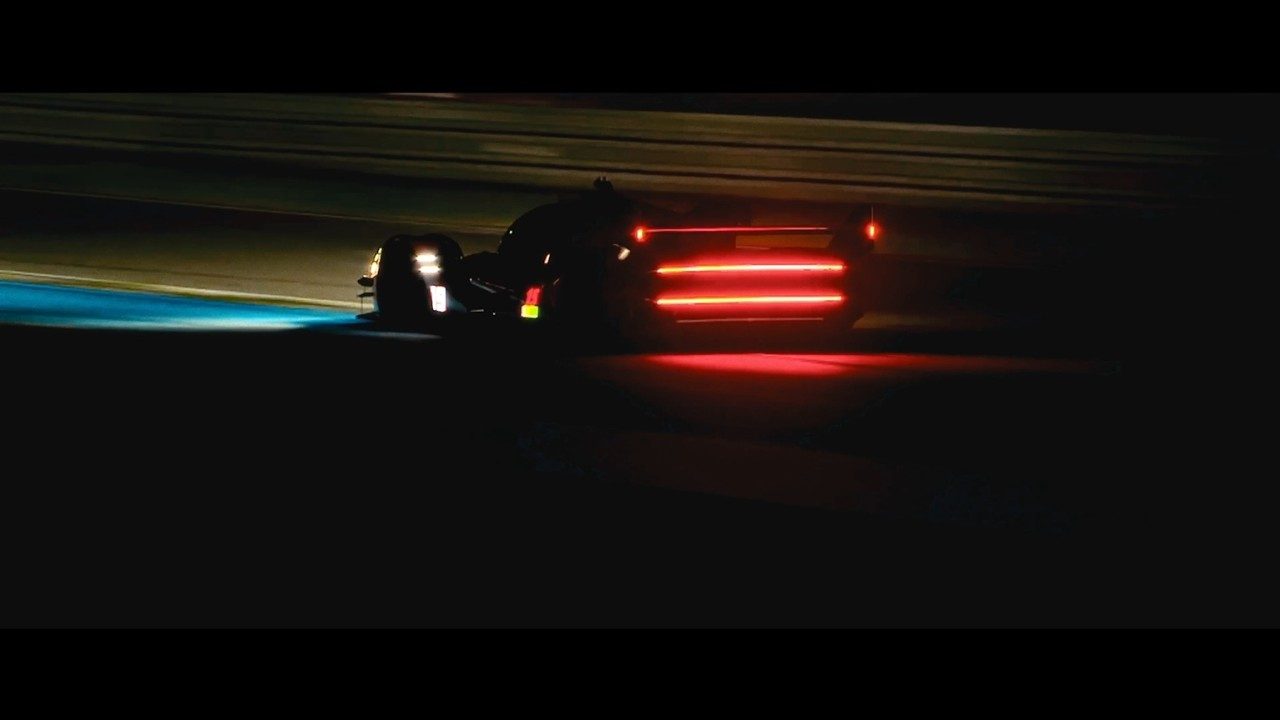
One of the most distinctive aspects of Le Mans is that the competition doesn't stop when the sun goes down. Cars continue racing through the night, forcing drivers to deal with reduced visibility, fatigue, changing temperatures, and different track conditions.
Nighttime running is particularly demanding because drivers must rely heavily on their headlights and judgment when approaching slower competitors. The Circuit de la Sarthe also features a combination of permanent race track sections and public roads, making it a unique environment for endurance competition.
Temperatures can drop significantly after sunset, affecting tire behavior and the way drivers approach their stints. Rain can make things even more complicated, particularly when different parts of the circuit experience different weather conditions.
Driver fatigue is another major concern. Although teams rotate between several drivers, everyone must remain focused and prepared for their next stint. A momentary lapse in concentration can result in an accident, potentially ending the team's race. These conditions are a major reason why Le Mans is considered a test of human endurance as well as automotive engineering.
The Race Helps Manufacturers Develop Better Cars
Although modern Le Mans prototypes and Hypercars are purpose-built racing machines, the event has maintained an important connection to automotive development.
When the race was established, one of its primary objectives was to demonstrate the reliability and quality of production cars. Over the decades, manufacturers have used endurance racing to explore improvements in aerodynamics, braking systems, engine efficiency, tire technology, and other areas of automotive engineering.
The ACO itself describes Le Mans as a technological laboratory, with innovation and reliability remaining central to its philosophy.
The competition has also evolved alongside the automotive industry. Hybrid powertrains have become part of the top-level competition, while manufacturers continue exploring more efficient technologies and alternative energy solutions.
Of course, not every innovation developed for a Le Mans prototype eventually appears in a road car. Modern racing regulations and specialized engineering requirements make direct comparisons difficult. However, the event still provides manufacturers with an opportunity to develop and evaluate technologies under extreme conditions.
What Do Motorsport Fans Think Makes Le Mans So Special?
Reddit discussions suggest that the 24 Hours of Le Mans is about much more than keeping a car running for an entire day. In a discussion on r/wec, fans revisited the original purpose of the event: testing whether automobiles could withstand 24 hours of continuous competition. That reliability challenge remains one of the biggest reasons the race has maintained its reputation.
Some motorsport fans also argue that Le Mans is particularly demanding because of the stress placed on the cars throughout the race. In a thread on r/motorsports, users highlighted the circuit's road sections, demanding driving conditions, and sustained engine load as factors that make the event such a difficult mechanical test.
Interestingly, the appeal of endurance racing is not limited to the engineering challenge. One Reddit user who watched their first 24-hour race described being surprised by how engaging the competition remained from the start through the final hour. That helps explain why Le Mans continues to attract fans who enjoy the strategy, unpredictability, and drama that shorter races don't always deliver.
Why Not Make Le Mans Shorter Or Longer?
The 24-hour format has become so closely associated with Le Mans that changing it would fundamentally alter the character of the event.
A shorter race would place less emphasis on long-term reliability, driver rotation, overnight performance, and endurance strategy. It would still be a demanding competition, but it wouldn't present the same combination of challenges that has defined Le Mans for more than a century.
A significantly longer race, meanwhile, would introduce additional logistical and financial challenges without necessarily improving the sporting spectacle. The 24-hour duration strikes a balance between testing the limits of automotive technology and creating a competition that spectators can follow over an entire day and night.
What do you think?
View
Comments
It's also an important part of the event's identity. Manufacturers, drivers, and fans understand what it means to win Le Mans: keeping a car competitive for 24 consecutive hours against some of the best teams in endurance racing.
Ultimately, Le Mans cars have to run for 24 hours because that's what the event was created to test. Speed might help a team take the lead, but reliability, consistency, engineering, and teamwork are what give it a chance of reaching the finish line.
More From Motor101
 Apple CarPlay Problems Are Annoying. Here's How To Fix Them
All-Season Vs All-Weather Tires: What’s The Difference?
Child Car Seats Expire Even If They Look Perfectly Fine. Here's Why
These 22 States Don't Require Front License Plates
We want your opinion!
What would you like to see on Motor1.com?
Take our 3 minute survey.
- The Motor1.com Team
Share this Story
- (https://twitter.com/intent/tweet?url=https%3A%2F%2Fwww.motor1.com%2Ffeatures%2F816610%2Fwhy-le-mans-cars-have-to-run-for-24-hours%2F&text=Why%20The%2024%20Hours%20Of%20Le%20Mans%20Is%20Exactly%2024%20Hours%20Long&via=motor1com)
- copy
GO TO COMMENTS
(
)
Got a tip for us? Email: tips@motor1.com
View all comments ( )
Popular
New York Bans Car Subscriptions For Features Your Car Already Has, With Exceptions
I Drove Porsche's Electric Boxster Prototype. It's Still A Driver's Car
12 Underrated Performance Cars That Nobody Bought
Toyota's Baby Land Cruiser Goes Full Off-Road Mode
Toyota Isn't Even Halfway Done Developing Its Mid-Engined Coupe
Latest Stories
- Why The 24 Hours Of Le Mans Is Exactly 24 Hours Long Nov 25 - Motor101 -
- The New Suzuki Ignis Is Another Cheap EV For Europe That America Isn't Getting Nov 25 - Green -
- Genesis GV90 Uses Two Different Infotainment Systems At Once Nov 25 - Technology -
- Toyota's Wild Hilux One-Off Is A Pickup That Forgot To Be A Truck Nov 25 - Concept Cars -
- US Road Deaths Drop To One Of Their Lowest Levels In History Nov 25 - Safety -
- Konnichiwa, Camry! Toyota Is Importing The Kentucky-Built Sedan Into Japan Nov 25 - Manufacturing / Production -
- Slate Truck’s 205-Mile Range Is The Bet That Could Redefine Affordable EVs Nov 25 - Range / Efficiency -
RECOMMENDED FOR YOU
How Does A Turbocharger Actually Make More Power?
The New Suzuki Ignis Is Another Cheap EV For Europe That America Isn't Getting
Your Engine Can't Do Its Job Without A Transmission
Genesis GV90 Uses Two Different Infotainment Systems At Once
No, BMW's Logo Isn't Actually An Airplane Propeller
Toyota's Wild Hilux One-Off Is A Pickup That Forgot To Be A Truck
All-Season Vs All-Weather Tires: What’s The Difference?