Home
Features
Motor101
Why Do Some Countries Drive On The Left Side Of The Road?
Why do the UK, Japan, and dozens of other countries drive on the left? The answer goes back centuries—and involves Napoleon.
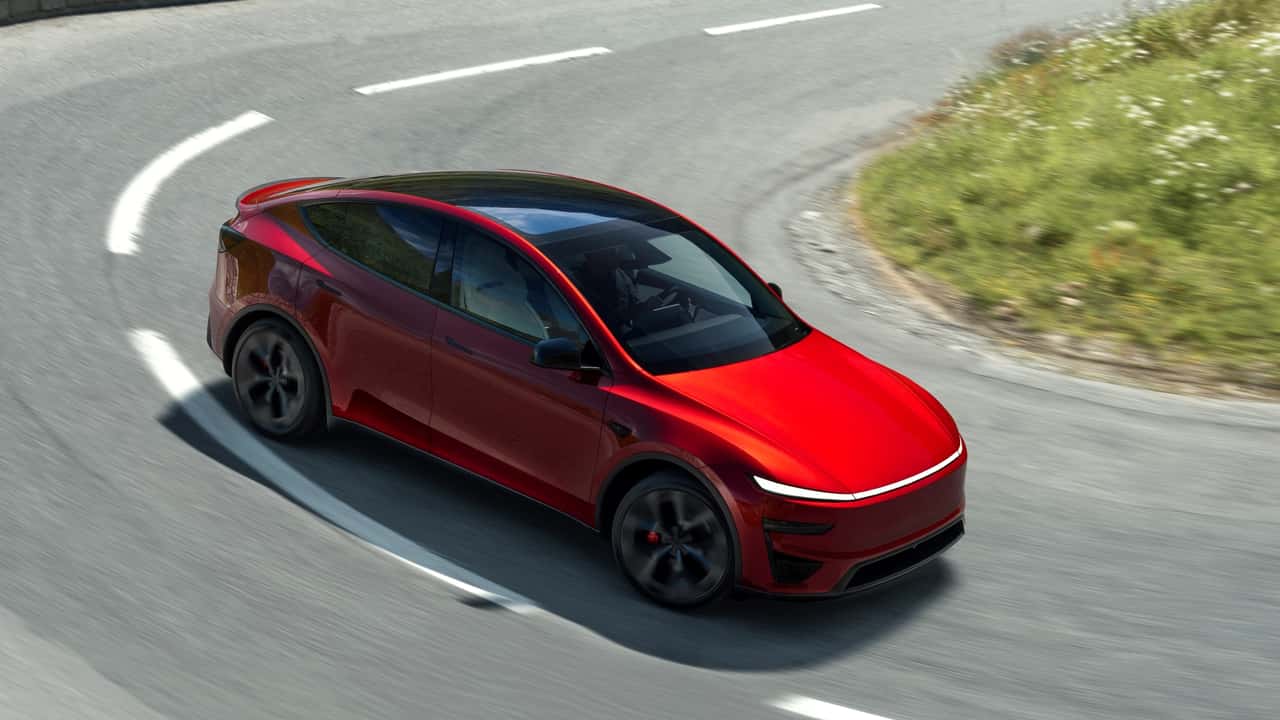
Photo by: Tesla
Dan Mihalascu 
By: Dan Mihalascu
Nov 21, at 1:00pm ET
Add Motor1.com as a preferred source in Google
- (https://twitter.com/intent/tweet?url=https%3A%2F%2Fwww.motor1.com%2Ffeatures%2F816206%2Fwhy-some-countries-drive-on-the-left-side-of-the-road%2F&text=Why%20Do%20Some%20Countries%20Drive%20On%20The%20Left%20Side%20Of%20The%20Road%3F&via=motor1com)
- copy
Share
Comment
Driving on the left side of the road might seem unusual to motorists who have spent their entire lives keeping right, but it's perfectly normal in dozens of countries around the world. From the United Kingdom and Australia to Japan and India, millions of drivers follow a traffic system that can feel completely backwards to visitors.
But the divide between left-hand and right-hand traffic is not a modern decision, nor was it created specifically for cars. Its roots go back centuries, to horseback travel, old European customs, military influence, and the expansion of empires. And while the automotive world has become increasingly globalized, these historical differences remain firmly in place today.
The Origins Of Left-Hand Traffic Go Back Centuries

The practice of keeping left dates back to a time when horses were the primary means of transportation. Historians commonly associate left-side travel with the fact that most people were right-handed. Keeping to the left allowed travelers to have their right hand closer to approaching strangers, which was useful in an era when carrying weapons and defending oneself wasn't unusual.
Horse riders also often mounted from the left side of the animal, making left-side positioning more practical when sharing narrow roads. Over time, these customs became established in parts of Europe, particularly in Britain, where left-side travel gradually became the accepted norm.
Long before cars appeared, people were already developing habits and rules about which side to use. When motor vehicles eventually arrived, they inherited road conventions that were centuries old.
Napoleon Helped Spread Right-Hand Traffic Across Europe
While Britain retained left-side traffic, much of continental Europe gradually adopted the opposite approach. The French Revolution is often associated with the shift toward right-hand traffic, as keeping right became linked to breaking with older aristocratic traditions. Napoleon Bonaparte subsequently helped spread the practice across territories conquered by his armies.
As French influence expanded, right-hand traffic became increasingly common throughout mainland Europe. Countries that were influenced by French rule, military campaigns, or neighboring road systems often adopted the same convention, although the history varied from nation to nation.
This is one of the major reasons Europe ended up divided between the two systems. Britain maintained its left-side tradition, while much of the continent standardized on driving to the right.
The British Empire Exported Left-Side Driving Around The World
Britain's influence extended far beyond Europe, and its road traditions traveled with it. As the British Empire expanded, left-hand traffic was adopted in many territories, some of which continued using it long after gaining independence. Today, dozens of countries still drive on the left, including:
- Ireland, which used to be an integral part of the United Kingdom from 1801 until gaining independence in 1922
- Australia and New Zealand, where British road traditions remain in place
- India and Pakistan, which retained left-side traffic after independence
- South Africa and Kenya, where left-hand driving remains standard
- Malaysia and Singapore, which also inherited British traffic conventions
- Thailand, due to strong British influence, even though it was never colonized by the British Empire
While British influence explains much of the global spread of left-side driving, not every country has the same story. Japan, for example, drives on the left despite never being a British colony. Its traffic customs developed through its own traditions, with British influence during modernization helping reinforce left-side conventions.
Some Countries Have Actually Switched Sides
Changing an entire country's traffic direction is a massive undertaking, but it has happened. Sweden is perhaps the most famous example, switching from left-hand traffic to right-hand traffic on September 3, 1967, in an event known as Dagen H. The transition required extensive planning, new road signs, public education, and coordination to ensure drivers could safely adapt overnight.
Samoa made a similar change in 2009, but in the opposite direction—from right to left. One of the main reasons was to make it easier for the country to import more affordable vehicles from markets such as Australia, New Zealand, and Japan, where right-hand-drive cars are common.
These changes show that traffic conventions aren't permanent, but switching requires a compelling reason. The financial cost, potential confusion, infrastructure adjustments, and safety risks make it a decision few governments would take lightly.
Drivers Weigh In On Why Countries Drive On The Left
Reddit discussions about left-side driving reveal just how much history influences modern road rules. In a thread on r/ExplainLikeImFive, users discuss the influence of horseback travel, Napoleon, and former colonial powers in shaping today's traffic systems.
Another recurring topic is why countries haven't standardized their roads. In discussions on r/NoStupidQuestions, users point to established infrastructure, vehicle imports, and the expense of changing an entire country's traffic system.
The practical challenges also come up. In a discussion about driving on the opposite side of the road, motorists share experiences adapting to unfamiliar traffic systems, with some finding the transition surprisingly easy and others struggling with unfamiliar roads and driving habits.
Why The World Still Hasn't Agreed On One Side
Standardizing traffic worldwide might seem like a logical idea, especially in an era of international travel and global vehicle manufacturing. However, changing sides would involve far more than asking motorists to drive differently. Entire road systems, intersections, signs, vehicles, public transport networks, and regulations are designed around a country's existing traffic direction.
Driving on the left or right is not inherently safer on its own. Road safety depends much more on driver behavior, speed management, road design, vehicle safety, and enforcement. Both systems can work effectively when drivers understand and follow the rules.
What do you think?
View
Comments
For countries that already have established traffic systems, the cost and disruption of switching sides would almost certainly outweigh the benefits of standardization. That's why a decision made centuries ago can still determine where a driver sits in a car, which lane they use, and how they navigate a roundabout today.
The next time you travel abroad and find yourself driving on the opposite side of the road, you're experiencing more than a different traffic rule. You're seeing history that has survived the horse, the carriage, the automobile, and the modern highway.
More From Motor101
 The Underside Of Your Car Can Make A Big Difference In Performance
Why Do Electric Cars Even Have Regenerative Braking?
Germany's Autobahn Has Some Rules That Might Surprise You
Running Out Of Gas Once Probably Won't Hurt Your Car. Making It A Habit Might
We want your opinion!
What would you like to see on Motor1.com?
Take our 3 minute survey.
- The Motor1.com Team
Share this Story
- (https://twitter.com/intent/tweet?url=https%3A%2F%2Fwww.motor1.com%2Ffeatures%2F816206%2Fwhy-some-countries-drive-on-the-left-side-of-the-road%2F&text=Why%20Do%20Some%20Countries%20Drive%20On%20The%20Left%20Side%20Of%20The%20Road%3F&via=motor1com)
- copy
GO TO COMMENTS
(
)
Got a tip for us? Email: tips@motor1.com
View all comments ( )
Popular
I Bought This Skoda 10 Years Ago. I Don't Think I'll Ever Sell It
BYD's Boxy SUV Banned In The EU After Land Rover Defender Copycat Ruling
What If Koenigsegg Had A Sterrato Fighter? Meet The Jesko Terrang
Audi Has 7 New Models Coming In 2027. Here's All Of Them
Latest Stories
- Why Do Some Countries Drive On The Left Side Of The Road? Nov 21 - Motor101 -
- I Bought This Skoda 10 Years Ago. I Don't Think I'll Ever Sell It Nov 21 - Opinion -
- This Chevy Engine's Timing Belt Should Last 150,000 Miles. A Teardown Says Otherwise Nov 21 - Engines -
- Most Drivers Have No Idea What The Little Switch Under Their Rearview Mirror Does Nov 21 - Motor101 -
- BYD's Boxy SUV Banned In The EU After Land Rover Defender Copycat Ruling Nov 21 - Corporate / Financial -
- Ram CEO: New Dakota Will Do 'Some Serious Fun Things' Nov 20 - Manufacturing / Production -
- Can You Drive An American Car In Europe? Yes, But It's Complicated Nov 20 - Motor101 -
RECOMMENDED FOR YOU
Most Drivers Have No Idea What The Little Switch Under Their Rearview Mirror Does
I Bought This Skoda 10 Years Ago. I Don't Think I'll Ever Sell It
Can You Drive An American Car In Europe? Yes, But It's Complicated
This Chevy Engine's Timing Belt Should Last 150,000 Miles. A Teardown Says Otherwise
How Does A Head-Up Display Actually Work?
BYD's Boxy SUV Banned In The EU After Land Rover Defender Copycat Ruling
The Underside Of Your Car Can Make A Big Difference In Performance