Home
Features
Features
Germany's Autobahn Has Some Rules That Might Surprise You
Despite its fame as a haven for speed junkies, Germany's Autobahn has strict rules and surprising restrictions to keep traffic safe.
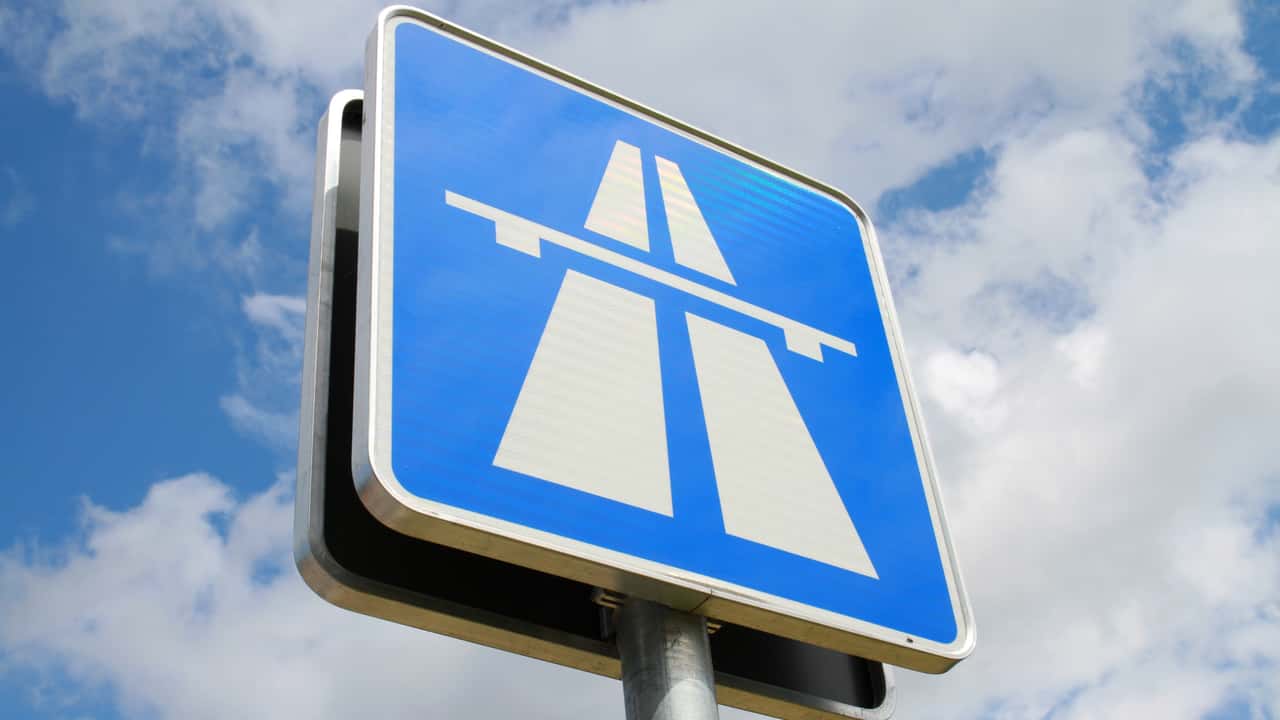
Photo by: Getty Images
Dan Mihalascu 
By: Dan Mihalascu
Nov 19, at 2:00pm ET
Add Motor1.com as a preferred source in Google
- (https://twitter.com/intent/tweet?url=https%3A%2F%2Fwww.motor1.com%2Ffeatures%2F816097%2Fhow-do-germanys-autobahns-really-work%2F&text=Germany%27s%20Autobahn%20Has%20Some%20Rules%20That%20Might%20Surprise%20You&via=motor1com)
- copy
Share
Comment
Germany's Autobahn is one of the most recognizable road networks in the world, and for good reason. It's famous for stretches where drivers can legally travel well beyond the speed limits found on highways in most other countries. For car enthusiasts, the idea of driving a Porsche, BMW, or Mercedes-Benz on a public road without a general speed limit sounds almost too good to be true.
But there's considerably more to the Autobahn than putting your foot down and watching the speedometer climb. Germany's highway network operates under a specific set of rules covering speed recommendations, lane discipline, overtaking, traffic management, and emergency procedures. So, how does it actually work, and what should drivers know before experiencing it?
What Exactly Is The German Autobahn?
The Autobahn is Germany's federal motorway network, connecting major cities, industrial centers, and neighboring countries. With approximately 13,200 kilometers (8,202 miles) of roads, it's one of the largest motorway networks in Europe.
There are around 120 individual Autobahns, each identified by an A-number. The numbering system is not entirely random, either. Single-digit routes generally cover major cross-country journeys, while two-digit numbers identify other important regional and national connections. Three-digit numbers are typically assigned to shorter regional routes and connectors.
There's also a useful trick for understanding the numbering system: odd-numbered Autobahns generally run north to south, while even-numbered routes tend to run east to west.
Most Autobahns have at least two lanes in each direction, although major routes can have three or more. Interchanges, junctions, and dedicated acceleration and deceleration lanes help traffic move between different parts of the network.
Is There Really No Speed Limit On The Autobahn?

This is the part that attracts the most attention. Germany doesn't have a general speed limit for passenger cars on its Autobahns, meaning drivers can legally travel faster than 130 km/h (81 mph) on sections without a posted restriction.
However, that doesn't mean the entire network is unrestricted. Many sections have permanent or temporary speed limits, particularly around construction zones, tunnels, bridges, and heavily congested areas.
Germany also has an official recommended speed known as the Richtgeschwindigkeit, which is 130 km/h (81 mph). Drivers aren't legally required to stick to it on unrestricted sections, but exceeding it can have consequences if they're involved in an accident.
In certain circumstances, drivers traveling above the recommended speed can share liability even when another road user initially caused the collision. The idea is that higher speeds can make accidents harder to avoid and more severe.
It's also worth remembering that vehicles have different speed restrictions. For example, heavy goods vehicles over 3.5 tonnes and passenger cars towing trailers generally face an 80 km/h (50 mph) motorway limit, subject to specific exceptions.
Why The Left Lane Is Strictly For Overtaking
One of the biggest differences between driving on the Autobahn and driving on highways in many other countries is how seriously Germany enforces lane discipline. The basic principle is simple: keep right and use the left lane to overtake. Drivers shouldn't cruise in the left lane when the right lane is available, even on sections with three or more lanes.
Overtaking on the right is generally prohibited, too, although limited exceptions exist in certain traffic conditions. Once you've passed a slower vehicle, you're expected to return to the right when it's safe to do so.
This system is particularly important on unrestricted sections, where vehicles can approach from behind at considerably higher speeds than drivers might expect.
It's also why checking mirrors and blind spots before changing lanes is essential. Moving into the left lane without properly judging the speed of approaching traffic can create a dangerous situation.
How Does The Autobahn Handle Traffic Jams And Emergencies?
Despite its reputation for high-speed driving, the Autobahn is not immune to congestion. Accidents, roadworks, and holiday traffic can bring even the fastest sections to a standstill.
Germany has a specific system for dealing with emergency vehicles called the Rettungsgasse, or emergency corridor. Whenever traffic slows to walking pace or comes to a standstill on a road with at least two lanes in one direction, drivers must create a clear passage for emergency services. The rules are straightforward:
- Vehicles in the far-left lane must move as far left as possible.
- Vehicles in all other lanes must move as far right as possible.
- The emergency corridor must remain between the leftmost lane and the lane immediately to its right.
- The hard shoulder must remain available for its intended use and shouldn't be used as a substitute emergency corridor.
The system allows ambulances, police cars, and fire engines to reach accident scenes without having to wait for every vehicle to move individually.
Drivers also aren't allowed to stop, reverse, or turn around on the Autobahn simply because they've encountered congestion or missed an exit. The hard shoulder is reserved for genuine emergencies and breakdowns.
What Do Drivers Really Think Of Germany's Autobahn?
Reddit discussions suggest that the Autobahn's biggest surprise for foreign drivers is not necessarily the lack of speed limits, but how seriously Germans take lane discipline. In a popular r/germany discussion about the written and unwritten Autobahn rules, drivers highlighted the importance of keeping right, overtaking on the left, and checking mirrors carefully before changing lanes.
Speed limits are another source of confusion. In a discussion about whether drivers routinely ignore posted restrictions, one newcomer described feeling pressured to drive faster than the signed limit, particularly in construction zones. Meanwhile, an American visitor sharing their experience driving in Germany was impressed by how consistently drivers moved into the right lane and slowed down around construction sites and tunnels.
Not every experience is positive, however. A particularly heated Reddit discussion about Autobahn tailgating highlighted the frustration some drivers feel when faster motorists follow too closely at high speeds. It's a useful reminder that while unrestricted sections offer plenty of freedom, the Autobahn still depends on anticipation, patience, and cooperation between drivers.
Does It Cost Money To Drive On The Autobahn?
Here's another interesting detail: unlike many European motorway networks, Germany doesn't charge private passenger-car drivers a general Autobahn toll.
That means you can drive your own car across much of the country without purchasing a motorway vignette or paying a distance-based highway fee. There are some exceptions involving individually tolled tunnels and private roads, but there's no general passenger-car Autobahn toll.
Commercial vehicles are a different story. Since July 2024, vehicles intended or used for road freight with a technically permissible maximum mass exceeding 3.5 tonnes have been subject to Germany's truck toll system on federal motorways and highways. The toll is calculated using factors including distance traveled, vehicle weight, emissions, and other vehicle characteristics.
What do you think?
View
Comments
So, while private motorists can enjoy much of Germany's motorway network without paying a general usage fee, freight operators have to account for road charges as part of their operating costs.
Ultimately, the Autobahn is much more than a place where drivers can legally travel at 150 mph. It's a carefully regulated motorway system that combines unrestricted-speed sections with strict rules governing overtaking, traffic flow, and road safety. And that's what makes Germany's approach to highway driving so fascinating.
More From Motor101
 Cupholders In Cars Weren't Always A Thing
Running Out Of Gas Once Probably Won't Hurt Your Car. Making It A Habit Might
What Actually Happens When You Press Your Car's Brake Pedal?
America's Speed Limits Make No Sense
We want your opinion!
What would you like to see on Motor1.com?
Take our 3 minute survey.
- The Motor1.com Team
Share this Story
- (https://twitter.com/intent/tweet?url=https%3A%2F%2Fwww.motor1.com%2Ffeatures%2F816097%2Fhow-do-germanys-autobahns-really-work%2F&text=Germany%27s%20Autobahn%20Has%20Some%20Rules%20That%20Might%20Surprise%20You&via=motor1com)
- copy
GO TO COMMENTS
(
)
Got a tip for us? Email: tips@motor1.com
View all comments ( )
Popular
The Volkswagen T-Roc R Is Officially Back, And It's More Than A Golf R On Stilts
2027 Hyundai Elantra Is Bigger, More Powerful, And Gets Up To 53 MPG
Scout Still Has Plenty To Prove. But Its Comeback Is Starting To Feel Very Real
We Played GTA 6. It's A Car Lover's Paradise
Lamborghini's New 907-HP Spyder Has A Roof That Actually Improves Handling
Latest Stories
- Germany's Autobahn Has Some Rules That Might Surprise You Nov 19 - Features -
- Genesis G80 And GV80 Finally Go Hybrid, With Over 500 Miles Of Range Nov 19 - Los Angeles Auto Show -
- 2027 Hyundai Elantra Is Bigger, More Powerful, And Gets Up To 53 MPG Nov 19 - Los Angeles Auto Show -
- We Played GTA 6. It's A Car Lover's Paradise Nov 19 - Video games -
- Porsche's Legendary 550 Spyder Gets A Tiny Electric Reboot. It Costs $92,000 Nov 19 - Toys -
- Scout Still Has Plenty To Prove. But Its Comeback Is Starting To Feel Very Real Nov 19 - State of Motion -
- This Eight-Wheeled Off-Roader Drives On Land And Water. And You Can Buy It Nov 19 - For Sale -
RECOMMENDED FOR YOU
Cadillac XT6 Is Returning, And It Won't Be An EV. Here's Everything We Know
Genesis G80 And GV80 Finally Go Hybrid, With Over 500 Miles Of Range
12 Cars That Should Easily Make It To 250,000 Miles
2027 Hyundai Elantra Is Bigger, More Powerful, And Gets Up To 53 MPG
Dodge Is Back In NASCAR After 14 Years. Here's Everything We Know
We Played GTA 6. It's A Car Lover's Paradise
12 Crossovers That Are Surprisingly Good At Off-Roading