Home
Features
Features
Why Do Electric Cars Even Have Regenerative Braking?
Electric cars can turn slowing down into extra driving range. Here's how regenerative braking works and why EV owners love it.
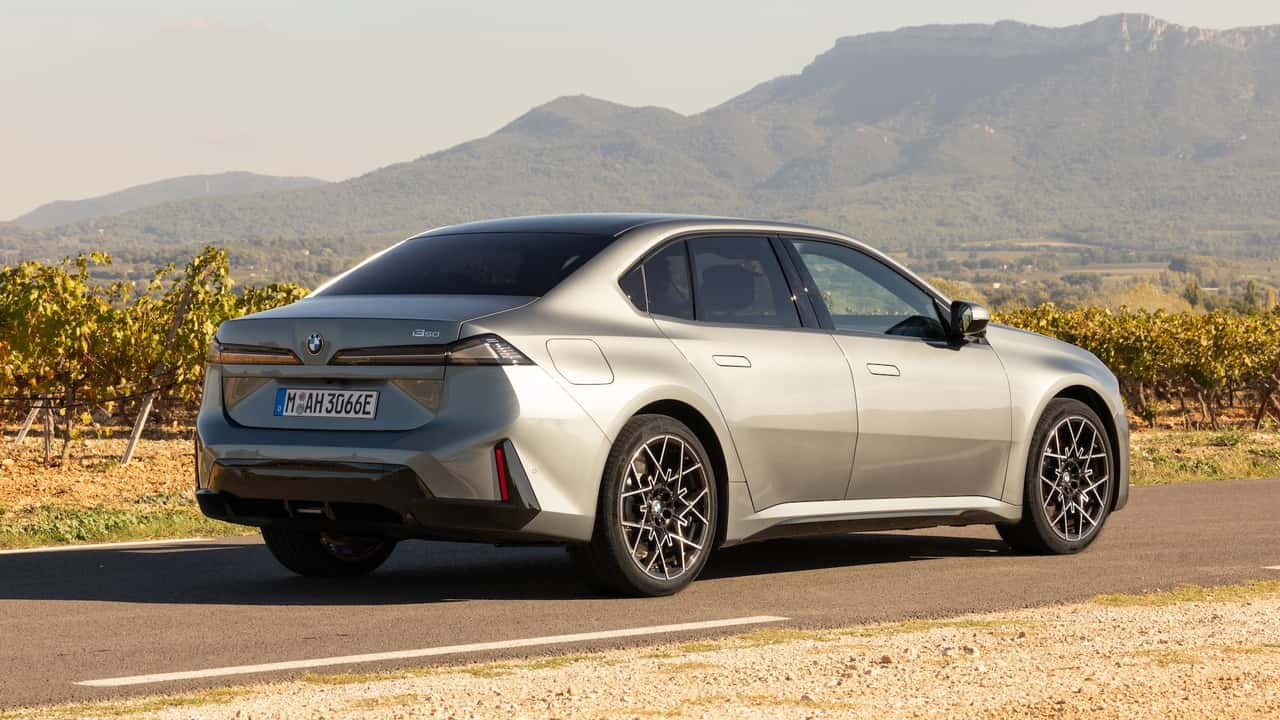
Photo by: BMW
Dan Mihalascu 
By: Dan Mihalascu
Nov 19, at 7:00pm ET
Add Motor1.com as a preferred source in Google
- (https://twitter.com/intent/tweet?url=https%3A%2F%2Fwww.motor1.com%2Ffeatures%2F816050%2Fwhy-do-electric-cars-have-regenerative-braking%2F&text=Why%20Do%20Electric%20Cars%20Even%20Have%20Regenerative%20Braking%3F&via=motor1com)
- copy
Share
Comment
Electric cars are known for their instant acceleration, quiet operation, and impressive efficiency, but one of their most clever features is hiding in plain sight. Every time an EV slows down, it has the potential to recover some of the energy that would otherwise be wasted as heat. That's thanks to regenerative braking, a technology that helps electric cars go farther without requiring any extra energy from the charger.
Unlike conventional cars, which lose most of their momentum when the driver hits the brakes, electric vehicles can turn slowing down into an opportunity to recharge their batteries. It's one of the reasons EVs are particularly efficient in city traffic, where frequent stops and starts are unavoidable. But how exactly does regenerative braking work, and why can't electric cars recover all the energy they lose?
Regenerative Braking Turns the Motor Into a Generator
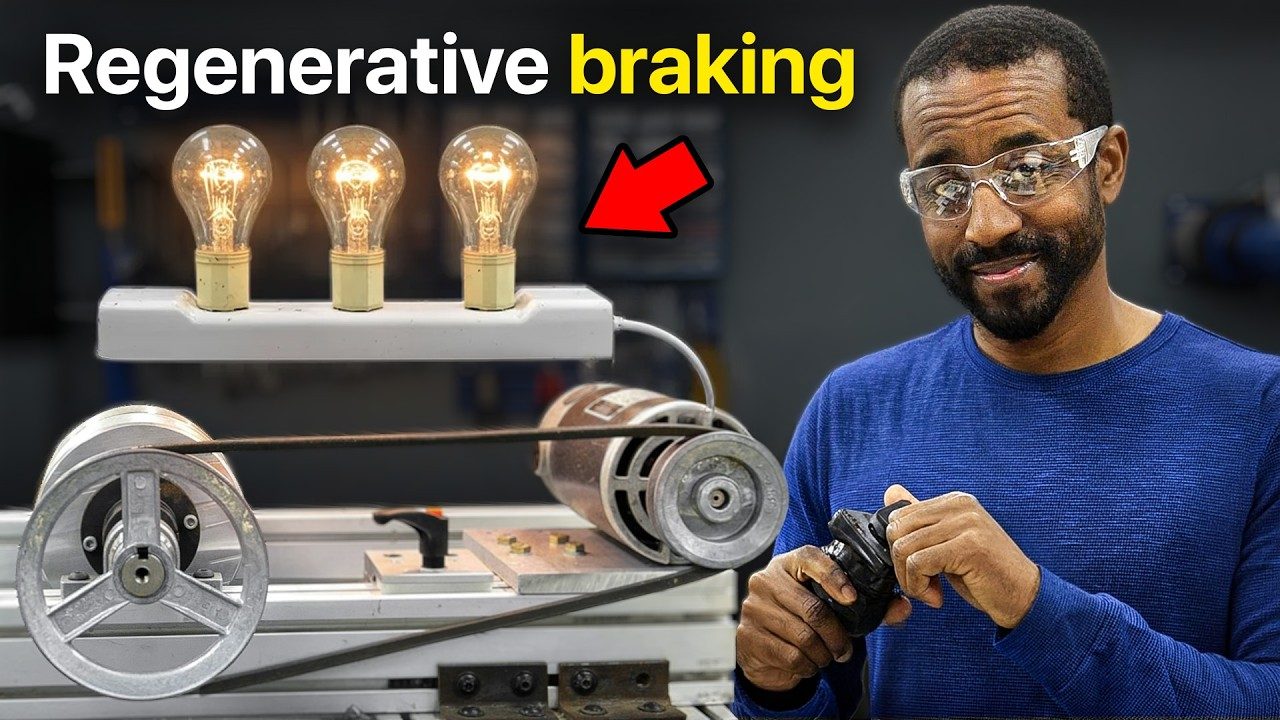
In a conventional car, braking relies on friction. Brake pads press against rotating discs, slowing the wheels and converting kinetic energy into heat that dissipates into the atmosphere. It's an effective way to stop a vehicle, but the energy used to get the car moving is largely wasted every time the driver brakes.
Electric cars approach this differently. When the driver lifts off the accelerator or applies the brakes, the electric motor can reverse its role. Instead of consuming electricity to spin the wheels, it uses the wheels' motion to generate electricity. That electricity is sent back to the battery, where it can be stored and used later to power the vehicle.
This process is called regenerative braking, and it essentially allows an EV to recycle some of the energy it uses to accelerate. It doesn't eliminate energy losses, but it makes driving more efficient by recovering energy that would otherwise be wasted.
It Makes Electric Cars More Efficient In City Traffic
Regenerative braking is particularly useful in urban environments. City driving involves frequent traffic lights, intersections, congestion, and speed changes, all of which require drivers to repeatedly slow down. In a gasoline-powered car, those situations mean wasting energy through friction braking. In an EV, they create opportunities to recover some of that energy.
The same principle applies when driving downhill. Instead of relying entirely on conventional brakes to control speed, an electric car can use its motor to slow down while sending electricity back to the battery. Depending on the slope, speed, and battery condition, the vehicle can recover a meaningful amount of energy during a descent.
That's one reason electric vehicles can be remarkably efficient in stop-and-go traffic compared with cruising at highway speeds. While highway driving offers fewer opportunities for regenerative braking, urban driving allows the system to work repeatedly throughout a journey.
One-Pedal Driving Makes The Experience Different
Many electric vehicles allow drivers to adjust the intensity of regenerative braking, changing how the car behaves when they release the accelerator. Some models offer gentle deceleration, while others can slow down quite aggressively without the driver touching the brake pedal.
With stronger regenerative braking, drivers can often control acceleration and deceleration using a single pedal. Pressing it accelerates the vehicle, while easing off slows it down. This is commonly known as one-pedal driving, and some EVs can even come to a complete stop this way.
For drivers new to electric cars, the sensation can take some getting used to. However, once mastered, one-pedal driving can make commuting less tiring, especially in traffic. It also encourages smoother driving, as anticipating traffic and gradually releasing the accelerator can help maximize energy recovery.
Regenerative Braking Has Its Limits
Although regenerative braking is useful, it cannot replace conventional brakes entirely. Electric cars still use brake pads and discs, and the vehicle automatically combines regenerative and friction braking when additional stopping power is needed or energy recovery is limited.
Regeneration can also become less effective under certain conditions, including:
- A fully charged battery: There may be little room to store recovered energy.
- Cold battery temperatures: The battery may not be able to accept energy efficiently until it warms up.
- Hard or emergency braking: Friction brakes may be needed to provide the required stopping force.
- Very low speeds: Regenerative braking may weaken near a complete stop, depending on the vehicle.
- Slippery roads: The system may reduce regeneration to help maintain traction and stability.
Drivers may notice that regenerative braking feels weaker on cold mornings or after charging the battery to 100%. This is normal behavior, and the car's braking system is designed to compensate when energy recovery is not available.
EV Owners Don't Agree That More Regen Is Always Better
EV owners on Reddit have mixed opinions about regenerative braking, particularly when it comes to one-pedal driving. While some drivers enjoy the convenience of slowing down simply by lifting off the accelerator, others prefer coasting, arguing that maintaining momentum can be more efficient than slowing down and recovering energy later.
Several discussions also highlight how personal preference plays a role. Some owners find strong regenerative braking more comfortable in traffic, while others say it takes time to adjust or can make driving less smooth for passengers. The debate over one-pedal driving and efficiency explores this question, while another thread examines regenerative braking versus coasting.
These discussions suggest regen is most beneficial when drivers use it thoughtfully rather than assuming maximum regenerative braking is always the most efficient approach. Ultimately, one-pedal driving is largely a matter of personal preference, as reflected in discussions about its efficiency and how it works.
It Can Reduce Brake Wear And Extend Driving Range
Regenerative braking doesn't just help EVs use less energy; it can also reduce wear on conventional braking components. Because the electric motor handles much of the routine slowing down, brake pads and discs may be used less frequently than in a comparable conventional car. That can mean fewer brake replacements over the vehicle's lifetime, although brake maintenance remains necessary.
What do you think?
View
Comments
The range benefit varies depending on how, where, and in what conditions the car is driven. Urban commuters who regularly slow down and accelerate may recover more energy than drivers spending most of their time on the highway. Even then, recovered energy is never a perfect return of what the vehicle spent moving in the first place.
Ultimately, regenerative braking is one of the technologies that makes electric cars fundamentally different from gasoline-powered vehicles. It turns deceleration into an opportunity, improves efficiency, and makes everyday driving a little smarter. It's not free energy, nor does it eliminate the need for conventional brakes, but it's a clever way of making the most out of every kilowatt-hour stored in an EV's battery.
More From Motor101
 Running Out Of Gas Once Probably Won't Hurt Your Car. Making It A Habit Might
America's Speed Limits Make No Sense
What Actually Happens When You Press Your Car's Brake Pedal?
Cupholders In Cars Weren't Always A Thing
We want your opinion!
What would you like to see on Motor1.com?
Take our 3 minute survey.
- The Motor1.com Team
Share this Story
- (https://twitter.com/intent/tweet?url=https%3A%2F%2Fwww.motor1.com%2Ffeatures%2F816050%2Fwhy-do-electric-cars-have-regenerative-braking%2F&text=Why%20Do%20Electric%20Cars%20Even%20Have%20Regenerative%20Braking%3F&via=motor1com)
- copy
GO TO COMMENTS
(
)
Got a tip for us? Email: tips@motor1.com
View all comments ( )
Popular
Scout Still Has Plenty To Prove. But Its Comeback Is Starting To Feel Very Real
2027 Hyundai Elantra Is Bigger, More Powerful, And Gets Up To 53 MPG
Genesis Hints At 'Performance Hybrids' As A Path Forward
This Modern Lancia Stratos Rendering Is Everything We Want
New Elantra N When? Hyundai Won't Move Away From Its 'Successful Formula'
Latest Stories
- Why Do Electric Cars Even Have Regenerative Braking? Nov 19 - Motor101 -
- New Elantra N When? Hyundai Won't Move Away From Its 'Successful Formula' Nov 19 - Los Angeles Auto Show -
- Genesis Hints At 'Performance Hybrids' As A Path Forward Nov 19 - Los Angeles Auto Show -
- GM Is Quietly Looking For Its Next CEO: Report Nov 19 - Corporate / Financial -
- This Modern Lancia Stratos Rendering Is Everything We Want Nov 19 - Design -
- Germany's Autobahn Has Some Rules That Might Surprise You Nov 19 - Features -
- Genesis G80 And GV80 Finally Go Hybrid, With Over 500 Miles Of Range Nov 19 - Los Angeles Auto Show -
RECOMMENDED FOR YOU
Germany's Autobahn Has Some Rules That Might Surprise You
New Elantra N When? Hyundai Won't Move Away From Its 'Successful Formula'
Cadillac XT6 Is Returning, And It Won't Be An EV. Here's Everything We Know
Genesis Hints At 'Performance Hybrids' As A Path Forward
12 Cars That Should Easily Make It To 250,000 Miles
GM Is Quietly Looking For Its Next CEO: Report
Dodge Is Back In NASCAR After 14 Years. Here's Everything We Know