Home
Features
Motor101
America's Speed Limits Make No Sense
From 55 to 85 mph, speed limits can change dramatically across state lines, and there's more to it than you might think.

Photo by: Jeff Perez / Motor1
Dan Mihalascu 
By: Dan Mihalascu
Nov 18, at 3:00pm ET
Add Motor1.com as a preferred source in Google
- (https://twitter.com/intent/tweet?url=https%3A%2F%2Fwww.motor1.com%2Ffeatures%2F815874%2Fwhy-does-every-state-have-different-highway-speed-limits%2F&text=America%27s%20Speed%20Limits%20Make%20No%20Sense&via=motor1com)
- copy
Share
Comment
If you've ever taken a long road trip across the United States, you've probably noticed that highway speed limits seem to change almost as frequently as the scenery. You might be driving along at 70 mph, only to cross a state line and discover that the limit has increased to 75, 80, or even 85 mph.
So, why doesn't the entire country have one standard highway speed limit? After all, cars are built to travel on the same roads, and drivers generally face similar responsibilities wherever they go.
The answer comes down to a combination of state laws, geography, road design, and safety priorities. Here's why America's highway speed limits vary so much from one state to another.
States, Not the Federal Government, Set Most Speed Limits
One of the biggest reasons highway speed limits differ is that individual states have the authority to establish their own rules. While the Federal Highway Administration provides transportation guidance, funding, and safety recommendations, it generally doesn't dictate the maximum speed motorists must follow on every interstate.
State legislatures typically establish the legal framework, while state transportation departments and other authorities determine appropriate limits for individual roads. This gives states considerable flexibility to account for their own transportation needs.
It's also why crossing a state line can mean an immediate change in the posted speed limit, even when the road itself looks practically identical. The highway might continue uninterrupted, but the laws governing it have changed.
Geography And Road Conditions Make A Big Difference
Not every highway is built for the same driving conditions. A wide, straight interstate running through relatively flat terrain presents a different set of challenges from a winding mountain road with steep grades and limited visibility.
That's one reason states consider local geography when establishing speed limits. Roads passing through mountainous areas, regions with frequent snowfall, or heavily populated corridors may require lower limits than long stretches of open highway.
Texas provides an interesting example. Certain sections of the state's road network allow speeds of up to 85 mph, reflecting the characteristics of specific highways and the state's approach to setting speed limits. Meanwhile, mountain roads in states such as Colorado can require considerably lower limits because of their terrain.
Of course, geography is not the only consideration. Traffic volume, intersections, road access, crash history, and visibility can all influence the final decision.
Some States Allow Drivers To Travel At 80 Or 85 MPH
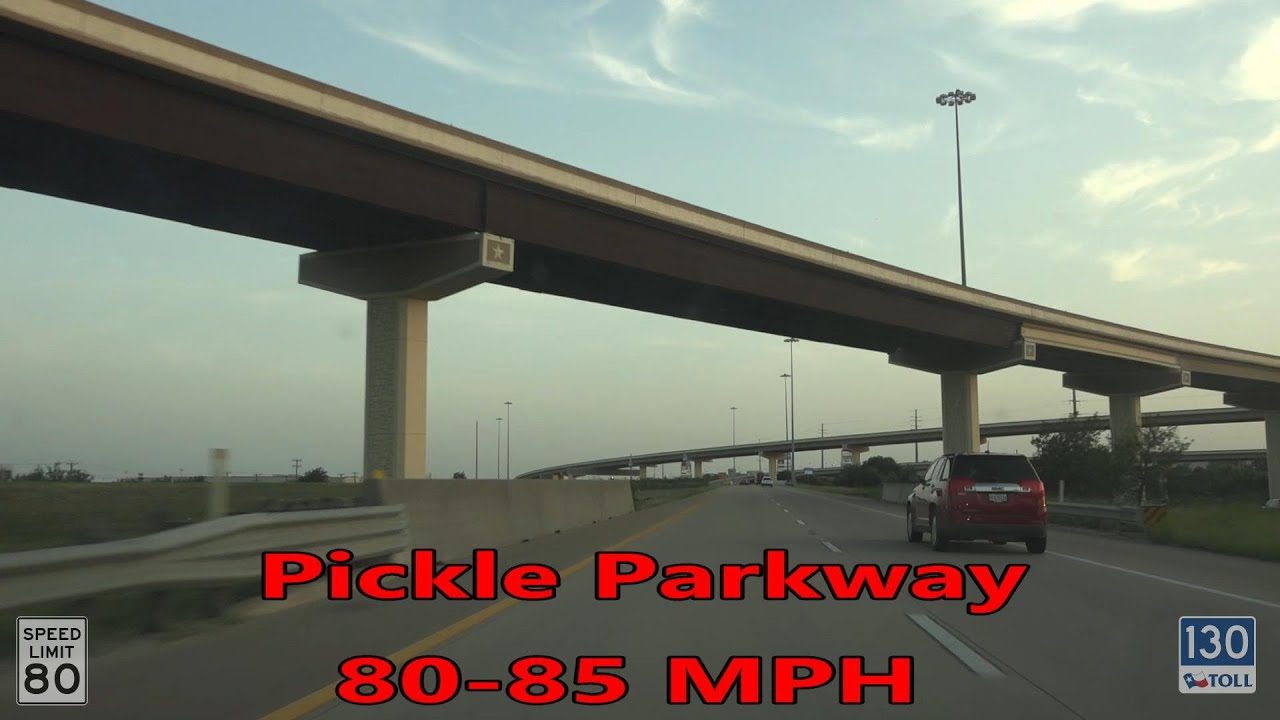
For motorists who enjoy long-distance driving, some American states offer considerably higher highway speed limits than others. While 65 or 70 mph remains common across many interstate highways, several states permit 80 mph on designated roads.
Texas takes things further, allowing 85 mph on certain sections of highway. These higher limits aren't applied everywhere, though. They're generally reserved for roads considered suitable for faster travel, as noted by the IIHS. Some of the states with higher maximum posted speed limits include:
- Texas: Up to 85 mph on designated sections of road.
- Utah: Up to 80 mph on certain highways.
- Nevada: Up to 80 mph on designated highways.
- Wyoming: Up to 80 mph on certain interstate sections.
- Idaho: Up to 80 mph on designated highways.
These limits demonstrate just how different state approaches can be. However, a higher posted limit doesn't mean drivers should always travel at the maximum. Rain, snow, poor visibility, traffic, and construction can make a slower speed the safer choice.
America Once Had A Nationwide 55-MPH Speed Limit
Interestingly, the United States hasn't always had such a wide variety of highway speed limits. During the 1970s, the federal government introduced a national maximum speed limit of 55 mph as part of an effort to conserve fuel during the energy crisis.
The Emergency Highway Energy Conservation Act of 1974 tied federal highway funding to states adopting the 55-mph limit. The idea was straightforward: lower highway speeds could reduce fuel consumption at a time when gasoline shortages and rising prices were major concerns.
However, the restriction wasn't particularly popular, especially in rural states where drivers were accustomed to traveling at higher speeds. Over time, pressure grew to give states more control over their highway speed limits.
Congress relaxed the restrictions in 1987, allowing higher limits on rural interstates. Then, in 1995, the national maximum speed limit was repealed altogether. States regained the authority to set their own maximum limits, creating the system American drivers know today.
What Do Drivers Think About America's Different Speed Limits?
America's varying highway speed limits are a popular topic among motorists online. In a discussion on r/driving, drivers debated whether 55-mph limits on busy interstate highways make sense, with some arguing that they don't reflect the actual speed of surrounding traffic.
A similar conversation appeared in r/NoStupidQuestions, where motorists questioned why some long, straight state highways have limits of 55 mph or lower. Meanwhile, an international visitor in r/roadtrip described being surprised by how frequently American drivers exceeded posted limits, even on highways.
These discussions highlight a recurring frustration: the posted speed limit doesn't always match the speed motorists consider normal.
Higher Speed Limits Don't Always Mean Faster Journeys
It's easy to assume that an 80-mph highway limit will make a road trip significantly shorter than a 70-mph limit. And technically, it can. But the difference might not be as impressive as some drivers expect.
For example, covering 100 miles at a constant 70 mph takes approximately 86 minutes. At 80 mph, that same distance takes 75 minutes. That's a saving of around 11 minutes, assuming uninterrupted travel at both speeds.
Real-world driving rarely works that way. Traffic congestion, construction, road conditions, fuel stops, and changing speed limits can all eat into those savings. There's also the impact on fuel economy to consider. As highway speeds increase, aerodynamic drag becomes a bigger factor, meaning many vehicles consume more fuel.
What do you think?
View
Comments
Ultimately, the differences in America's highway speed limits reflect the freedom states have to account for their own roads, landscapes, and driving conditions. A speed limit that makes sense on a straight, open interstate in Texas might not be appropriate on a winding mountain highway elsewhere.
As a rule of thumb, always remember to check the signs as you cross state lines, because the speed that was perfectly legal a few miles ago might not be legal anymore.
More From Motor101
 What Is A Solid-State Battery, And Why Is Everyone Talking About It?
Cupholders In Cars Weren't Always A Thing
Your Car Has A Redline. What Happens If You Exceed It?
As Hybrid Sales Climb, Here's What Drivers Should Know About Their Gas Engines
We want your opinion!
What would you like to see on Motor1.com?
Take our 3 minute survey.
- The Motor1.com Team
Share this Story
- (https://twitter.com/intent/tweet?url=https%3A%2F%2Fwww.motor1.com%2Ffeatures%2F815874%2Fwhy-does-every-state-have-different-highway-speed-limits%2F&text=America%27s%20Speed%20Limits%20Make%20No%20Sense&via=motor1com)
- copy
GO TO COMMENTS
(
)
Got a tip for us? Email: tips@motor1.com
View all comments ( )
Popular
12 Cars That Should Easily Make It To 250,000 Miles
Cadillac XT6 Is Returning, And It Won't Be An EV. Here's Everything We Know
Nissan Reveals One Key Design Detail About The Next GT-R
Toyota's New Small Truck Is A Corolla Cross With A Bed
Toyota's Tiny Pickup Could Come To America As A $25,000 Import
Latest Stories
- America's Speed Limits Make No Sense Nov 18 - Motor101 -
- Toyota's Tiny Pickup Could Come To America As A $25,000 Import Nov 18 - Official -
- Cadillac XT6 Is Returning, And It Won't Be An EV. Here's Everything We Know Nov 18 - Everything We Know -
- Toyota's New Small Truck Is A Corolla Cross With A Bed Nov 18 - Official -
- What Actually Happens When You Press Your Car's Brake Pedal? Nov 18 - Motor101 -
- 12 Cars That Should Easily Make It To 250,000 Miles Nov 18 - Lists -
- Driven: Subaru Forester Wilderness Hybrid Feels Like Déjà Vu Nov 18 - First Drives -
RECOMMENDED FOR YOU
What Actually Happens When You Press Your Car's Brake Pedal?
Toyota's Tiny Pickup Could Come To America As A $25,000 Import
Cupholders In Cars Weren't Always A Thing
Cadillac XT6 Is Returning, And It Won't Be An EV. Here's Everything We Know
As Hybrid Sales Climb, Here's What Drivers Should Know About Their Gas Engines
Toyota's New Small Truck Is A Corolla Cross With A Bed
Your Car Has A Redline. What Happens If You Exceed It?