Home
Features
Motor101
Cupholders In Cars Weren't Always A Thing
Cupholders weren't always a given. So how did something as simple as holding your coffee become a must-have car feature?
Dan Mihalascu 
By: Dan Mihalascu
Nov 17, at 4:09pm ET
Add Motor1.com as a preferred source in Google
- (https://twitter.com/intent/tweet?url=https%3A%2F%2Fwww.motor1.com%2Ffeatures%2F815766%2Fwhy-did-automakers-start-putting-cupholders-in-cars%2F&text=Cupholders%20In%20Cars%20Weren%27t%20Always%20A%20Thing&via=motor1com)
- copy
Share
Comment
Cupholders are among the most overlooked yet ubiquitous features in modern cars. They're everywhere, from center consoles and door panels to rear armrests and even third-row seating areas. Some vehicles have so many that you'd think automakers were more interested in keeping drinks secure than getting passengers to their destinations.
But there was a time when cars didn't have dedicated places for beverages at all. So, when did cupholders become a standard automotive feature, and why did manufacturers start installing them in the first place? The answer involves the rise of drive-in restaurants, changing American lifestyles, and the arrival of the minivan.
Cars Weren't Always Designed For Eating And Drinking
Early automobiles weren't particularly accommodating places to enjoy a meal. Roads were rough, cabins were basic, and long-distance journeys usually involved stopping somewhere to eat. There wasn't much reason for manufacturers to dedicate valuable interior space to holding beverages.
That began to change during the 1950s, as drive-in restaurants and roadside dining became increasingly popular in the United States. Drivers could order food without leaving their vehicles, creating a new demand for somewhere to put their drinks.
Some manufacturers experimented with shallow circular indentations in glovebox doors, which could double as small beverage trays when opened. The 1962 Ford Falcon Futura, for example, featured a glovebox door with molded wells intended to hold drinks.
However, these early solutions weren't particularly practical while driving, as The Smithsonian Institution points out. Aftermarket accessories, including window-mounted holders and dashboard attachments, also became popular. Drivers clearly wanted somewhere to put their beverages, but automakers hadn't yet developed a convenient built-in solution.
The Minivan Helped Make Cupholders Mainstream
A major turning point arrived in 1984, when Chrysler introduced the Dodge Caravan and Plymouth Voyager. These vehicles were designed around practicality, offering spacious cabins, flexible seating, and storage solutions for families.
They also helped popularize built-in dashboard cupholders. Rather than treating beverage storage as an aftermarket convenience, Chrysler incorporated it into the vehicle's interior design.
The timing made sense. Families were spending more time traveling together, and parents needed somewhere to put drinks for themselves and their children. A dedicated cupholder was a relatively inexpensive addition that made everyday driving more convenient.
The early designs were fairly basic, consisting of shallow molded openings that couldn't accommodate every beverage container. Still, they represented an important change in automotive thinking. Cars were becoming more than transportation. They were spaces designed to accommodate the routines of everyday life.
The 1990s Turned Cupholders Into An Essential Feature
During the 1990s, cupholders spread throughout the automotive industry. American drivers were increasingly accustomed to commuting with coffee, stopping at drive-through restaurants, and carrying beverages during road trips.
Automakers quickly recognized that customers expected somewhere to put their drinks. Manufacturers also began improving cupholder designs, moving beyond simple molded openings to more sophisticated mechanisms.
General Motors, for example, introduced spring-loaded cupholder designs in several vehicles during the decade. These mechanisms could accommodate different container sizes and hold beverages more securely.
Cupholders also became a selling point, particularly in family vehicles. The 1997 Chevrolet Venture minivan famously offered up to 17 cupholders, demonstrating just how seriously manufacturers were taking beverage storage.
Luxury brands eventually embraced the feature, too. Some initially concealed cupholders behind sliding panels or decorative trim to maintain a cleaner dashboard appearance, but the underlying convenience was becoming increasingly difficult to ignore.
Modern Cars Have More Cupholders Than Ever
Today's cupholders are considerably more sophisticated than the simple openings found in early minivans. Automakers have had to adapt to changing beverage containers, particularly large reusable water bottles, insulated tumblers, and oversized coffee cups.
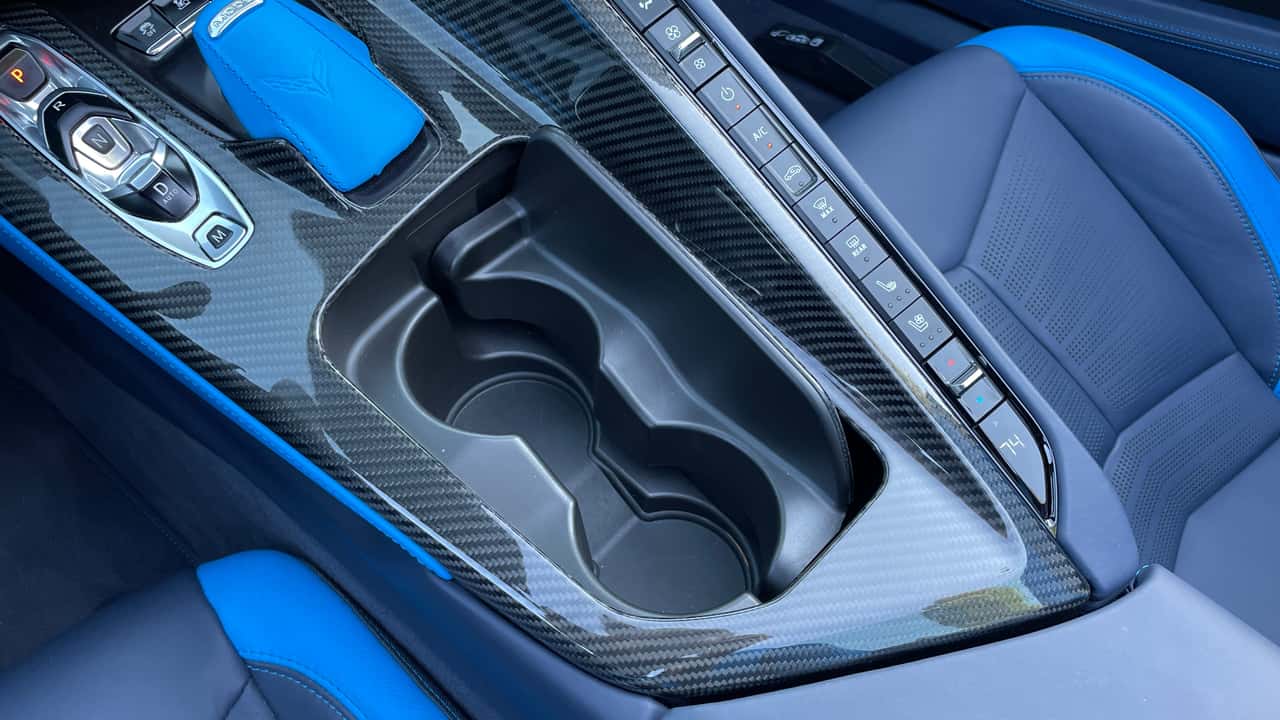
Modern designs often include adjustable grips, removable inserts, and different-sized storage compartments. Some vehicles even feature heated or cooled cupholders, allowing drivers to maintain their preferred beverage temperature. There are several reasons why cupholders have become such an important part of modern interior design:
- Changing beverage sizes: Large tumblers and reusable bottles require more versatile storage solutions.
- Family-friendly interiors: Parents need convenient places to store drinks for children and other passengers.
- Longer commutes: Drivers increasingly appreciate practical features that make everyday journeys more comfortable.
- Passenger convenience: Rear-seat and third-row occupants now expect access to dedicated cupholders, too.
- Interior competition: Automakers use clever storage solutions to make their cabins feel more practical and accommodating.
Some modern vehicles take things to extremes. The Subaru Ascent, for example, offers up to 19 cupholders throughout its cabin. That's a remarkable number considering how recently the feature was treated as an optional convenience.
Drivers Remember When Cars Didn't Have Cupholders
A discussion on r/GenX brought back memories of a time when cars didn't have dedicated places for drinks. One user recalled explaining to their millennial wife that drivers simply didn't have cupholders for oversized convenience-store drinks. Instead, people relied on aftermarket accessories or wedged beverages between their legs.
Other drivers shared similar experiences in an r/Cartalk discussion, with one commenter recalling that their first car with factory-installed cupholders was built in 1996. A separate r/GenX thread also prompted nostalgic memories of quirky aftermarket holders, including novelty designs that attached to car interiors.
Of course, modern cupholders aren't always perfect, either. In an r/cars discussion, one owner complained that their cupholders were positioned awkwardly beneath the dashboard, making larger bottles difficult to use. It seems that while automakers have come a long way, finding the perfect place for a coffee or water bottle remains an ongoing challenge.
A Small Feature That Changed How We Use Cars

Cupholders might not be as exciting as a powerful engine, an advanced infotainment system, or an innovative suspension design. However, their evolution tells an interesting story about the automotive industry.
Cars have gradually become more comfortable and accommodating, with interiors designed around how people actually spend their time behind the wheel. Features that once seemed unnecessary, including cupholders, have become standard expectations.
What do you think?
View
Comments
Automakers now compete over everything from touchscreen sizes and wireless charging to clever storage compartments. Yet something as simple as having somewhere to put a coffee can still influence how someone feels about a vehicle.
It's a reminder that automotive innovation is not always about making cars faster, more powerful, or more technologically advanced. Sometimes, it's about making the everyday experience a little more convenient. And apparently, drivers have always wanted somewhere to put their drinks.
More From Motor101
 As Hybrid Sales Climb, Here's What Drivers Should Know About Their Gas Engines
Your Car Has A Redline. What Happens If You Exceed It?
What Is A Solid-State Battery, And Why Is Everyone Talking About It?
Diesel Engines Make More Torque Than Ever, And It's Not An Accident
We want your opinion!
What would you like to see on Motor1.com?
Take our 3 minute survey.
- The Motor1.com Team
Share this Story
- (https://twitter.com/intent/tweet?url=https%3A%2F%2Fwww.motor1.com%2Ffeatures%2F815766%2Fwhy-did-automakers-start-putting-cupholders-in-cars%2F&text=Cupholders%20In%20Cars%20Weren%27t%20Always%20A%20Thing&via=motor1com)
- copy
GO TO COMMENTS
(
)
Got a tip for us? Email: tips@motor1.com
View all comments ( )
Popular
Where Did All The Bad Cars Go?
Driven: The New Audi A2 Is Proof Small Cars Still Make Sense
Toyota Thinks $22,000 Is 'Reasonable' For Its Scion Kei Truck
Driven: BMW's Electric M3 Is The Real Deal
Inspiring The Next Generation Of Mechanics
Latest Stories
- Cupholders In Cars Weren't Always A Thing Nov 17 - Motor101 -
- Used Nissan GT-Rs Cost Less Than You Might Think Nov 17 - Why Buy? -
- Gas Prices Are Finally Dropping. Here's The Cheapest And Most Expensive Gas In Every State Nov 17 - Lists -
- The Ford Mustang Cobra Arrives 'Late 2027' (Update) Nov 17 - Teasers -
- Driven: The New Audi A2 Is Proof Small Cars Still Make Sense Nov 17 - First Drives -
- Toyota Thinks $22,000 Is 'Reasonable' For Its Scion Kei Truck Nov 17 - Pricing -
- Inspiring The Next Generation Of Mechanics Nov 17 - Motorsport -
RECOMMENDED FOR YOU
As Hybrid Sales Climb, Here's What Drivers Should Know About Their Gas Engines
Used Nissan GT-Rs Cost Less Than You Might Think
Your Car Has A Redline. What Happens If You Exceed It?
Gas Prices Are Finally Dropping. Here's The Cheapest And Most Expensive Gas In Every State
What Is A Solid-State Battery, And Why Is Everyone Talking About It?
The Ford Mustang Cobra Arrives 'Late 2027' (Update)
Diesel Engines Make More Torque Than Ever, And It's Not An Accident