Home
Features
What Is A Solid-State Battery, And Why Is Everyone Talking About It?
More range, higher energy density, and potentially minutes instead of hours at the charger. Could this finally be the EV breakthrough?

Dan Mihalascu 
By: Dan Mihalascu
Nov 16, at 5:00pm ET
Add Motor1.com as a preferred source in Google
- (https://twitter.com/intent/tweet?url=https%3A%2F%2Fwww.motor1.com%2Ffeatures%2F815631%2Fwhat-are-solid-state-batteries-viral-videos-evs%2F&text=What%20Is%20A%20Solid-State%20Battery%2C%20And%20Why%20Is%20Everyone%20Talking%20About%20It%3F&via=motor1com)
- copy
Share
Comment
Electric vehicle technology has come a long way, but battery tech remains one of the industry's biggest challenges. Automakers have made significant improvements in driving range, charging speeds, and battery costs, yet many buyers still worry about long charging stops, expensive replacements, and the potential fire risks associated with lithium-ion batteries.
Now, a new type of battery technology promises to address several of these concerns, and some of the world's biggest automakers are racing to bring it to market. It's called a solid-state battery, and it could represent one of the biggest developments in EV technology. Solid-state batteries promise greater energy density, faster charging, and improved safety. But despite the excitement, they're not quite ready to take over the EV market yet.
What Exactly Is A Solid-State Battery?
A solid-state battery is an energy storage device that uses a solid electrolyte instead of the liquid electrolyte found in conventional lithium-ion batteries. That might sound like a relatively small engineering change, but it could have major implications for how electric vehicles store and deliver energy.
In a traditional lithium-ion battery, the electrolyte is a liquid solution that allows lithium ions to move between the anode and cathode during charging and discharging. A solid-state battery replaces that liquid with a solid material, which can be ceramic, glass, or a specially engineered polymer.
The solid electrolyte also performs the role of the separator, helping prevent the battery's electrodes from coming into direct contact. This is important because a short circuit inside a battery can cause excessive heat and potentially lead to thermal runaway.
The technology doesn't necessarily change the basic way a battery stores and releases electricity. Instead, it changes the materials and internal structure used to make that process possible. Some designs also aim to use lithium-metal anodes, which could further increase energy density.
Why Are Solid-State Batteries Considered A Big Deal?
The excitement surrounding solid-state batteries comes from their potential to improve several areas where conventional EV batteries still have limitations. By replacing the liquid electrolyte and allowing different electrode materials, engineers hope to develop batteries that store more energy, charge faster, and offer improved safety. Some of the biggest potential advantages include:
- Greater driving range: Higher energy density could allow automakers to install smaller, lighter battery packs without sacrificing range.
- Faster charging: Improved ion transport and battery chemistry could eventually allow charging times comparable to a quick fuel stop, although actual performance depends on the complete battery design.
- Improved safety: Solid electrolytes can reduce the risk of leakage and may lower certain fire hazards associated with conventional liquid electrolytes.
- Potentially longer lifespan: Some designs aim to reduce degradation and improve battery durability over repeated charging cycles.
- More packaging flexibility: Higher energy density could allow manufacturers to develop lighter battery packs and rethink vehicle packaging.
These benefits are particularly attractive to automakers because battery weight, cost, and charging times remain important considerations when designing electric vehicles. However, it's worth remembering that these are potential advantages, not guaranteed improvements across every solid-state battery design. Real-world performance, durability, and safety still need to be demonstrated at scale.
Why Are Automakers Racing to Develop Solid-State Batteries?
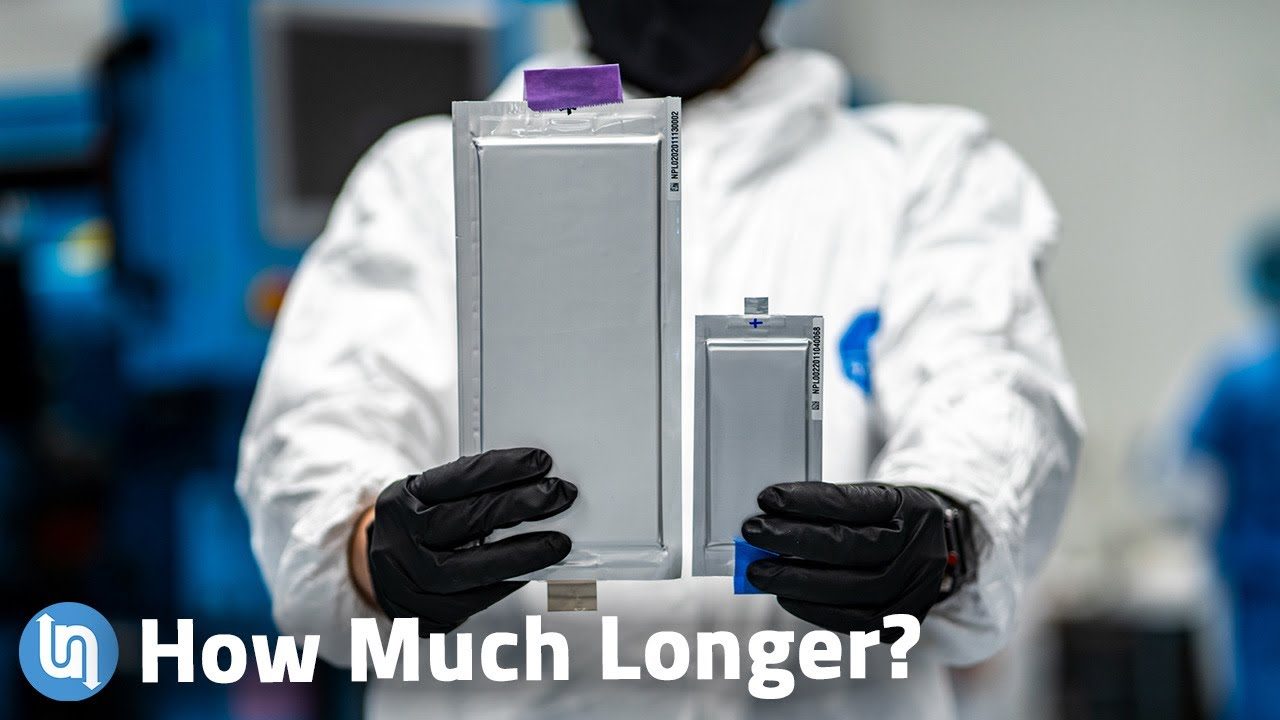
Some of the biggest names in the automotive industry see solid-state batteries as a potential competitive advantage in the next generation of electric vehicles.
Toyota is among the most prominent companies pursuing the technology. The Japanese automaker has been developing all-solid-state batteries for years and is targeting their introduction in a future vehicle by the end of 2028. Toyota believes the technology could offer improvements in energy storage and charging performance compared with conventional batteries.
Volkswagen is also involved through its partnership with QuantumScape, a US-based battery technology company. In February 2026, QuantumScape inaugurated its Eagle Line pilot production facility in California. The highly automated production line is designed to manufacture battery cells for customer sampling, testing, and product integration. It is an important step toward scaling up the company's solid-state technology, although it doesn't mean mass production for consumer vehicles has begun.
Other companies, including China's BYD and South Korea's Samsung, are also working toward commercializing their own solid-state battery technologies. The International Energy Agency's 2026 Global EV Outlook identifies several manufacturers pursuing commercialization, with early applications expected to focus on premium vehicles.
The competition is about more than simply producing a better battery. The company that figures out how to manufacture solid-state cells reliably and affordably could gain a significant advantage in the increasingly competitive EV market.
What's Stopping Solid-State Batteries From Reaching The Mass Market?
Despite their potential, solid-state batteries still face considerable engineering and manufacturing challenges. Producing a working prototype is one thing; manufacturing millions of reliable battery cells at an affordable price is an entirely different challenge.
One major issue is the difficulty of maintaining stable contact between the solid electrolyte and the electrodes. Unlike liquids, which can naturally fill small gaps, solid materials need to maintain close physical contact to allow lithium ions to move efficiently. Repeated charging and discharging can also cause materials to expand and contract, potentially creating cracks and affecting battery performance.
Manufacturing costs are another obstacle. Solid-state batteries require specialized materials, precision production processes, and strict quality controls. Automakers will need to overcome these challenges before the technology can compete with the increasingly affordable lithium-ion batteries already used in mass-produced EVs.
There's also an important distinction between semi-solid, hybrid, and all-solid-state batteries. Some products marketed as solid-state still contain small amounts of liquid electrolyte. A true all-solid-state battery uses a solid electrolyte throughout its operating cell design.
According to the IEA, all-solid-state batteries are still largely at the prototype stage, with manufacturing complexity, cost, and battery-pack integration among the biggest obstacles. The agency expects the technology to remain concentrated in premium vehicle segments until the first half of the 2030s.
What Do EV Enthusiasts Think About Solid-State Batteries?
Solid-state batteries have generated plenty of discussion among EV enthusiasts, but not everyone is convinced they're the revolution automakers promise. In a discussion on r/electricvehicles, users questioned when the technology would actually become commercially available, with some arguing that improvements to existing lithium-ion batteries could deliver more practical benefits in the meantime.
Manufacturing costs and scalability are also major concerns. In discussions on r/batteries and r/electriccars, enthusiasts highlighted challenges involving dendrite formation, material costs, and maintaining consistent quality during mass production. Others questioned whether the promised improvements in range and charging speeds would justify the eventual price premium.
There's also skepticism about whether drivers actually need solid-state technology. In a popular r/electricvehicles discussion, some users argued that today's lithium iron phosphate (LFP) batteries are already good enough for many everyday applications.
When Will Solid-State Batteries Arrive In Production Cars?
The good news is that solid-state batteries are moving beyond laboratory experiments. Several manufacturers have established pilot production facilities, tested prototype cells, and announced plans to introduce the technology in future vehicles.
Toyota is targeting the end of 2028 for its first vehicle featuring an all-solid-state battery, while other manufacturers are working toward their own commercialization milestones. QuantumScape's February 2026 pilot-line announcement also demonstrates that companies are increasingly focusing on manufacturing processes rather than just laboratory performance.
What do you think?
View
Comments
However, announced production targets shouldn't be confused with guaranteed delivery dates. Battery development is complicated, and manufacturers still need to demonstrate that their technology can meet automotive requirements for durability, reliability, safety, and cost.
For consumers, this means solid-state batteries probably won't transform the entire electric vehicle market overnight. Early applications are more likely to appear in expensive, premium vehicles before production volumes increase and costs potentially come down. The real breakthrough will come when automakers can put affordable, mass-produced solid-state batteries into vehicles that ordinary buyers can afford.
More From Motor101
 Why Your Car's Windows Fog Up Even When It's Not Raining
Think Someone Is Tracking Your Car? Here Are The Warning Signs To Look For
There's A Reason Your Car Door Doesn't Close Properly Anymore
We want your opinion!
What would you like to see on Motor1.com?
Take our 3 minute survey.
- The Motor1.com Team
Share this Story
- (https://twitter.com/intent/tweet?url=https%3A%2F%2Fwww.motor1.com%2Ffeatures%2F815631%2Fwhat-are-solid-state-batteries-viral-videos-evs%2F&text=What%20Is%20A%20Solid-State%20Battery%2C%20And%20Why%20Is%20Everyone%20Talking%20About%20It%3F&via=motor1com)
- copy
GO TO COMMENTS
(
)
Got a tip for us? Email: tips@motor1.com
View all comments ( )
Popular
BMW Has 10 New Models Coming In 2027. Here's All Of Them
GM Might Finally Build A Real F-150 Raptor Rival: Report
New Hyundai Elantra N Caught Testing, And It Looks Spicy: Video
Where Did All The Bad Cars Go?
I Tried Mercedes' New Hands-Free Driving Tech. It Nearly Drove Me Everywhere
Latest Stories
- What Is A Solid-State Battery, And Why Is Everyone Talking About It? Nov 16 - Motor101 -
- Maserati: Our Cars Don't Need Wild Styling To Stand Out Nov 16 - Design -
- GM Might Finally Build A Real F-150 Raptor Rival: Report Nov 16 - Rumors -
- Diesel Engines Make More Torque Than Ever, And It's Not An Accident Nov 16 - Motor101 -
- New Hyundai Elantra N Caught Testing, And It Looks Spicy: Video Nov 16 - Spy Shots -
- There's A New James Bond Nov 16 - Breaking -
- GTA 6 Has Already Made $1.18 Billion. It's Not Even Out Yet Nov 16 - Video games -
RECOMMENDED FOR YOU
Toyota's Cheaper Sports Car Is Reportedly Back On The Menu
Maserati: Our Cars Don't Need Wild Styling To Stand Out
Want A New Pickup With A Manual? There's Still Only One Choice
GM Might Finally Build A Real F-150 Raptor Rival: Report
Average New Car Prices Just Hit Another Record: $51,000
Diesel Engines Make More Torque Than Ever, And It's Not An Accident
Scion Is Back, And It's Bringing A Tiny Kei Truck To America