Home
Features
Motor101
The Worst Car Communism Gave The World: The Trabant
Slow, smoky, and decades behind the West, the Trabant became a symbol of everything wrong with communist-era car manufacturing.
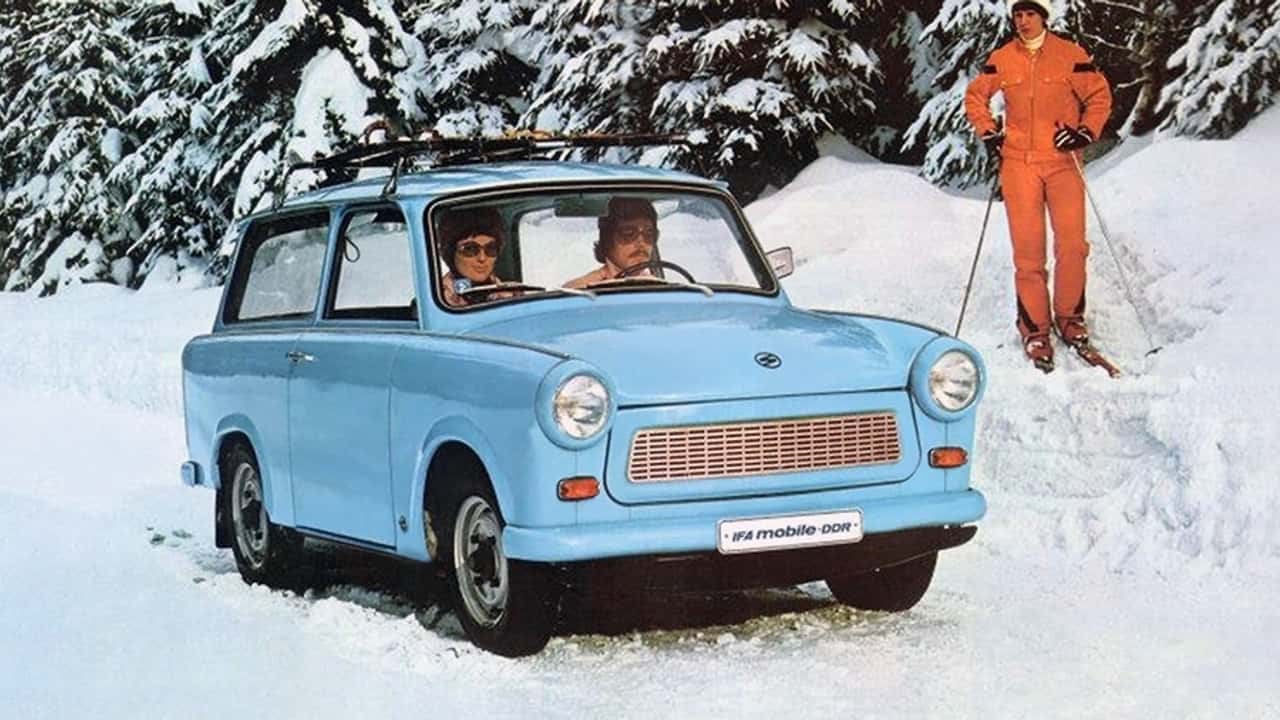
Photo by: Trabant
Dan Mihalascu 
By: Dan Mihalascu
Nov 11, at 6:00pm ET
Add Motor1.com as a preferred source in Google
- (https://twitter.com/intent/tweet?url=https%3A%2F%2Fwww.motor1.com%2Ffeatures%2F815116%2Fworst-car-communism-gave-the-world-trabant-601%2F&text=The%20Worst%20Car%20Communism%20Gave%20The%20World%3A%20The%20Trabant&via=motor1com)
- copy
Share
Comment
The fall of the Berlin Wall revealed plenty of things to the outside world, but few were as memorable as the cars East Germans drove through the border crossings. Among them was the Trabant 601, a tiny, noisy machine that looked like it had been left behind by the automotive industry for decades. It was slow, smoky, basic, and built with a plastic-like body. And yet, millions of people bought one.
The Trabant wasn't just a bad car. It was a product of an economic system that struggled to keep its automotive industry competitive with the West. Built in East Germany from 1964 to 1990, the 601 remained largely unchanged for more than a quarter-century. Its story is a fascinating look at what happens when an automaker has little incentive—or ability—to keep up with the rest of the world.
The Trabant 601 Was Outdated Almost From The Start
The Trabant 601 arrived in 1964 as an evolution of the earlier Trabant models. It was designed to provide affordable personal transportation for ordinary East Germans, but its basic engineering was already showing its age.
Under the hood sat a tiny, air-cooled, two-cylinder, two-stroke engine displacing just 594 cc. Later versions produced around 26 horsepower, which had to move a car weighing roughly 615 kilograms (1,356 pounds). Power went to the front wheels through a four-speed manual transmission.
That might sound adequate for a lightweight city car, but the Trabant was hardly quick. Its top speed was around 100 km/h (62 mph), and acceleration was leisurely by even the standards of its era. The engine also produced the distinctive smoke and noise associated with two-stroke designs.
The basic engine concept remained in service until the end of the 601's production run. While Western automakers were moving toward more sophisticated four-stroke engines, better safety equipment, and increasingly refined interiors, the Trabant was stuck in a very different era.
Its Body Was Made From A Rather Unusual Material
One of the Trabant's most famous features was its bodywork. Instead of conventional steel panels, the car used a material called Duroplast, a composite made from resin reinforced with recycled cotton or wool fibers.
It sounds like an automotive experiment gone wrong, but there was a practical reason behind the decision. East Germany faced shortages of materials and had limited access to the industrial resources available to manufacturers in Western Europe. Duroplast could be made using locally available materials, including cotton waste and phenolic resins.
The material had some practical advantages and drawbacks:
- It was lightweight: Duroplast helped keep the little Trabant's weight down.
- It resisted rust: Unlike conventional steel body panels, the composite material didn't corrode in the same way.
- It wasn't especially easy to repair: Damage to the panels could be more complicated to address than a dent in ordinary sheet metal.
- It wasn't a modern safety solution: The unusual material didn't make the Trabant a particularly advanced or safe car.
The choice of Duroplast was less about creating an innovative new automotive material and more about finding a way to build cars despite the country's industrial limitations.
Getting One Was Almost As Difficult As Driving One
Perhaps the most extraordinary part of the Trabant story wasn't its engine or bodywork. It was the buying process.
In East Germany, demand for new cars far exceeded supply. Buyers could place an order and then wait years for delivery. By the early 1970s, a typical customer could face a wait of seven to 10 years, according to historical research on the Trabant's production history.
That situation had a major effect on the car itself. In a competitive market, a manufacturer that failed to improve its product would risk losing customers to a rival. Trabant buyers had few alternatives. If they wanted a new car, they often had to accept what was available.
The Trabant 601 eventually became one of East Germany's defining products, with more than 2.8 million examples built between 1964 and 1990. Its long production run was not proof that it was a great car. It was evidence of how difficult it was for the country's automotive industry to change.
The Trabant Barely Changed For More Than 25 Years
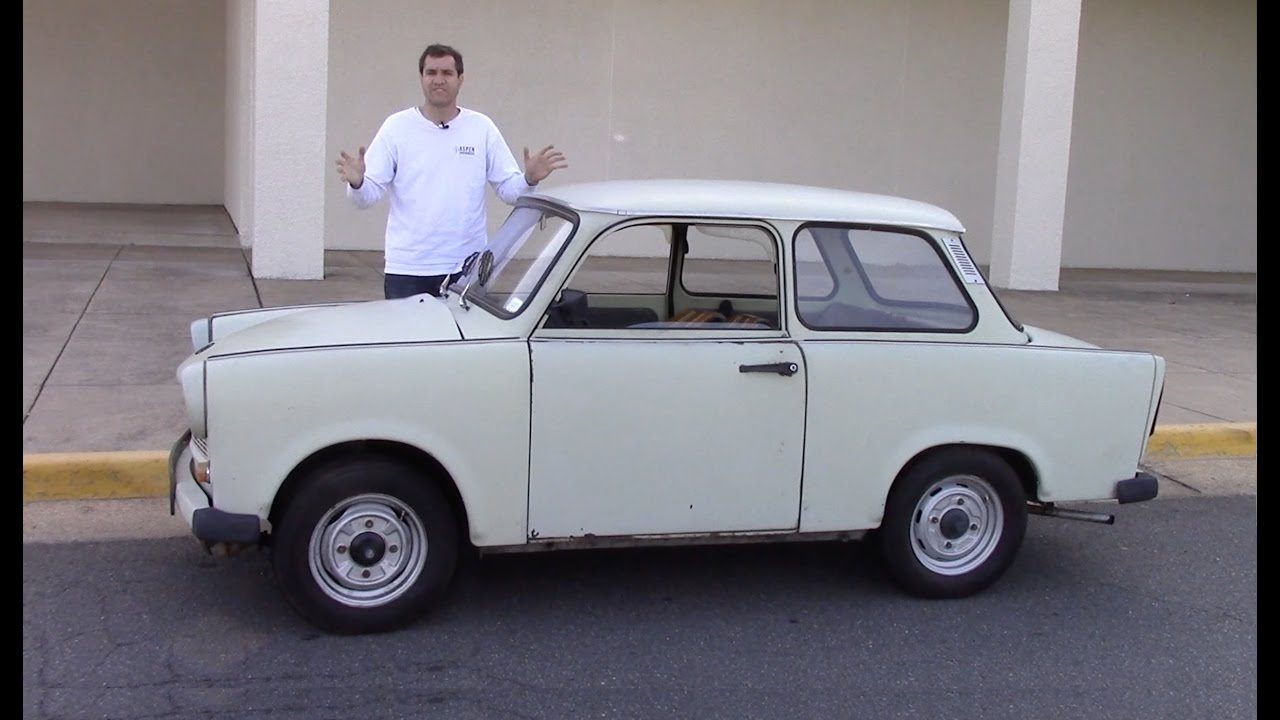
The most damning part of the Trabant's history is how long it stayed in production without a major redesign.
The 601 received updates over the years, but its fundamental engineering remained remarkably familiar. Its two-stroke engine, basic cabin, and overall layout survived while the rest of the automotive world moved forward.
Plans for more modern replacements existed, including projects developed with Czechoslovak partners. But those efforts ultimately failed to deliver a new generation of cars. Historical research into the East German automotive industry points to deeper industrial and political problems behind the lack of progress.
The result was a car that became increasingly outdated as the decades passed. By the time the Berlin Wall fell in 1989, the Trabant looked like a relic from another age. However, after the German reunification, the Trabant saw its most radical overhaul ever courtesy of a four-stroke 1,043 cc engine derived from the Volkswagen Polo, according to the National Automobile Museum of Turin.
Owners Have Mixed Feelings About The Infamous Trabant
The Trabant might be one of the most ridiculed cars ever built, but Reddit discussions show that its reputation is not entirely black and white. In a thread on r/AskEurope, users discussed what it was actually like to drive communist-era cars. One response described the Trabant as loud and awkward, with poor handling, but also surprisingly robust and easy to repair with basic tools.
Other discussions highlight just how limited the car was compared with Western alternatives. In an r/regularcarreviews thread, users joked about waiting 15 years for the privilege of buying a Trabant. One owner called it an "abysmal little thing," while another discussion on r/namethatcar pointed out that the 601 remained in production from 1964 to 1990 with remarkably few fundamental changes.
Still, not everyone thinks owning one is a terrible idea. In a discussion on r/Trabant, enthusiasts described the car as simple and surprisingly reliable when properly maintained, although its limited power and difficulty sourcing parts can make it impractical as a daily driver. The Trabant left behind a strange legacy: it was a deeply compromised car, but one that earned a loyal following. Stockholm syndrome, maybe?
Was It Really The Worst Car Communism Produced?
The Trabant has a strong claim to the title, but it wasn't the only questionable car to emerge from the Eastern Bloc. Poland's Polski Fiat 126p, Yugoslavia's Yugo, and several Soviet-era models also became famous for their basic engineering and modest performance.
Still, the Trabant stands out because it became such a powerful symbol of the divide between East and West. Its shortcomings were easy to see, hear, and smell, but the car also served a genuine purpose. For millions of families, it provided personal transportation in a country where alternatives were limited.
What do you think?
View
Comments
And there's an important distinction between the car's reputation and the people who owned it. The Trabant was often maintained by resourceful owners who learned to repair its simple mechanical components and make the most of what they had.
Today, the little East German car has become a cult classic. Its quirky looks, unusual construction, and place in Cold War history have made it a popular collectible and tourist attraction.
More From Motor101
 No, Premium Gas Doesn't Automatically Make Your Car Faster
Paint Protection Film Costs Thousands. Is It Actually Worth It?
The Physics Behind Why SUVs Are More Likely To Roll Over In A Crash
There's A Reason Your Brain Doesn't Like Driving A CVT
We want your opinion!
What would you like to see on Motor1.com?
Take our 3 minute survey.
- The Motor1.com Team
Share this Story
- (https://twitter.com/intent/tweet?url=https%3A%2F%2Fwww.motor1.com%2Ffeatures%2F815116%2Fworst-car-communism-gave-the-world-trabant-601%2F&text=The%20Worst%20Car%20Communism%20Gave%20The%20World%3A%20The%20Trabant&via=motor1com)
- copy
GO TO COMMENTS
(
)
Got a tip for us? Email: tips@motor1.com
View all comments ( )
Popular
12 Crossovers That Are Surprisingly Good At Off-Roading
Audi Nuvolari Costs $700,000. And It Will Be Rare In America
Dodge Is Back In NASCAR After 14 Years. Here's Everything We Know
Rimac's Electric Hypercar Is Dead Earlier Than Expected
Lucid's Sub-$50,000 SUV Comes Into Focus In New Teaser
latest articles
- The Worst Car Communism Gave The World: The Trabant Nov 11 - Motor101 -
- Jaguar May Already Have A Name For Its Next Car Nov 11 - Patents & Trademarks -
- This Gearbox Blurs The Line Between Manual And Automatic Nov 11 - Motor101 -
- Audi Nuvolari Costs $700,000. And It Will Be Rare In America Nov 11 - Pricing -
- Rimac's Electric Hypercar Is Dead Earlier Than Expected Nov 11 - Manufacturing / Production -
- Dodge Is Back In NASCAR After 14 Years. Here's Everything We Know Nov 11 - Features -
- Want To Drive A Rally Car? DirtFish Is Heading To Willow Springs Nov 11 - Motorsport -
RECOMMENDED FOR YOU
This Gearbox Blurs The Line Between Manual And Automatic
Jaguar May Already Have A Name For Its Next Car
Your Car Has Airbags In Places You Probably Didn't Even Know
Audi Nuvolari Costs $700,000. And It Will Be Rare In America
Paint Protection Film Costs Thousands. Is It Actually Worth It?
Rimac's Electric Hypercar Is Dead Earlier Than Expected
The Physics Behind Why SUVs Are More Likely To Roll Over In A Crash