Home
Mercedes-Benz
News
Mercedes Explains Why Its Electric Cars Look the Way They Do
The jellybean shape isn't just about aero.
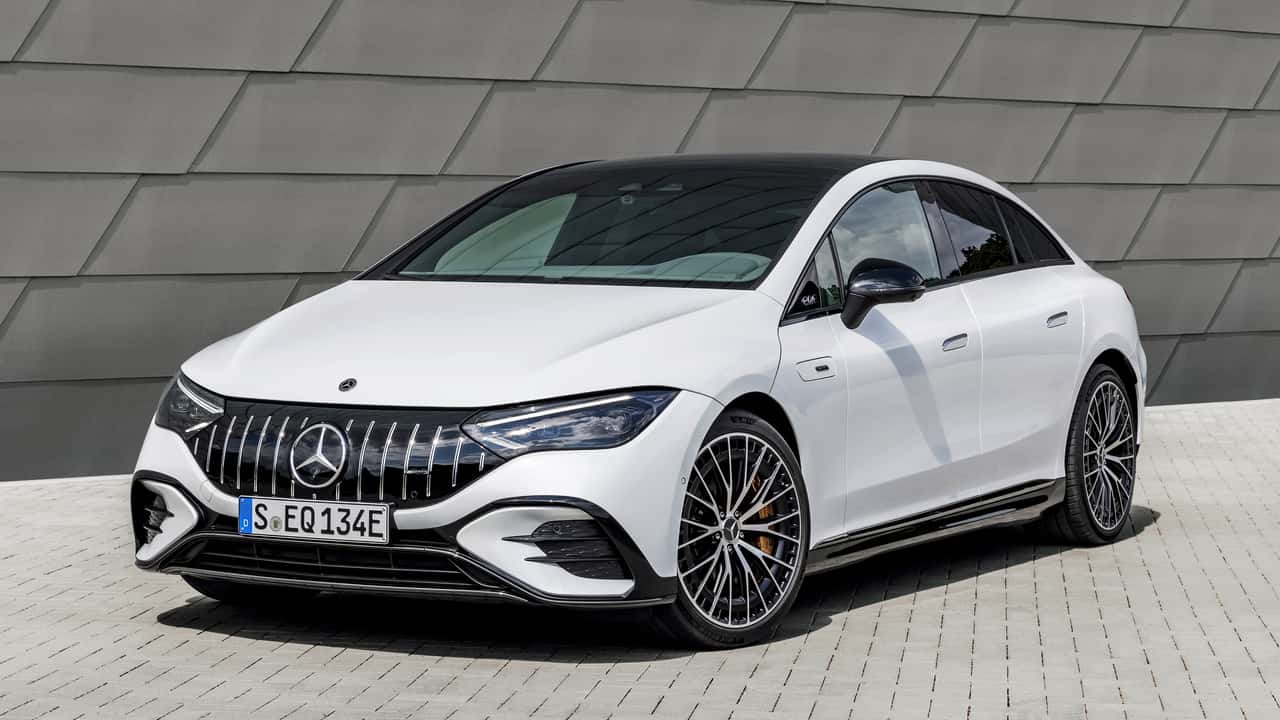
Photo by: Mercedes-Benz
Adrian Padeanu 
By: Adrian Padeanu
Oct 1, 2025 at 6:25am ET
Add Motor1.com as a preferred source in Google
- (https://twitter.com/intent/tweet?url=https%3A%2F%2Fwww.motor1.com%2Fnews%2F774316%2Fmercedes-explains-electric-car-design%2F&text=Mercedes%20Explains%20Why%20Its%20Electric%20Cars%20Look%20the%20Way%20They%20Do&via=motor1com)
- copy
Share
Comment
Ever since the EQS debuted in 2021, Mercedes has faced harsh criticism over the design of its electric vehicles. We can all agree the production version wasn’t nearly as sleek as the 2019 Vision EQS concept. However, in the company’s defense, I do think the EQS looks better in person than in photos, but to each their own.
The smaller EQE followed the same aero-driven philosophy to maximize efficiency and squeeze out extra range. Mercedes did things a bit differently by dropping the EQS’ more practical liftgate in favor of a traditional trunk, but their swoopy profiles are nearly identical. Beyond aerodynamics, we’re now learning there was another reason the first “EQ” models looked so different from conventionally powered cars.
Mercedes Chief Technology Officer Markus Schäfer explained the thinking at the time: people ready to switch from gas to electric wanted something that stood out from the usual crop of ICE models. In an interview with Australian magazine WhichCar, he defended the ultra-streamlined shapes of the EQS and EQE:
'Early adopters wanted to be different. They wanted to show that they were driving an electric car and now we’re entering the mainstream and mass adoption, and customers don’t want to show that they’re driving an EV. They want the same shape, no matter the drivetrain.'

Archrival BMW took this approach from the beginning, avoiding the split design language and instead making only subtle tweaks to distinguish electric models from combustion cars. Mercedes is now moving in that direction with the electric CLA and EQC, bringing them closer to their combustion-engine counterparts. Similarly, next year’s all-electric C-Class won’t look much different from the gas-powered sedan.
While Mercedes is unifying design across its lineup for a cohesive look, it’s still keeping platforms separate. Sharing the same underpinnings creates packaging compromises, whereas dedicated architectures for each drivetrain give engineers more freedom to exploit the hardware fully:
'Fitting both drivetrains to the same platform ultimately ends up with compromise and we don’t want to offer compromised cars.'
Mercedes design chief Gorden Wagener has repeatedly tried to explain why egg-shaped cars like the EQS failed to resonate. You and I might call it “jellybean” styling, but he describes it as “purposeful and very progressive.” According to him, the flagship EV was ahead of its time in the wrong way; it was launched “10 years too early.”
What do you think?
View
Comments
Wagener, who recently criticized the latest BMW and Audi interiors, also blamed marketing strategy for the EQS’ subpar sales. Had it been pitched as a “futuristic CLS, S-Class Coupe, or something like that,” it might have drawn more buyers. While the EQS is getting a facelift and will remain on sale for a few more years, Autocar reports its smaller sibling is set to retire in 2026, making way for an electric E-Class later this decade.
Eventually, the S-Class and EQS will merge into a single model line as well. The current S-Class is scheduled for a facelift next year, meaning the next generation is likely to arrive in 2029 or 2030. When it does, it'll have both combustion engines and electric drivetrains.
Mercedes Is Merging Designs:
Future Mercedes EVs Will Look More Like Gas Cars
Mercedes Will Abandon Its Separate EV Lineup

Stay informed with our newsletter every weekday
back
Subscribe For more info, read our Privacy Policy & Terms of Use.
Source: WhichCar
We want your opinion!
What would you like to see on Motor1.com?
Take our 3 minute survey.
- The Motor1.com Team
Share this Story
- (https://twitter.com/intent/tweet?url=https%3A%2F%2Fwww.motor1.com%2Fnews%2F774316%2Fmercedes-explains-electric-car-design%2F&text=Mercedes%20Explains%20Why%20Its%20Electric%20Cars%20Look%20the%20Way%20They%20Do&via=motor1com)
- copy
GO TO COMMENTS
(
)
Got a tip for us? Email: tips@motor1.com
View all comments ( )
Popular
The Corvette Spent 70 Years Building Its Legacy. There's No Reason To Dilute It Now
Scout Has 212,000 Reservations. Here's What Those Drivers Own
Subaru Wants To Save The Gas Engine With A More Efficient Boxer
Honda Secretly Showed Dealers Its Future Models, Including The Element. Here's What They Said
Scout Is Finally Building Real Vehicles At Its $2-Billion Factory
Latest Stories
- Jeep Is Auctioning A One-Of-A-Kind 705-HP Wrangler Nov 13 - For Sale -
- Meet The Sanrivatti One: The Hypercar You Ride Rather Than Drive Nov 13 - Supercars -
- Germany Restricts BYD, Nio And Geely Cars At Military Sites Over Security Concerns Nov 13 - Military / Police -
- Aston Martin Teams Up With Star Wars For 50th Anniversary Celebrations Nov 13 - Corporate / Financial -
- Lamborghini Trademarks Two Outlandish Names, Hinting At Its Next Supercars Nov 13 - Patents & Trademarks -
- Jeremy Clarkson Exposes Alarming Flaws During Tesla Cybercab Ride Nov 13 - Autonomous Vehicles -
- Toyota's Cheaper Sports Car Is Reportedly Back On The Menu Nov 13 - Rumors -
RECOMMENDED FOR YOU
Mercedes Previews New SL: Boss Källenius Shares First Details
Lamborghini Trademarks Two Outlandish Names, Hinting At Its Next Supercars
12 Crossovers That Are Surprisingly Good At Off-Roading
Jeremy Clarkson Exposes Alarming Flaws During Tesla Cybercab Ride
Last Mercedes SLR McLaren Stirling Moss Could Sell For More Than $6 Million
Toyota's Cheaper Sports Car Is Reportedly Back On The Menu
Mercedes Chairman Says Gas And Diesel Engines Still Have 10–15 Years Left