Home
Volkswagen
Features
Remember When Volkswagen Made Diesel Sports Cars?
The EcoRacer and BlueSport were efficient, fun, and diesel-powered. We're not shocked that neither happened.
Photo by: Ralph Hermens | Motor1
Adrian Padeanu 
By: Adrian Padeanu
Aug 18, 2025 at 9:15am ET
Add Motor1.com as a preferred source in Google
- (https://twitter.com/intent/tweet?url=https%3A%2F%2Fwww.motor1.com%2Ffeatures%2F768574%2Fvolkswagen-diesel-sports-car-concepts%2F&text=Remember%20When%20Volkswagen%20Made%20Diesel%20Sports%20Cars%3F&via=motor1com)
- copy
Share
Comment
The importance of the diesel engine in Europe during the 2000s and 2010s cannot be overstated. At their peak, they accounted for more than half of new car sales on the continent. Volkswagen's TDI-powered models spanned every market segment, from the tiny Lupo to the mighty Phaeton.
The late Ferdinand Piëch ruled with an iron fist during the diesel heyday. The outspoken CEO greenlit some truly wild projects while at the helm of the VW Group, like the Touareg V-10 TDI and the outrageous Audi Q7 V-12 TDI.
Although the VW Group’s unofficial motto of the era might as well have been "diesel all the things," one diesel that never reached production was a sports car—not that VW didn't try. The R8 V-12 TDI was scrapped before reaching production, as were these two mid-engine VW concepts pictured here.
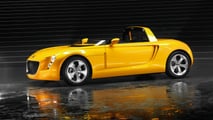
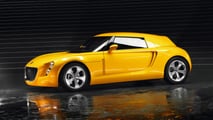
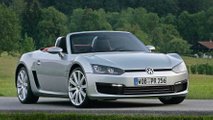
The 2005 VW EcoRacer and the 2009 VW BlueSport were powered entirely by diesel. The former was a polarizing sports car that could morph from a coupe into a roadster and even a speedster, while the latter was more civilized—think VW’s diesel-flavored take on the Porsche Boxster. Sadly, neither of them made it to the road.

2005 VW EcoRacer concept
Photo by: Volkswagen
2005 Volkswagen EcoRacer
The EcoRacer was more than just a showpiece for the 2005 Tokyo Motor Show. It was a fully functional prototype powered by a then-new 1.5-liter diesel engine producing 134 horsepower and 184 pound-feet of torque, sent through a dual-clutch automatic transmission. That might not sound like much for a sports car, but keep in mind Mazda sells the Miata in Europe exclusively with a 1.5-liter gas engine that makes even less: 129 hp and 111 lb-ft. Few would call the MX-5 boring to drive.
Lighter even than the original Miata, the EcoRacer tipped the scales at just 1,874 pounds thanks to its carbon fiber body. Weight distribution was 40:60 front to rear, and VW developed a bespoke front double-wishbone suspension for the car. At the back, engineers adapted the rear axle from the fifth-generation Golf, then two years into production.
With its featherweight build and frugal diesel, the EcoRacer offered the best of both worlds: performance and efficiency. It sprinted from 0 to 62 miles per hour in 6.3 seconds, or about half a second quicker than the GTI of the day. It topped out at 143 mph, impressive for such a small-displacement diesel.
Photos by: Volkswagen
VW promised you could have your cake and eat it too, quoting fuel consumption of just 3.4 liters per 100 km (69.1 mpg). The car’s efficiency owed not only to its engine and lightweight construction, but also to its compact dimensions: just 148.4 inches long.
While the EcoRacer’s diesel engine was the headline act, other details stood out. Its door windows swung upward, evoking the Mercedes 300SL Gullwing, and the entire roof could be removed to transform the coupe into a roadster. For a full speedster experience, the windscreen, frame, and upper dashboard could also be detached via latches on the A-pillars.
17
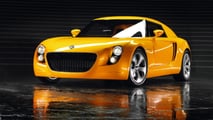
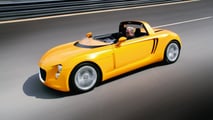
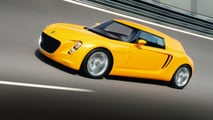
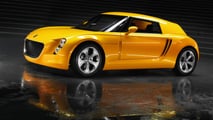
Source: Volkswagen
The quirky LED headlights might not have been to everyone’s taste, but we have to give credit where it's due. The bold styling was a departure for a brand known for playing it safe. Inside, the cabin had a retro-futuristic vibe with oversized analog switches, a digital instrument cluster, body-hugging seats, exposed carbon fiber, a chunky steering wheel, and decorative screws on the center tunnel.
Back then, VW described it as “a prototype that could well make history as the most economical sports car of its time.” It never reached production, but just four years later, VW revisited the idea of a performance diesel with the more grown-up BlueSport.
2009 VW BlueSport concept
2009 Volkswagen BlueSport
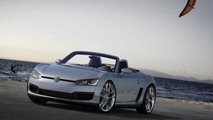
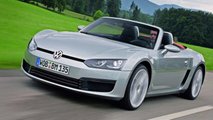
At the 2009 North American International Auto Show in Detroit, VW followed up on the diesel performance car formula with the BlueSport. The two-seater roadster ditched the quirky styling of the EcoRacer in favor of a more sophisticated look while retaining the mid-engine layout and DSG. The 1.5-liter diesel was gone, replaced by a larger 2.0-liter TDI producing 177 hp and 258 lb-ft.
From the outset, VW said the BlueSport was merely a "design study with no immediate plans for production." However, it didn’t take long for reports to surface claiming the diesel sports car would be sold to customers. For several years, the project was an on-again, off-again affair before ultimately being shelved after failing to win over the higher-ups. As then-R&D boss Ulrich Hackenberg explained: "We didn’t find a market for it. There is no business case."
Adding insult to injury for enthusiasts, the BlueSport was essentially production-ready. Some journalists even had the chance to drive it. As expected, it was a parts-bin special, borrowing the Polo’s front axle and the Golf’s multi-link rear suspension. Fun fact: braking power came from the Golf R32.
It was a touch slower than the featherweight EcoRacer, taking 6.6 seconds for the sprint on its way to 140 mph. It also sipped slightly more fuel, needing 4.3 liters for every 62 miles covered.
Without the EcoRacer’s carbon fiber body, the BlueSport was substantially heavier, tipping the scales at about 2,866 lbs with a 45:55 weight distribution. But the production version was projected to be lighter, at around 2,645 lbs, only slightly more than a Miata RF. Its striking orange retractable soft top weighed just 60 lbs, and practicality wasn’t entirely sacrificed: the rear trunk held 2.47 cubic feet, while the front compartment offered another four cubic feet.
Measuring just under 157 inches long, the concept was bigger than the EcoRacer but still smaller than an Audi TT or Porsche Boxster. Had it been approved in Wolfsburg, the road-going model was expected to launch in 2012. Rumors also suggested Skoda, SEAT, Audi, and Porsche counterparts were in the works, but VW Group’s entry-level sports car lineup to rival the Miata never materialized. VW would likely have offered a gasoline version with the Golf GTI’s engine to broaden its appeal.
Of all the VW concepts over the years, the BlueSport is probably the one that got away.
15



What do you think?
View
Comments
Although neither the EcoRacer nor the BlueSport made it to production, VW didn’t abandon performance diesels. It kept selling the Golf GTD until last year, when the hot hatch received a facelift and dropped the hot diesel derivative. It’s doubtful there will ever be another sporty TDI from the VW Group, given the diesel’s downfall in Europe, accelerated by the EU’s stringent emissions regulations.
In the first half of this year, diesels accounted for only 8.2 percent of new car sales, according to figures from the European Automobile Manufacturers' Association (ACEA). In 2025, plug-in hybrids are the new diesel, and the not-for-America Golf GTE picks up where the GTD left off.
Remember These Volkswagen Concepts?
1999 VW Concept D: Concept We Forgot
2004 VW Concept T: Concept We Forgot
We want your opinion!
What would you like to see on Motor1.com?
Take our 3 minute survey.
- The Motor1.com Team
Share this Story
- (https://twitter.com/intent/tweet?url=https%3A%2F%2Fwww.motor1.com%2Ffeatures%2F768574%2Fvolkswagen-diesel-sports-car-concepts%2F&text=Remember%20When%20Volkswagen%20Made%20Diesel%20Sports%20Cars%3F&via=motor1com)
- copy
GO TO COMMENTS
(
)
Got a tip for us? Email: tips@motor1.com
View all comments ( )
Popular
The Rotary Engine Should Be Everywhere. Why Isn't It?
Driven: The Revuelto SV Is All Bull, No BS
Toyota's Next Mid-Engined Coupe Is Going Racing This Weekend
Alfa Romeo Has Had It With Huge Screens
Subaru Teases A New Manual WRX, But Only For Japan
latest articles
- The Legendary AMG Hammer Might Be Making a Comeback Oct 23 - Aftermarket / Tuning -
- The New Hyundai Tucson Could Be Its Most Popular Yet Oct 23 - Sales -
- How A Tire Company Created The World's Most Famous Blimp Oct 23 - Motor101 -
- Acura Just Trademarked Four New Names, Hinting At 3 New SUVs Oct 23 - Patents & Trademarks -
- Driven: The Revuelto SV Is All Bull, No BS Oct 23 - New Car Reviews -
- The Mercedes 300 SL's Gullwing Doors Weren't Just For Looks. They Solved A Problem Oct 23 - Motor101 -
- 2027 Toyota Crown Signia Adds Tech Without Changing Its Formula Oct 23 - Pricing -
RECOMMENDED FOR YOU
Volvo, Mercedes And VW Turn To Nvidia For European Self-Driving Push
The Legendary AMG Hammer Might Be Making a Comeback
Volkswagen Wanted An Electric Bugatti Tourbillon, But Mate Rimac Pushed For A V16 Engine
The New Hyundai Tucson Could Be Its Most Popular Yet
The Strange Reason The Golf GTI Had A Golf Ball Shifter
How A Tire Company Created The World's Most Famous Blimp
12 Cars With Names That Make Absolutely No Sense