Home
Features
Motor101
Why Is Formula 1 Called Formula 1?
The name sounds more complicated than it is—and it dates back to the earliest days of modern Grand Prix racing.
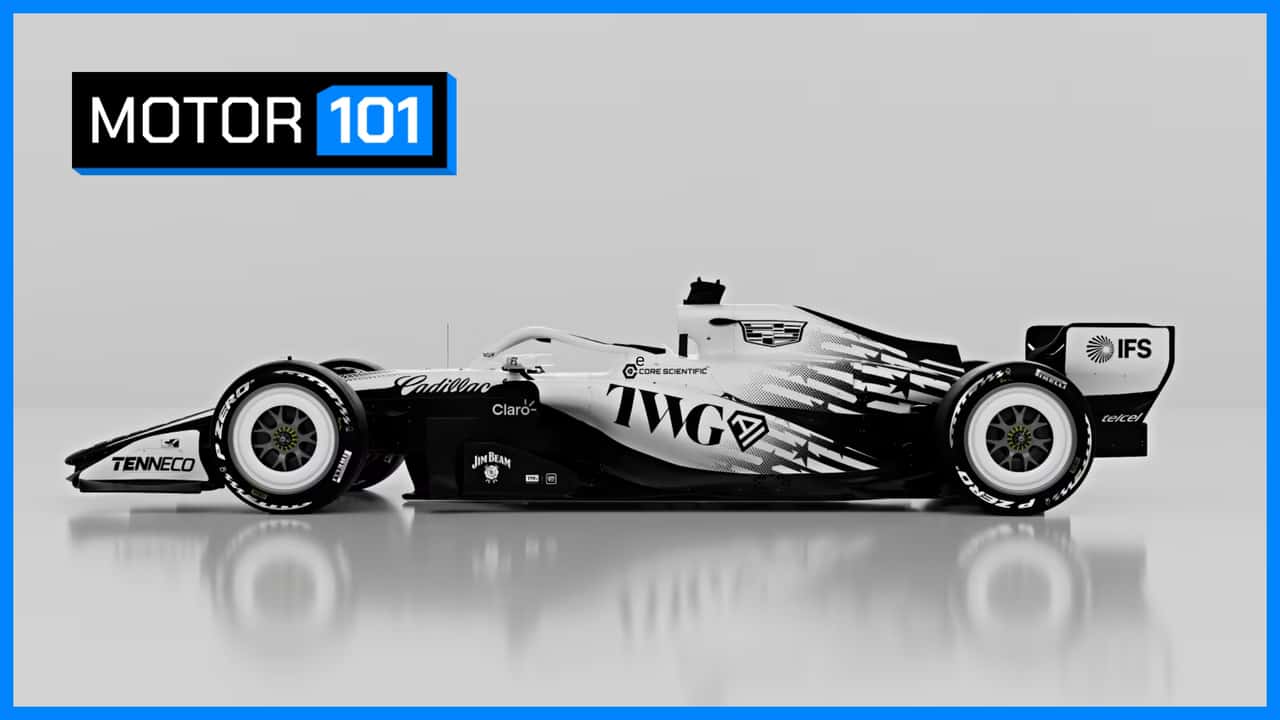
Photo by: Cadillac
Motor1.com Team 
By: Motor1.com Team
Aug 27, at 7:00am ET
Add Motor1.com as a preferred source in Google
- (https://twitter.com/intent/tweet?url=https%3A%2F%2Fwww.motor1.com%2Ffeatures%2F805938%2Fwhy-formula-1-called-formula-1%2F&text=Why%20Is%20Formula%201%20Called%20Formula%201%3F&via=motor1com)
- copy
Share
Comment
The name sounds scientific, but the explanation is surprisingly simple.
Formula 1 isn't called Formula 1 because someone thought it sounded futuristic. And despite what a new fan might reasonably assume, it doesn't have anything to do with a mathematical formula.
The word "formula" refers to a set of rules. The "1" means this particular formula sits at the top of the motorsport hierarchy. In other words, Formula 1 basically translates to the number-one category of racing governed by this particular rulebook.
But getting to that name took a little longer than you might expect.
What Does 'Formula' Actually Mean?
In motorsports, a formula is essentially a technical recipe.
It determines what competitors are allowed to build and race, covering everything from the car's basic design to its engine, components, dimensions, and other technical requirements.
Every Formula 1 team can develop its own car, but every one of those cars has to fit within the same basic set of regulations. That's the "formula."
It's also why the name still makes perfect sense nearly 80 years after it was created. The cars have changed dramatically, but Formula 1 remains defined by an extremely detailed collection of technical and sporting rules.
Formula 1 Almost Had A Different Name
The origins of the name date back to the immediate aftermath of World War II.
In 1946, the Commission Sportive Internationale—the sporting arm of the organization that would become the FIA—began creating a new set of rules for international Grand Prix racing.
According to Formula 1's own history, officials initially used the name "Formula Internationale." There's also evidence that the category was referred to as "Formula A."
Eventually, Formula 1 won out.
The reasoning was wonderfully straightforward: It instantly communicated that this was supposed to be the premier formula in international motor racing. Your thoughts on the matter may vary, based on your preferred form of motorsport, of course.
But there was no marketing department that spent six months brainstorming names for it. Sometimes the obvious answer really is the right one.
The First Formula 1 Rules Were Very Different
The original formula would look almost unrecognizable compared with today's rulebook.
Beginning in 1947, eligible cars could use either a massive 4.5-liter naturally aspirated engine or a much smaller 1.5-liter supercharged engine.
Those basic engine regulations carried over when the official Formula 1 World Championship began in 1950.
The first championship race took place at Silverstone on May 13, 1950, where Giuseppe Farina led an Alfa Romeo sweep of the podium. Farina eventually became Formula 1's first World Champion.
The regulations have been rewritten countless times since then—including another major technical overhaul for 2026—but the basic concept behind the name hasn't changed.
There's a formula. And this is Formula Number One.
So What About Formula 2 And Formula 3?
Yes, they're real, too.
Formula 2 and Formula 3 sit below F1 on the modern single-seater ladder, each operating under its own set of regulations. They're largely used as development categories for drivers hoping to eventually reach Formula 1.
That hierarchy makes "Formula 1" sound even more logical today, even though the name wasn't simply created because somebody lined up F1, F2, and F3 in order.
And the terminology still confuses new fans.
A discussion on Reddit's r/OutOfTheLoop about Formula 1's surge in popularity eventually produced almost exactly this question: Why is it called Formula 1 in the first place? The straightforward community answer was essentially the same—the "formula" is the rules competitors have to follow, while F1 is the big one. Read the Reddit discussion
Formula 1 Is Basically The World's Fastest Rulebook
That's probably the easiest way to remember it.
"Formula" doesn't describe the cars themselves. It describes the framework under which they're built and raced.
What do you think?
View
Comments
And "1" tells you exactly where that framework was intended to sit.
At the top.
More Motor101
 Why Is Turtle Wax Called Turtle Wax?
Why Is It Called a 'Pit Stop' In Racing?
What Does 'NASCAR' Actually Stand For?
What Those Little Weights On Your Wheels Actually Do
We want your opinion!
What would you like to see on Motor1.com?
Take our 3 minute survey.
- The Motor1.com Team
Share this Story
- (https://twitter.com/intent/tweet?url=https%3A%2F%2Fwww.motor1.com%2Ffeatures%2F805938%2Fwhy-formula-1-called-formula-1%2F&text=Why%20Is%20Formula%201%20Called%20Formula%201%3F&via=motor1com)
- copy
GO TO COMMENTS
(
)
Got a tip for us? Email: tips@motor1.com
View all comments ( )
Popular
12 Underrated Performance Cars That Nobody Bought
This $41,000 Chevy Corvette C1 Lookalike Is Really A Supersized Miata
2027 Honda Accord Gets Split Headlights With Squinty Eyes, But Only In China
Acura Is Building An 'Adventure-Ready' SUV. Here's Everything We Know
Mazda Exec Claims The Company's Identity No Longer Depends On The Miata
Latest Stories
- Meet Ford's New Le Mans Fighter: The GT41 Nov 26 - First Look -
- Android Auto Keeps Disconnecting? Here's What Might Be Wrong Nov 26 - Motor101 -
- 2027 Toyota 4Runner Finally Adds Heated Seats, Then Crosses $45,000 Nov 26 - Pricing -
- Porsche Unveils One-Off 911 GT3 Tribute To Its Iconic GT1 Race Car Nov 26 - Special Editions -
- Audi Is Putting A Gas Engine In Its Chinese AUDI Electric SUV Nov 26 - Green -
- Toyota's First Range-Extended EV Is Coming, And It Looks Like A Highlander Nov 26 - Teasers -
- 2027 Honda Accord Gets Split Headlights With Squinty Eyes, But Only In China Nov 26 - Facelift -
RECOMMENDED FOR YOU
Android Auto Keeps Disconnecting? Here's What Might Be Wrong
Meet Ford's New Le Mans Fighter: The GT41
What Happens To Concept Cars After The Auto Show Is Over? Sadly, Not All Of Them Survive
2027 Toyota 4Runner Finally Adds Heated Seats, Then Crosses $45,000
Volvo Invented The Modern Seatbelt. Then Gave Away The Idea For Free
Porsche Unveils One-Off 911 GT3 Tribute To Its Iconic GT1 Race Car
Why The 24 Hours Of Le Mans Is Exactly 24 Hours Long