Home
Features
Motor101
This Gearbox Blurs The Line Between Manual And Automatic
It shifts like an automatic, but it's really a manual gearbox with a robot doing the work. Here's how AMTs pull it off.
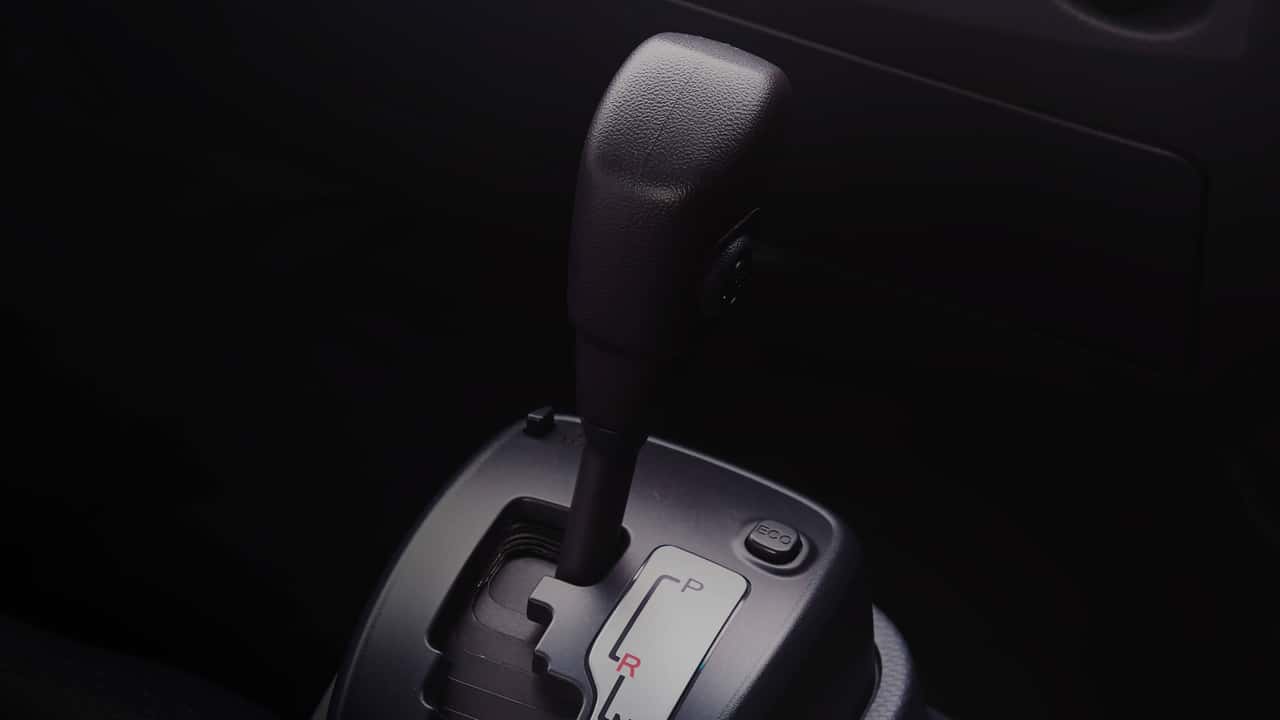
Photo by: Isuzu
Dan Mihalascu 
By: Dan Mihalascu
Nov 11, at 1:38pm ET
Add Motor1.com as a preferred source in Google
- (https://twitter.com/intent/tweet?url=https%3A%2F%2Fwww.motor1.com%2Ffeatures%2F815089%2Fwhat-is-an-automated-manual-transmission-how-it-works%2F&text=This%20Gearbox%20Blurs%20The%20Line%20Between%20Manual%20And%20Automatic&via=motor1com)
- copy
Share
Comment
An automatic transmission makes driving easier, while a manual gearbox gives drivers more direct control over how power is delivered. But what if you could have the convenience of an automatic without giving up the mechanical simplicity of a manual? That's where the automated manual transmission, or AMT, comes in.
It's a type of gearbox that combines the basic architecture of a traditional stick shift with electronic systems that take care of clutch operation and gear changes. The idea behind an AMT is surprisingly straightforward. Instead of relying on a driver to operate the clutch pedal and move the gear lever, the transmission does everything itself. The result is a two-pedal driving experience that looks and feels similar to an automatic, although there are some important differences under the skin.
What Is An Automated Manual Transmission?
An automated manual transmission is essentially a conventional manual gearbox that can change gears without driver intervention. It uses the same basic mechanical arrangement as a stick shift, including a dry-type clutch and a set of gears, but replaces the driver's physical actions with electronic controls and actuators.
In a traditional manual car, the driver presses the clutch pedal to disconnect the engine from the transmission before selecting another gear. With an AMT, sensors, an electronic control unit, and electromechanical or hydraulic actuators handle those operations automatically, as research by Aisin engineers details.
The driver simply uses the accelerator and brake pedals, just as they would in a conventional automatic. Some systems also allow manual gear selection through the gear lever or steering-wheel paddles, giving drivers additional control when needed.
The important distinction is that an AMT doesn't work like a conventional automatic transmission internally. It's still a manual gearbox, just one operated by a computer rather than the person behind the wheel.
How Does An Automated Manual Transmission Work?
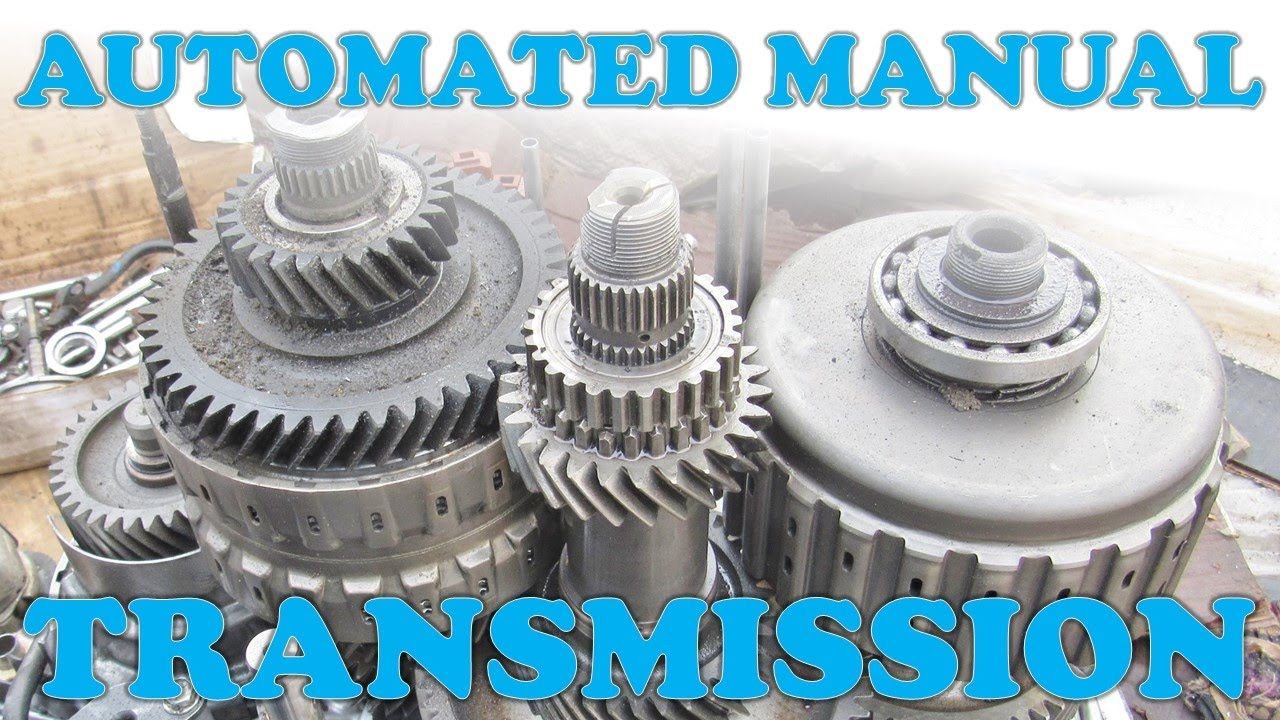
The process starts with the transmission control unit monitoring information such as vehicle speed, engine RPM, throttle position, and driving conditions. Based on this data, the system determines when the engine needs another gear.
When it's time to shift, an actuator disengages the clutch, temporarily separating the engine from the gearbox. Another actuator then operates the gear-selection mechanism to engage the appropriate gear. Once the shift is complete, the clutch is re-engaged, restoring the flow of power to the wheels, as explained in this NHTSA technical report.
All of this happens without the driver having to lift a foot off the accelerator to operate a clutch pedal or move a traditional gear lever. The system coordinates each step electronically, although the exact operating strategy varies between manufacturers and transmission designs.
Because a typical AMT uses a single clutch, however, engine power is briefly interrupted during gear changes. This is why some automated manuals can feel less smooth than conventional automatics, particularly when accelerating hard or driving in stop-and-go traffic, as Kia notes in a presentation of its AMT.
What Are The Advantages And Disadvantages Of An AMT?
Automated manual transmissions offer an interesting middle ground between manual and automatic gearboxes. Their biggest appeal is that manufacturers can often adapt an existing manual transmission rather than develop a completely different automatic system. Some of their main advantages include:
- Lower manufacturing costs: AMTs can be relatively inexpensive to produce because they use many of the same components as conventional manual gearboxes.
- Potentially good fuel efficiency: Their mechanical layout can offer competitive efficiency, although actual consumption depends on the vehicle and transmission calibration.
- Reduced mechanical complexity: Compared with many conventional automatics, AMTs can have fewer specialized transmission components.
- Automatic driving convenience: Drivers don't have to operate a clutch pedal or manually change gears.
- Familiar mechanical architecture: Since the underlying gearbox is similar to a manual, manufacturers can build on existing engineering and production processes.
However, the technology is not without compromises. The most noticeable disadvantage is shift quality. Because the clutch has to disengage during gear changes, drivers may experience a brief pause in acceleration or a slight forward-and-backward movement.
Clutch wear is another consideration. An AMT still uses a friction clutch, meaning it can eventually require replacement, just like a conventional manual. Frequent stop-and-go driving and aggressive acceleration can accelerate wear, depending on how the system manages clutch engagement.
How Is An AMT Different From A Conventional Automatic And A Dual-Clutch Transmission?
Although an AMT provides two-pedal driving, it shouldn't be confused with a conventional automatic transmission. Most traditional automatics use planetary gearsets and a torque converter to manage power delivery, although some modern designs use different clutch-based arrangements.
An AMT retains the conventional manual gearbox layout and uses actuators to operate its clutch and gear selector. This generally makes it simpler and less expensive than many conventional automatic designs, but the interruption in power delivery during shifts can affect refinement.
A dual-clutch transmission, or DCT, takes a different approach. It uses two separate clutches, typically with one handling odd-numbered gears and the other handling even-numbered gears. This allows the next gear to be preselected while the current one is still engaged, making gear changes considerably quicker and minimizing interruptions in power delivery.
The trade-off is complexity. Dual-clutch transmissions generally require more sophisticated hardware and control systems, which can increase manufacturing and repair costs. In simple terms, an AMT is a manual gearbox that shifts itself, while a DCT is a more sophisticated system designed to combine the efficiency of a manual with faster, smoother automated gear changes.
What Do Drivers Think About Automated Manual Transmissions?
Reddit discussions reveal mixed opinions about AMTs, with shift quality emerging as one of the biggest talking points. In a discussion on r/CarsIndia, some owners say the gear changes can feel jerky, particularly between first and second gear, while others argue that newer AMTs are considerably smoother and simply require some getting used to.
Low-speed driving is another common complaint. In a thread about Swift AMT ownership, one driver coming from a dual-clutch car described noticeable hesitation in bumper-to-bumper traffic. Other owners, however, suggested adjusting accelerator input to make shifts smoother, highlighting how driving style can influence the experience.
Despite these drawbacks, many Reddit users appreciate the convenience of not having to operate a clutch in heavy traffic. A discussion about long-term AMT experiences also highlights their appeal as relatively affordable, fuel-efficient alternatives to more sophisticated automatic gearboxes. The main takeaway is that AMTs can make sense for budget-conscious buyers, provided they're comfortable with less refined gear changes.
Where Are AMTs Used, And Are They Worth It?
Automated manual transmissions have found a particularly strong following in cost-conscious automotive markets. They're popular in some affordable small cars because they give buyers the convenience of automatic driving without the added cost of a more sophisticated transmission.
Manufacturers such as Maruti Suzuki, Tata Motors, Fiat, Opel, and Renault have offered AMT-equipped vehicles in various markets. The technology has also found applications in commercial vehicles, where automating a manual gearbox can reduce driver workload and make operation easier.
What do you think?
View
Comments
So, is an AMT worth having? That depends on what matters most to the driver. If affordability, relatively straightforward engineering, and two-pedal convenience are priorities, an automated manual can be a sensible choice.
However, drivers who expect the seamless gear changes of a modern torque-converter automatic or dual-clutch transmission may find the experience less satisfying.
More From Motor101
 Paint Protection Film Costs Thousands. Is It Actually Worth It?
The Physics Behind Why SUVs Are More Likely To Roll Over In A Crash
There's A Reason Your Brain Doesn't Like Driving A CVT
No, Premium Gas Doesn't Automatically Make Your Car Faster
We want your opinion!
What would you like to see on Motor1.com?
Take our 3 minute survey.
- The Motor1.com Team
Share this Story
- (https://twitter.com/intent/tweet?url=https%3A%2F%2Fwww.motor1.com%2Ffeatures%2F815089%2Fwhat-is-an-automated-manual-transmission-how-it-works%2F&text=This%20Gearbox%20Blurs%20The%20Line%20Between%20Manual%20And%20Automatic&via=motor1com)
- copy
GO TO COMMENTS
(
)
Got a tip for us? Email: tips@motor1.com
View all comments ( )
Popular
12 Crossovers That Are Surprisingly Good At Off-Roading
Audi Nuvolari Costs $700,000. And It Will Be Rare In America
Dodge Is Back In NASCAR After 14 Years. Here's Everything We Know
Rimac's Electric Hypercar Is Dead Earlier Than Expected
Lucid's Sub-$50,000 SUV Comes Into Focus In New Teaser
latest articles
- This Gearbox Blurs The Line Between Manual And Automatic Nov 11 - Motor101 -
- Audi Nuvolari Costs $700,000. And It Will Be Rare In America Nov 11 - Pricing -
- Rimac's Electric Hypercar Is Dead Earlier Than Expected Nov 11 - Manufacturing / Production -
- Dodge Is Back In NASCAR After 14 Years. Here's Everything We Know Nov 11 - Features -
- Want To Drive A Rally Car? DirtFish Is Heading To Willow Springs Nov 11 - Motorsport -
- Two Nearly Identical Ferraris Sold On The Same Day. One Fetched $7.6 Million More Nov 11 - Supercars -
- The Lucid Gravity Grand Touring Is a Minivan-Shaped Supercar: Driven Nov 11 - New Car Reviews -
RECOMMENDED FOR YOU
Your Car Has Airbags In Places You Probably Didn't Even Know
Audi Nuvolari Costs $700,000. And It Will Be Rare In America
Paint Protection Film Costs Thousands. Is It Actually Worth It?
Rimac's Electric Hypercar Is Dead Earlier Than Expected
The Physics Behind Why SUVs Are More Likely To Roll Over In A Crash
Dodge Is Back In NASCAR After 14 Years. Here's Everything We Know
There's A Reason Your Brain Doesn't Like Driving A CVT