Home
Porsche
News
Porsche Revisits Its Strange Car Designed To Last 20 Years
The FLA concept debuted in 1973 with a modest 74-hp engine, but the goal was longevity rather than performance.
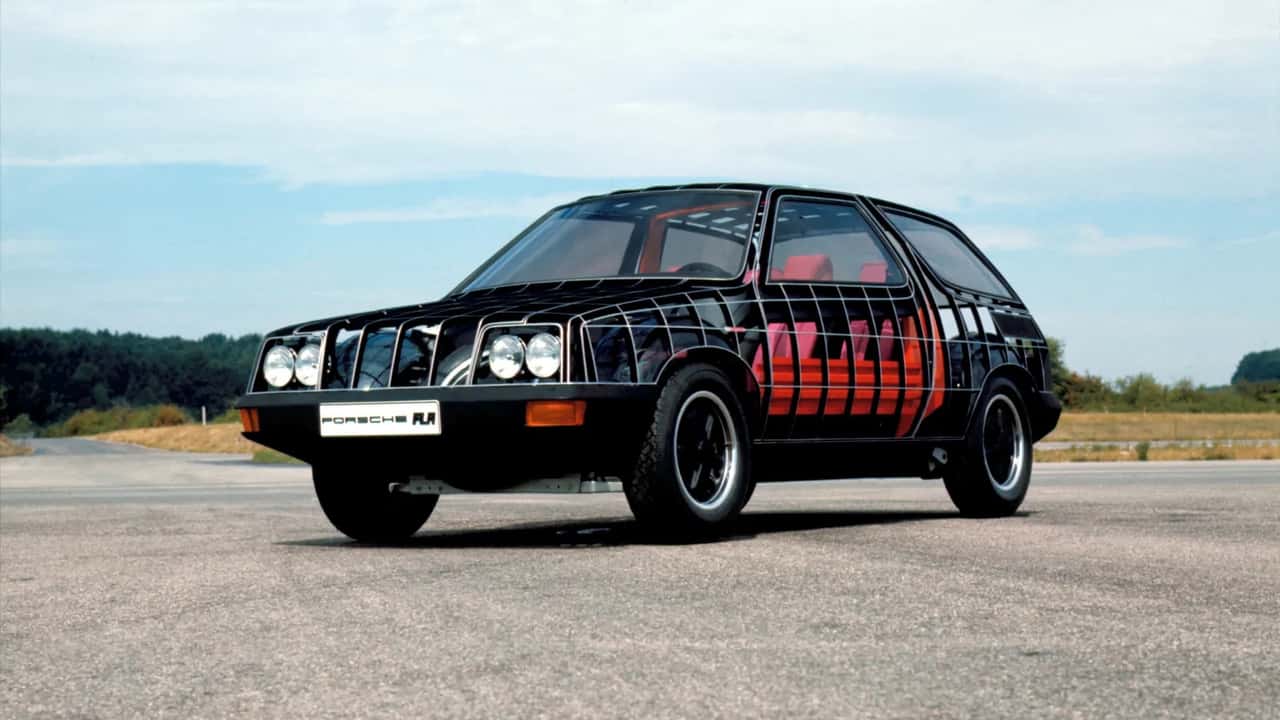
Photo by: Porsche
Adrian Padeanu 
By: Adrian Padeanu
Nov 17, at 6:33am ET
Add Motor1.com as a preferred source in Google
- (https://twitter.com/intent/tweet?url=https%3A%2F%2Fwww.motor1.com%2Fnews%2F815722%2F1973-porsche-fla-concept%2F&text=Porsche%20Revisits%20Its%20Strange%20Car%20Designed%20To%20Last%2020%20Years&via=motor1com)
- copy
Share
Comment
Cars eventually wear out, but Porsche was already exploring ways to make them last longer more than 50 years ago. The Porsche Museum recently reminded us of that unusual experiment on its official Instagram page, spotlighting the Forschungsprojekt Langzeitauto (FLA). Unveiled in 1973, the concept prioritized longevity over performance and even anticipated some features that eventually made it into production.
The project followed the Club of Rome's 1972 Limits to Growth study, which raised concerns about the planet's finite resources and the consequences of unchecked industrial expansion. Porsche took those warnings seriously enough to investigate how automakers could reduce their raw material consumption by building vehicles that wouldn't need replacing so often.
Commissioned by Germany's Federal Ministry for Research and Technology, the project resulted in a compact car designed to cover at least 186,000 miles (300,000 kilometers) over a 20-year lifespan. That was roughly twice the expected service life of a typical car at the time. Internally designated Type 1989, the FLA debuted at the 1973 Frankfurt Motor Show, though Porsche never intended to put it into production.
A Porsche That Put Longevity Ahead Of Performance
The FLA looked nothing like the sports cars that made Porsche famous. Its compact silhouette was closer to an ordinary family hatchback, bringing to mind the AMC Pacer and Lada Samara, although both cars arrived several years later. The exposed grid-like structure made it look more like an engineering experiment than a finished automobile. That was precisely the point: Porsche wanted visitors to see how the car was put together rather than admire its styling.
The unconventional exterior also revealed some interesting engineering solutions. The doors featured side-impact protection, something that wasn't yet commonplace in production cars. The concept also incorporated a robust chassis and corrosion-resistant construction, with the proposed body using materials such as aluminum and stainless steel to fight rust and simplify recycling.
Porsche even considered details that might seem insignificant today but could matter over decades of ownership. These included scratch-resistant glass, silver-coated electrical contacts, a maintenance-free battery, and a split wiring harness that would make future repairs and modifications easier. Generously sized oil reservoirs and filters were also intended to reduce wear and extend maintenance intervals.
A 2.5-Liter Engine With Just 74 Horsepower
Naturally, a car designed to survive for decades didn't need a particularly powerful engine. Porsche installed a 2.5-liter, air-cooled four-cylinder boxer engine behind the rear seats, producing just 74 hp and revving to 4,000 rpm. The modest output was intentional, as the engineers wanted to minimize mechanical stress and extend the lifespan of both the engine and transmission.
The powertrain was paired with an equally unexciting three-speed automatic transmission, prioritizing durability over driver involvement. The FLA wasn't supposed to be a thrill to drive, and Porsche was perfectly comfortable with that compromise. After all, this was a research project about longevity, not another attempt to build a sports car.
The company estimated that a production version would have cost around 30 percent more than a conventional car of the period. However, buyers would theoretically have received twice the usable lifespan. It was an interesting proposition, although convincing customers to pay more upfront for a car they might keep for 20 years was always going to be a difficult sell.

1973 Porsche FLA concept
Photo by: Porsche
Porsche's Long-Life Experiment Wasn't Entirely In Vain
The FLA never became a production model, and its unusual body structure and deliberately underpowered engine remained confined to the experimental vehicle. Nevertheless, the project wasn't a complete waste of time.
One particularly important idea made its way into Porsche's production lineup: hot-dip galvanization. Starting in 1975, the 911 received corrosion-resistant galvanized body panels, helping protect the sports car against rust. Porsche subsequently introduced a six-year warranty against corrosion perforation, a significant development for a manufacturer whose cars were expected to last.
There's also an interesting historical footnote. Porsche had already experimented with stainless-steel bodywork on a 911 S in 1967, demonstrating that the company was investigating corrosion resistance well before the FLA appeared. The long-life project took that thinking considerably further.
1973 Porsche FLA concept
6



Source: Porsche
More than five decades later, the FLA feels surprisingly relevant. Automakers are once again discussing resource conservation, recycling, repairability and extending vehicle lifecycles. Porsche's experiment showed that the EV revolution didn't invent these concerns. In fact, the company was exploring them back when 74 horsepower was considered sufficient for a car from Stuttgart.
The FLA remains a reminder that sometimes the most interesting automotive innovations aren't about making cars faster, but about making sure they don't end up in the scrapyard quite so soon.
1994 Porsche C88 concept
9


What do you think?
View
Comments
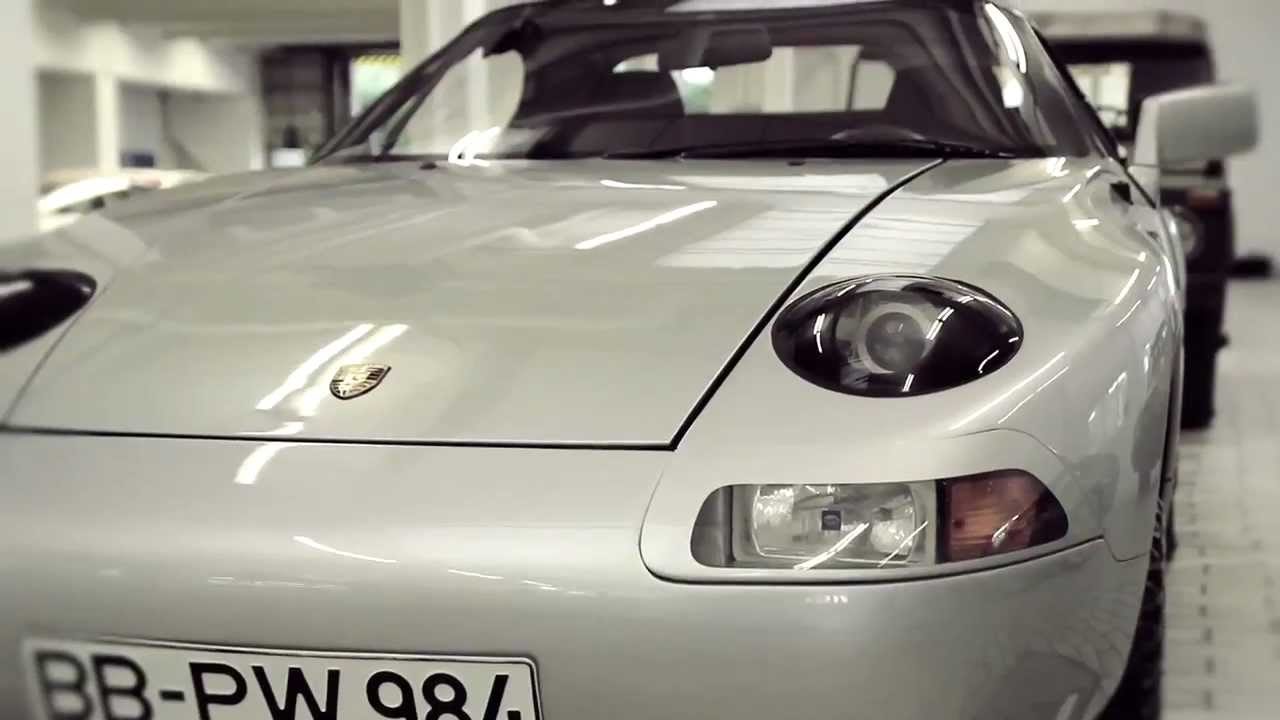
Porsche revisited the idea of building an unconventional car two decades later, though with a very different mission. The 1994 C88 was a no-frills sedan developed for China as part of a government initiative to create an affordable people's car. It even wore a specially designed badge depicting a family of three instead of Porsche's famous crest.
The project never made it to production, giving Porsche another curious one-off to add to its history.
See Other Forgotten Porsche One-Offs:
Porsche Le Mans Living Legend Was An Eight-Cylinder Nod To The Past
Porsche 904 Living Legend Was A Lightweight Coupe With V2 Engine
Porsche Vision Renndienst Is Proof An Electric Van Can Be Cool
Porsche 919 Street Revealed As 900-Horsepower Hypercar Never Built
We want your opinion!
What would you like to see on Motor1.com?
Take our 3 minute survey.
- The Motor1.com Team
Share this Story
- (https://twitter.com/intent/tweet?url=https%3A%2F%2Fwww.motor1.com%2Fnews%2F815722%2F1973-porsche-fla-concept%2F&text=Porsche%20Revisits%20Its%20Strange%20Car%20Designed%20To%20Last%2020%20Years&via=motor1com)
- copy
GO TO COMMENTS
(
)
Got a tip for us? Email: tips@motor1.com
View all comments ( )
Popular
BMW Has 10 New Models Coming In 2027. Here's All Of Them
Driven: BMW's Electric M3 Is The Real Deal
GM Might Finally Build A Real F-150 Raptor Rival: Report
Where Did All The Bad Cars Go?
I Tried Mercedes' New Hands-Free Driving Tech. It Nearly Drove Me Everywhere
Latest Stories
- Porsche Revisits Its Strange Car Designed To Last 20 Years Nov 17 - Concept Cars -
- 2028 Ford Mustang GTD Gets A Special Edition 125 Years In The Making Nov 17 - Special Editions -
- This Kia Stinger V6 Filled With Metal After 100,000 Miles Nov 17 - Engines -
- A Chinese Company Is Reproducing Classic Car Bodies On The Cheap Nov 17 - Classics -
- A $1.6 Million McLaren Senna Couldn't Find A Buyer. Now It's Sitting Neglected Nov 17 - Supercars -
- Aston Martin Is Taking Its Call Of Duty Off-Roader To The Dakar Rally With Fernando Alonso Nov 17 - Motorsport -
- Ford Maverick Buyers Can Get The 300-HP SV300T Package Before Taking Delivery Nov 17 - Official -
RECOMMENDED FOR YOU
Porsche’s New Supercar Already Spotted At The Nürburgring
2028 Ford Mustang GTD Gets A Special Edition 125 Years In The Making
Theon Design Expands US Presence As It Celebrates A Decade Of Porsche Restomods
This Kia Stinger V6 Filled With Metal After 100,000 Miles
Porsche's Boss Isn't A Fan Of Tesla's Marketing Stunts
A Chinese Company Is Reproducing Classic Car Bodies On The Cheap
This Porsche 924 Was The UAE's First Performance Police Car