Home
News
Trending
'This Motor Might Say Land Rover…:' Mechanic Lifts the Hood of a Luxury SUV. Then He Reveals Who Actually Makes the Engine
"You thinking you getting some kind of Porsche."
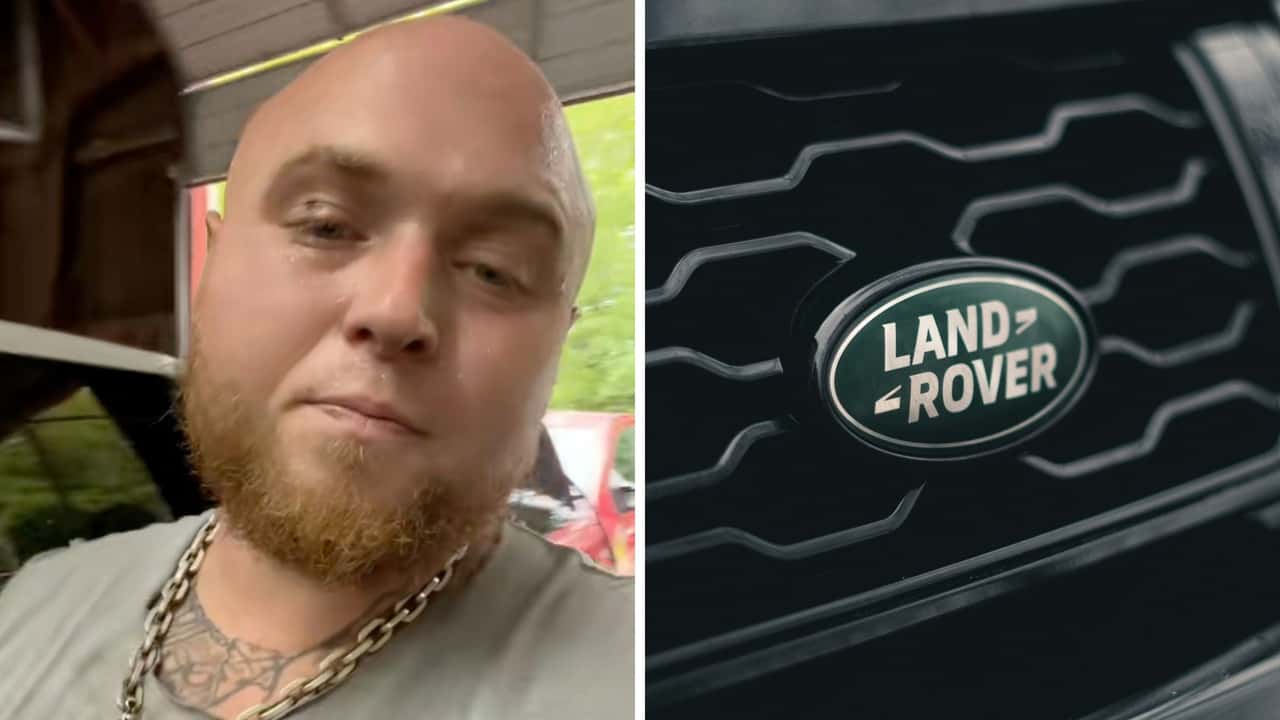
Photo by: larry.law94 & Loris Marie
Chad Swiatecki 
By: Chad Swiatecki
Aug 17, 2025 at 5:00pm ET
Add Motor1.com as a preferred source in Google
- (https://twitter.com/intent/tweet?url=https%3A%2F%2Fwww.motor1.com%2Fnews%2F769163%2Fland-rover-engine%2F&text=%27This%20Motor%20Might%20Say%20Land%20Rover%E2%80%A6%3A%27%20Mechanic%20Lifts%20the%20Hood%20of%20a%20Luxury%20SUV.%20Then%20He%20Reveals%20Who%20Actually%20Makes%20the%20Engine&via=motor1com)
- copy
Share
Comment
Land Rover owners expect rugged British style and refinement. But lift the hood on certain models and you might find a surprise stamped right into the metal: Ford Motor Company.
Mechanic and automotive-minded creator Larry Law (@larry.law94) is all smiles in a viral clip where he reveals the provenance of Land Rover’s critical components to potential owners.
“This motor might say Land Rover, but on the side of it, it says Ford Motor Company. So you thinking you getting some kind of Porsche,” he says while looking under the hood of a Land Rover sitting in his repair bay. “This is a 5.0. This is a 302 Ford.”
When Ford and Land Rover Shared Parts
In the world of automotive manufacturing, luxury brands sometimes borrow engineering from broader platforms, especially when cost-sharing or corporate ownership comes into play.
Following Ford’s 2000 acquisition of Land Rover, several V‑8 engines in Land Rover models were produced at Ford facilities. The AJ‑V8 family, designed by Jaguar, is a perfect example. Despite its British design, production occurred within a dedicated “plant‑within‑a‑plant” at Ford’s Bridgend Engine Plant in Wales.
Trending Now
The Bridgend plant, active from 1980 to 2020, produced over 22 million engines during its lifetime and served Ford, Jaguar, Volvo, and Land Rover operations. In August 2020, Land Rover confirmed it would shift engine production in‑house after Bridgend’s closure.
The 5.0-liter engine that Larry refers to is most likely the AJ-V8 (AJ133), which powered certain Range Rover models between 2009 and 2012. While its displacement matches Ford’s classic 302 cubic-inch V-8, the AJ-V8 is a distinct design, making it more of a cousin than a direct descendant. Automotive enthusiasts point out that, although these engines were built in Ford facilities, their internals were explicitly developed for Jaguar and Land Rover applications.
The AJ-V8 also features direct fuel injection and a hemispherical-like combustion chamber, which the mechanic likened to Chrysler’s “Hemi” design. While the comparison captures the general shape and injector placement, it’s more a colorful analogy than a technical match. Many of the Land Rover models using this engine were also paired with Ford-sourced automatic transmissions, underscoring the level of component sharing between the two brands during and after Ford’s ownership.
Sharing powertrain components is a strategy that demonstrates smart economics. By using a common engine platform, manufacturers reduce development costs and leverage proven systems. Ford’s use of the Bridgend facility exemplified this: Jaguar (and later Land Rover) could tap into existing production lines without setting up a completely separate factory.
After the Bridgend closure, JLR invested in its engine production capabilities, bringing operations to its Wolverhampton Engine Manufacturing Centre.
Why It Matters to Owners
For Land Rover owners, the connection to Ford has real-world implications for maintenance, repair, and brand perception. On the positive side, using Ford-sourced internals can make it easier to source replacement parts, particularly in markets with an extensive Ford service network. Many independent mechanics are already familiar with Ford V-8 systems, which can translate into shorter repair times and potentially lower labor costs. The components themselves also carry a track record from years of use in other vehicles, lending them a degree of proven durability.
However, the discovery that a luxury SUV’s engine bears Ford branding can be unsettling for some buyers who expect entirely bespoke engineering under the Land Rover badge. Paying premium prices for a vehicle that shares significant mechanical DNA with less expensive models also raises questions about perceived value. However, in practice, the integration and refinement often remain firmly in the luxury category.

Stay informed with our newsletter every weekday
back
Subscribe For more info, read our Privacy Policy & Terms of Use.
The Ford–Land Rover collaboration is far from unique in the automotive world. Across the industry, luxury automakers have long relied on sister companies or corporate group resources to source components and share technology.
Aston Martin, for example, has incorporated Ford-derived switchgear and electronics into several of its models, a legacy of Ford’s former partial ownership stake in the brand. Bentley, meanwhile, has built vehicles on Volkswagen Group modular platforms and used VW-sourced powertrains, blending high-end craftsmanship with shared engineering foundations.
Such practices are rooted in economics. Component and platform sharing allows manufacturers to maintain brand identity while achieving the cost efficiencies of large-scale production.
For owners curious about their own vehicle’s mechanical heritage, there are several ways to trace an engine’s origin. VIN decoding tools, available online or through dealerships, can identify the specific engine type and where it was built. A visual inspection of the engine block may also reveal stamped markings such as “Ford Motor Company” that point directly to its provenance.
What do you think?
View
Comments
Additionally, reviewing factory service manuals, official parts catalogs, or detailed service histories can uncover information about part suppliers and manufacturing sources, offering a clearer picture of the vehicle’s lineage.
Motor1 reached out to Larry via direct message. We’ll update this if he responds.
More From Motor1
 BMW Once Considered Selling Range Rovers Directly—Yes, Really
The 2026 Land Rover Defender Keeps the Supercharged V-8 Alive
Jaguar Be Damned: JLR Just Had its Best Profit in a Decade
Every Three-Row SUV You Can Buy in 2025
We want your opinion!
What would you like to see on Motor1.com?
Take our 3 minute survey.
- The Motor1.com Team
Share this Story
- (https://twitter.com/intent/tweet?url=https%3A%2F%2Fwww.motor1.com%2Fnews%2F769163%2Fland-rover-engine%2F&text=%27This%20Motor%20Might%20Say%20Land%20Rover%E2%80%A6%3A%27%20Mechanic%20Lifts%20the%20Hood%20of%20a%20Luxury%20SUV.%20Then%20He%20Reveals%20Who%20Actually%20Makes%20the%20Engine&via=motor1com)
- copy
GO TO COMMENTS
(
)
Got a tip for us? Email: tips@motor1.com
View all comments ( )
Popular
BYD Better Watch Out: Koenigsegg Is Still Chasing A 330-MPH Jesko Run
Driven: New Audi Q7 And SQ7 Bring The Power And The Tech
Honda Shows Several New Hybrids Under Covers, Details All-New Modular Platform
BYD's Boxy SUV Banned In The EU After Land Rover Defender Copycat Ruling
Audi Has 7 New Models Coming In 2027. Here's All Of Them
Latest Stories
- This Corvette Sat Abandoned For 25 Years. Then It Got Its First Deep Clean Nov 23 - Classics -
- Driven: New Audi Q7 And SQ7 Bring The Power And The Tech Nov 23 - New Car Reviews -
- Subaru's American-Built Ascent Is Heading To Japan Nov 23 - Official -
- Rare Ferrari 499P Modificata Rear-Ends Schumacher-Era F1 Car Nov 23 - Crashes / Wrecks -
- These 22 States Don't Require Front License Plates Nov 23 - Motor101 -
- Audi Drivers Can Now Manage Emails And Teams Meetings Using AI Nov 23 - Technology -
- Mechanics Were Asked About Buying Used Jeeps. They Have Strong Opinions Nov 23 - Buying Tips -
RECOMMENDED FOR YOU
Audi Drivers Can Now Manage Emails And Teams Meetings Using AI
Mechanics Were Asked About Buying Used Jeeps. They Have Strong Opinions
First Chinese Car In Germany's Biggest Reliability Study Finishes Near The Bottom
McLaren Delivers First W1 Hyperacr, And It's Very Green
Honda And Toyota Recall 1.6 Million Vehicles Over Takata Airbag Risk
Honda Shows Several New Hybrids Under Covers, Details All-New Modular Platform
Steve McQueen's Ferrari NART Spider Just Sold For $18.9 Million