Home
News
Industry
One in five independent workshops not planning for electromobility
Lack of demand and high training requirements are reasons against BEV maintenance, according to the study
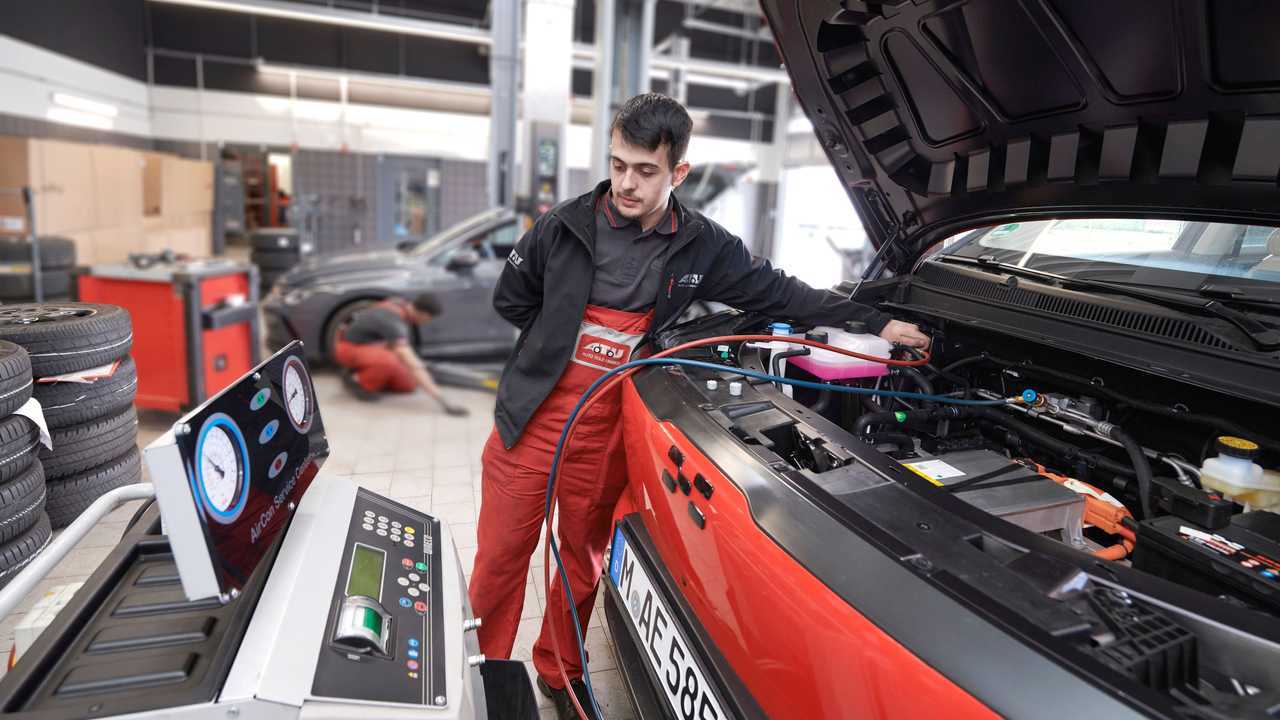

By: Benja Hiller
Published by: Brian Potter
Aug 27, 2024 at 4:35am ET
Add Motor1.com as a preferred source in Google
- (https://twitter.com/intent/tweet?url=https%3A%2F%2Fwww.motor1.com%2Fnews%2F731427%2Findependent-workshops-not-preparing-ev-service-study%2F&text=One%20in%20five%20independent%20workshops%20not%20planning%20for%20electromobility&via=motor1com)
- copy
Share
Comment
The shortage of skilled labour is a task that is also on the government's agenda and needs to be solved. Independent garages also seem to have a lot of catching up to do when it comes to servicing electric vehicles.
According to a representative study conducted in cooperation with MEYLE, one in five garages are currently planning their future without servicing EVs at all. To this end, the market research institute INNOFACT AG surveyed a total of 274 independent workshops in Germany, Austria and Switzerland between March and May 2024 on current and future challenges.

Independent workshops servicing electric vehicles infographic
Meyle
According to the survey, most independent workshops do not even have e-mobility on their radar at the moment. For them, it is not a business-relevant topic. Only three per cent state that they already generate more than half of their turnover with EVs. However, according to 40 per cent of respondents, an electric car is in the yard at least once or several times a week. Changing tyres is the most frequently cited reason for a vehicle being brought in - 58 per cent. This is followed by general repairs (49 per cent) and brake servicing (38 per cent).
One reason for this is the step-by-step qualification prescribed by the German Social Accident Insurance (DGUV) for work on vehicles with high-voltage systems, which is often still lacking at present. This is divided into three stages: general work, work in a de-energised state and work on live high-voltage systems.
The vast majority of independent garages are currently still allowed to service electric vehicles - around 78 per cent. However, only a third of them are allowed to carry out this general work, a further 25 per cent are qualified to carry out maintenance in a de-energised state, and only one in five workshops are allowed to work on high-voltage systems and replace live components.
There is therefore a lack of specialised personnel. 70 per cent want to tackle the necessary training in the future. Of these, 39 per cent plan to generate a large part of their turnover in the high-voltage sector in future. Many are therefore recognising a trend towards the need for change and adaptation. However, almost one in five garages has no plans to repair electric cars.
In the past, independent workshops have repeatedly encountered difficulties in the adaptation process, for example with systems and software for on-board diagnostics. The problem here was not only a lack of qualifications, but also a lack of supply and, later on, costly new purchases. Training courses were also repeatedly offered by spare parts suppliers and equipment manufacturers.
More about maintenance and repair:
The £2,000 relic that keeps on giving
UK faces major pothole crisis: £14 billion needed for repairs
MOT fallout: UK drivers delay repairs, opt for DIY solutions
These are the most unreliable brands and cars in Europe
What do you think?
View
Comments
This is exactly what most workshops want now, help with implementation in order to be able to offer such services in the future. 64 per cent of respondents are relying on the support of spare parts manufacturers, 58 per cent on software and diagnostic tool providers, 52 per cent are calling for partnerships with wholesalers. These should offer diagnostic tools and repair services, specific training and certifications or set up online platforms for technical support.
"We need precisely this kind of insight to understand the challenges and pain points of workshops so that we can tailor our services accordingly. The results show that independent workshops need solutions that go beyond the usual production of parts in order to keep pace in the future," says Michael Grimm, Innovation Manager at MEYLE AG.
Source: Meyle
We want your opinion!
What would you like to see on Motor1.com?
Take our 3 minute survey.
- The Motor1.com Team
Share this Story
- (https://twitter.com/intent/tweet?url=https%3A%2F%2Fwww.motor1.com%2Fnews%2F731427%2Findependent-workshops-not-preparing-ev-service-study%2F&text=One%20in%20five%20independent%20workshops%20not%20planning%20for%20electromobility&via=motor1com)
- copy
GO TO COMMENTS
(
)
Got a tip for us? Email: tips@motor1.com
View all comments ( )
Popular
12 Cars With Names That Make Absolutely No Sense
BMW Kept This Hatchback A Secret For Decades
Bugatti Restores One-Off Veyron With A Mirror-Like Aluminum Body
The Gas BMW M3 Isn't Dead: Next-Gen Prototype Roars
latest articles
- Subaru Built A 510-HP Electric Wagon Without Toyota's Help Oct 20 - Official -
- The Strange Reason The Golf GTI Had A Golf Ball Shifter Oct 20 - Motor101 -
- Photos: Porsche's Mission S Concept Takes Over New York City Oct 20 - Design -
- The 2027 Honda Passport TrailSport Looks Noticeably Taller Next To Last Year's Model Oct 20 - Off-Road -
- 12 Cars With Names That Make Absolutely No Sense Oct 20 - Lists -
- The Ford Ranger Is Getting A Bigger V6 For 2027: Report Oct 20 - Rumors -
- BMW Already Has A Deal On The New i3. But It's Not Cheap Oct 20 - Pricing -
RECOMMENDED FOR YOU
Lincoln Will Have Fewer Than 300 Dealerships By The End Of 2027
Subaru Built A 510-HP Electric Wagon Without Toyota's Help
Mercedes Admits It Underestimated The V8 Crowd, Teases A V12 Surprise
The Strange Reason The Golf GTI Had A Golf Ball Shifter
The Best (And Worst) Cities For Owning An EV: Study
Photos: Porsche's Mission S Concept Takes Over New York City
Jaguar Explains Why It Had To Kill All Gas Cars