Home
Volkswagen
News
Volkswagen will have its own energy ecosystem for home charging
The company partners with Otovo and will provide an integrated system with photovoltaic panels and storage batteries: saving up to 40%.


By: Francesco Barontini
Published by: Brian Potter
Jun 12, 2024 at 5:14am ET
Add Motor1.com as a preferred source in Google
- (https://twitter.com/intent/tweet?url=https%3A%2F%2Fwww.motor1.com%2Fnews%2F722999%2Fvolkswagen-otovo-huawei-home-charging-systems%2F&text=Volkswagen%20will%20have%20its%20own%20energy%20ecosystem%20for%20home%20charging&via=motor1com)
- copy
Share
Comment
Volkswagen knows that the future of mobility lies in electric car services. Thus, through its charging company Elli, it has entered into a collaboration with the Norwegian company Otovo. The aim is to use Huawei equipment to connect electric cars to photovoltaic (PV) systems and home storage batteries to optimise electricity consumption.
The partnership marks a further step by Volkswagen in the value chain of the energy sector, where it is already present with wallboxes, a charging network and its own energy tariff offer.
A partnership in key markets
Volkswagen relied on Otovo, a company founded in 2016, because the Norwegian company has been working for almost ten years to enable private homeowners to set up their own PV systems with stationary batteries and is currently present in 13 European countries.

Volkswagen two-way charging
The agreement offers benefits to both. To Volkswagen, as mentioned, to close the circle; to Otovo to offer its services to the customer base of Europe's largest car manufacturer. Giovanni Palazzo, CEO of Elli, said, "In terms of electric vehicle sales, the markets in which Otovo operates account for 70-80% of the total volumes of the European battery car sector."
What do you think?
View
Comments
Costs down by 40 per cent
Volkswagen and Otovo estimate that the combination of wallboxes and home photovoltaic systems with storage batteries will reduce the cost of charging an electric car by up to 40 per cent.
The partnership will start with the integration of Huawei inverters and batteries into PV systems to build an ecosystem around the electric car. According to Palazzo, "Tthe move is necessary to give new impetus to the electric car sector, which is also hampered by high car prices, a lack of affordable models and range anxiety".
More from Volkswagen:
New VW Golf R (2024) covered drive: The facelift in a pre-test
The Volkswagen ID.2 is ready: Market debut 2025
VW reverses stance on combustion engines: Billions are now being invested
The next generation of Volkswagen electric vehicles will arrive in 2028
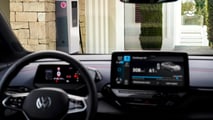
Gallery: Volkswagen two-way charging
5



We want your opinion!
What would you like to see on Motor1.com?
Take our 3 minute survey.
- The Motor1.com Team
Share this Story
- (https://twitter.com/intent/tweet?url=https%3A%2F%2Fwww.motor1.com%2Fnews%2F722999%2Fvolkswagen-otovo-huawei-home-charging-systems%2F&text=Volkswagen%20will%20have%20its%20own%20energy%20ecosystem%20for%20home%20charging&via=motor1com)
- copy
GO TO COMMENTS
(
)
Got a tip for us? Email: tips@motor1.com
View all comments ( )
Popular
12 Cars With Names That Make Absolutely No Sense
BMW Kept This Hatchback A Secret For Decades
Bugatti Restores One-Off Veyron With A Mirror-Like Aluminum Body
The Gas BMW M3 Isn't Dead: Next-Gen Prototype Roars
latest articles
- Driver Goes Through Car Wash With Full Truck Bed—Then He Learns The Hard Way Why You Shouldn't Do That Oct 20 - Trending -
- Every Rolls-Royce Has A Hidden Feature Most People Don't Know About Oct 20 - Motor101 -
- Subaru Built A 510-HP Electric Wagon Without Toyota's Help Oct 20 - Official -
- The Strange Reason The Golf GTI Had A Golf Ball Shifter Oct 20 - Motor101 -
- Photos: Porsche's Mission S Concept Takes Over New York City Oct 20 - Design -
- The 2027 Honda Passport TrailSport Looks Noticeably Taller Next To Last Year's Model Oct 20 - Off-Road -
- 12 Cars With Names That Make Absolutely No Sense Oct 20 - Lists -
RECOMMENDED FOR YOU
The Strange Reason The Golf GTI Had A Golf Ball Shifter
Driver Goes Through Car Wash With Full Truck Bed—Then He Learns The Hard Way Why You Shouldn't Do That
12 Cars With Names That Make Absolutely No Sense
Every Rolls-Royce Has A Hidden Feature Most People Don't Know About
This German City Exists Because Of Volkswagen
Subaru Built A 510-HP Electric Wagon Without Toyota's Help
10 SUVs That Get 30 MPG Without Hybrid Power