Home
Audi
News
DKW Junior (1959-1963): The German Junior
The now almost forgotten car bore its name several years before Alfa Romeo


By: Roland Hildebrandt
Published by: Brian Potter
Jun 9, 2024 at 3:39am ET
Add Motor1.com as a preferred source in Google
- (https://twitter.com/intent/tweet?url=https%3A%2F%2Fwww.motor1.com%2Fnews%2F722628%2Fdkw-junior-1959-history-alfa-romeo%2F&text=DKW%20Junior%20%281959-1963%29%3A%20The%20German%20Junior&via=motor1com)
- copy
Share
Comment
The new Alfa Romeo Junior, which was originally planned as the Milano, is currently the talk of the town. It owes its name to an additional designation that the brand first used in 1966. What many people don't know:is that a car with the name Junior existed far earlier. The German Adler Trumpf Junior in 1934, the Panhard Junior from France in 1952 and finally the DKW Junior from 1959.
Towards the end of the 1950s, many car manufacturers in Germany pushed into the class of small vehicles with an engine capacity of around 600 cubic centimetres. Italy led the way with the Fiat 600, followed by the Lloyd 600 from Borgward, the BMW 700, the NSU Prinz and, in the GDR, the Trabant P50. Even Volkswagen designed a 600 cubic metre small car, but rejected it in 1956 under pressure from the German government.
Gallery: DKW Junior (1959–1962)

9


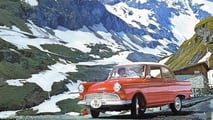


At the IAA 1957, DKW presented a prototype with a 660 cc two-cylinder engine under the name DKW 600, which was similar to the later DKW Junior except for the engine. Series production of the Junior began in August 1959. The two-door notchback body of the almost four-metre-long car is striking. Its implied tail fins were very much in vogue and even decades later caused confusion with the Trabant P 601.
The reason was under the bonnet: an initially 34 PS three-cylinder two-stroke engine. With a sound similar to that of the East German "Trabi". Although there is certainly a certain relationship after 1945, many Auto Union and DKW engineers fled from central Germany to the West in order to rebuild the company and DKW in Düsseldorf and Ingolstadt. East DKW became VEB Sachsenring and the Trabant.
The DKW Junior and the Auto Union 1000 based on the DKW F9
Initially, however, both parts build essentially the same car, the DKW F9, which was already finished in 1940. This rounded pre-war design was replaced by the DKW Junior almost twenty years later. Its engine with a displacement of 741 cc was praised as being particularly well noise-damped. Not only was the engine somewhat larger than usual for the class, but the interior was also larger.
The engine, gearbox and clutch form a single block, while the Junior utilises a box-section frame. The chassis is high-maintenance, requiring lubrication at 40 points every 7,500 kilometres. The car's equipment included a steering wheel with a low-set hub, steering wheel gearstick for the fully synchronised four-speed gearbox, a shock-absorbing dashboard and headlight flasher. The advertising also emphasises the "almost half a square metre" large parcel shelf. A steel sliding roof was available for an extra charge of DM 260, while the Saxomat automatic clutch cost an additional DM 275.
DKW Junior (1959-1962)
Speaking of prices, if you wanted to buy a DKW Junior, which initially weighed 675 kilograms, prices in Germany started at 4,950 marks. A VW Beetle Export is around 200 DM cheaper. Series production of the Junior starts in August 1959 at the new plant in Ingolstadt. This is where Audi vehicles roll off the production line today.
By December 1962, exactly 118,986 units had been built, followed by the more powerful and visually modified DKW F11/F12. From July 1961 to October 1963, 118,619 Junior de Luxe cars also rolled off the production line. It had a larger displacement (796 cc), enabling it to sprint to 50 mph in 16 seconds. It also offered a little more luxury and, as a special technical feature, the so-called fresh oil automatic transmission. Connoisseurs know in the two-stroke engine, oil and fuel are mixed in a specific ratio.
Junior successor DKW F12 (1963)
What do you think?
View
Comments
With the automatic fresh oil system, the oil no longer has to be added when refuelling. It is atomised separately from the fuel in the carburettor and added to the mixture. The oil supply is load-dependent and controlled by an oil pump developed by Bosch, which is controlled by a V-belt.
Audi classics:
The Audi V8 was a pioneering super saloon
Audi 80 celebrates 50th birthday with a nostalgic look at its past
Unfortunately, this works well in theory, but not always in practice. In addition, the Junior generally consumes quite a lot of fuel, up to 11.5 litres per 100 kilometres. The typical two-stroke odour and sound also found fewer and fewer fans, and in 1965 the F 102 ended the DKW chapter in Germany. The F 102 became the first Audi with a four-stroke engine. The rest is history.
We want your opinion!
What would you like to see on Motor1.com?
Take our 3 minute survey.
- The Motor1.com Team
Share this Story
- (https://twitter.com/intent/tweet?url=https%3A%2F%2Fwww.motor1.com%2Fnews%2F722628%2Fdkw-junior-1959-history-alfa-romeo%2F&text=DKW%20Junior%20%281959-1963%29%3A%20The%20German%20Junior&via=motor1com)
- copy
GO TO COMMENTS
(
)
Got a tip for us? Email: tips@motor1.com
View all comments ( )
Popular
Hyundai's Supercar Dream Is (Probably) Dead
Honda Debuts New Three-Row SUV With Next-Gen Hybrid Technology
What If Koenigsegg Had A Sterrato Fighter? Meet The Jesko Terrang
Audi Has 7 New Models Coming In 2027. Here's All Of Them
Latest Stories
- Ram CEO: New Dakota Will Do 'Some Serious Fun Things' Nov 20 - Manufacturing / Production -
- Can You Drive An American Car In Europe? Yes, But It's Complicated Nov 20 - Motor101 -
- Hyundai Sonata Dead In Australia, But America Still Wants Sedans Nov 20 - Manufacturing / Production -
- Waymo Just Paused Driverless Freeway Rides Across The US (Update) Nov 20 - Autonomous Vehicles -
- Hyundai's Supercar Dream Is (Probably) Dead Nov 20 - Manufacturing / Production -
- Koenigsegg Is Now Worth $1.4 Billion After New Investment Nov 20 - Corporate / Financial -
- What If Koenigsegg Had A Sterrato Fighter? Meet The Jesko Terrang Nov 20 - Renderings -
RECOMMENDED FOR YOU
Audi Has 7 New Models Coming In 2027. Here's All Of Them
Ram CEO: New Dakota Will Do 'Some Serious Fun Things'
Driven: The New Audi A2 Is Proof Small Cars Still Make Sense
Can You Drive An American Car In Europe? Yes, But It's Complicated
Audi Tells Us Why The Nuvolari Costs $300,000 More Than Temerario
Hyundai Sonata Dead In Australia, But America Still Wants Sedans
Audi A2 E-Tron Can Power Your Home And Charge Your Devices