Home
Features
Motor101
Your Engine Can't Do Its Job Without A Transmission
Your engine makes the power, but your transmission makes it usable. Here's why your car needs both to get moving.
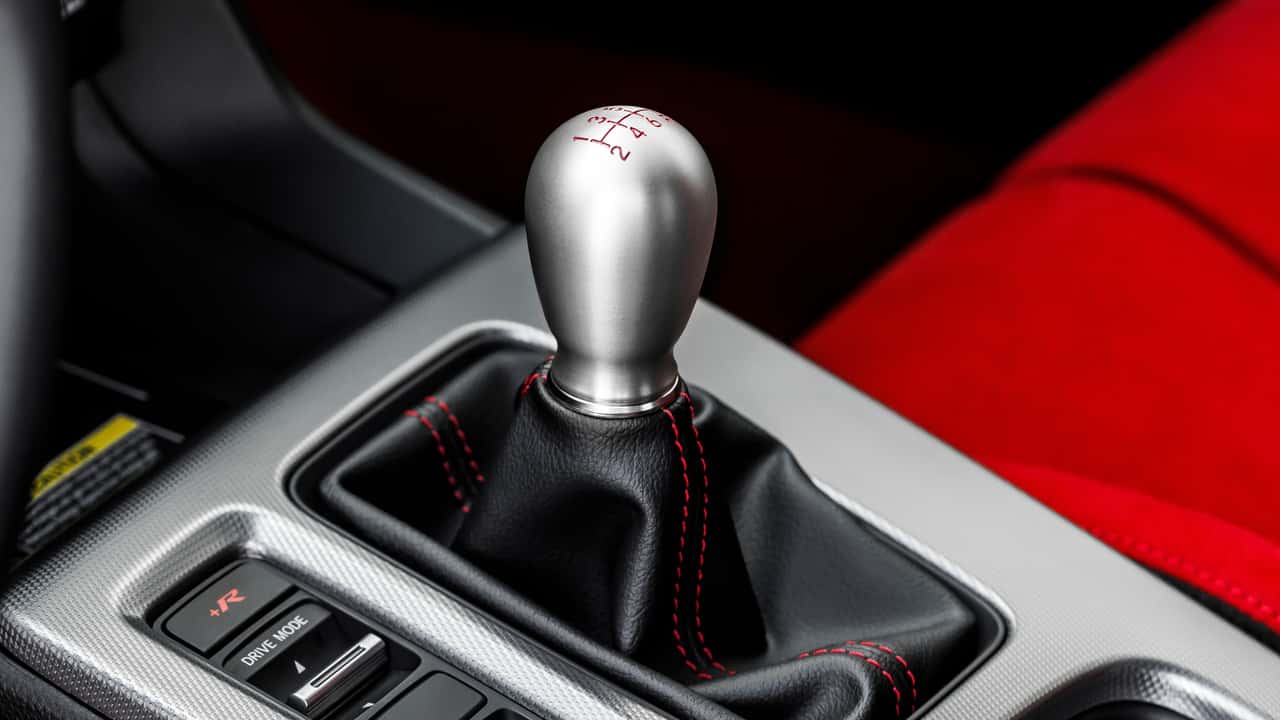
Photo by: Honda
Dan Mihalascu 
By: Dan Mihalascu
Nov 24, at 2:00pm ET
Add Motor1.com as a preferred source in Google
- (https://twitter.com/intent/tweet?url=https%3A%2F%2Fwww.motor1.com%2Ffeatures%2F816412%2Fwhy-your-car-needs-a-transmission%2F&text=Your%20Engine%20Can%27t%20Do%20Its%20Job%20Without%20A%20Transmission&via=motor1com)
- copy
Share
Comment
Your car's engine is responsible for producing the power that gets you moving, so why does it need a transmission to begin with? Whether you're driving a manual, a traditional automatic, or a continuously variable transmission (CVT), there's an entire mechanical system between the engine and the wheels that determines how that power gets delivered.
The problem is that an engine doesn't produce the same amount of power at every speed. It has a relatively narrow operating range where it works most efficiently, and it can't deliver maximum torque under every driving condition. That's where the transmission comes in. Its job is to make the power usable, whether you're pulling away from a stop, climbing a hill, cruising on the highway, or overtaking another vehicle.
An Engine Can't Do Everything On Its Own
An internal combustion engine produces torque by burning fuel and converting that energy into rotational force at the crankshaft. However, the amount of torque it produces changes depending on engine speed, throttle input, and load. More importantly, an engine has a limited operating range where it can deliver useful performance.
Imagine trying to ride a bicycle using just one gear. A gear that's comfortable for cruising along a flat road would make starting from a standstill or climbing a steep hill incredibly difficult. Your legs would either struggle to turn the pedals or spin them too quickly to make meaningful progress.
An engine faces a similar problem. It needs to operate at different speeds depending on what the driver is asking it to do. Without a transmission, getting a vehicle moving from a standstill would be difficult, while maintaining reasonable engine speeds at highway velocity would be another challenge.
The Transmission Multiplies Torque When You Need It Most
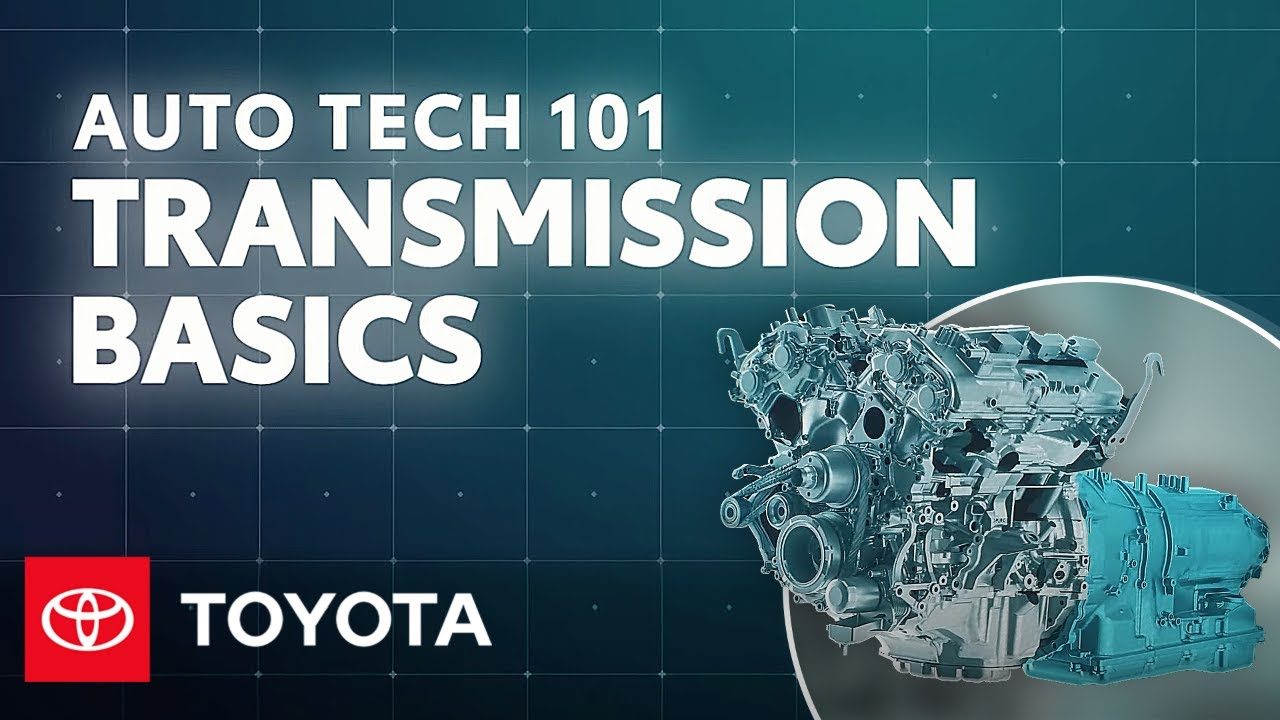
One of the transmission's most important jobs is changing the relationship between engine speed and wheel speed. Lower gears provide mechanical advantage, allowing the engine to deliver more torque to the wheels while they rotate relatively slowly.
This is especially important when pulling away from a stop. Your vehicle needs substantial torque at the wheels to overcome its weight and begin moving. First gear provides that mechanical advantage, allowing the engine to accelerate the vehicle without needing to produce enormous amounts of torque on its own.
As the vehicle gains speed, the transmission shifts into higher gears. These reduce the amount of torque multiplication while allowing the engine to operate at lower RPMs relative to road speed. The result is smoother acceleration, more comfortable cruising, and better fuel economy in many driving situations.
Why Can't You Just Use One Gear?
A single gear ratio would force an engine to operate at whatever RPM corresponds to the vehicle's road speed. That might work reasonably well under certain conditions, but it would create significant compromises elsewhere.
For example, a gear ratio designed for highway cruising wouldn't provide enough mechanical advantage for strong acceleration from a standstill. Conversely, a ratio suited to quick acceleration would make the engine spin excessively fast at highway speeds.
A transmission solves this problem by offering multiple gear ratios, each suited to a different driving situation. Depending on the vehicle, these ratios help with:
- Starting from a stop: Lower gears multiply torque to help overcome the vehicle's inertia.
- Accelerating: The transmission keeps the engine in a useful RPM range as road speed increases.
- Climbing hills: Lower gears provide additional torque at the wheels.
- Highway cruising: Higher gears reduce engine RPM, often improving efficiency and lowering noise.
- Towing: Appropriate gear ratios help the engine handle heavier loads without excessive strain.
Essentially, the transmission gives the engine flexibility it wouldn't otherwise have.
What Happens If A Car Doesn't Have A Traditional Transmission?
Interestingly, not every vehicle uses a conventional multi-speed gearbox. Electric cars are a particularly good example because their motors behave very differently from internal combustion engines.
Electric motors can produce substantial torque from very low speeds and operate effectively across a much wider RPM range. That's why most electric cars don't need the same complicated transmissions found in gasoline-powered vehicles. Many use a simple single-speed reduction gearbox that adjusts motor speed to a suitable range for the wheels.
There are exceptions, of course. Some electric performance cars use two-speed transmissions to improve acceleration and high-speed efficiency. Porsche's Taycan, for example, uses a two-speed gearbox on its rear axle.
Some gasoline-powered vehicles also use continuously variable transmissions (CVTs), which don't have traditional fixed gear steps. Instead, they continuously vary the transmission ratio to keep the engine operating near an appropriate speed for the driving conditions.
Drivers Explain Why Engines Still Need Transmissions
Reddit users have tackled this question in several discussions, with many comparing a car's transmission to the gears on a bicycle. In one popular r/explainlikeimfive thread, users explained that combustion engines need to operate within a limited RPM range. Different gear ratios allow the engine to keep spinning efficiently while the wheels move at different speeds.
Another discussion focused on how transmissions balance engine speed and wheel speed. Users pointed out that lower gears provide more torque at the wheels, making it easier to get a vehicle moving or climb a hill, while higher gears allow it to travel faster without forcing the engine to rev excessively.
Interestingly, Reddit users also compared combustion engines with electric motors. In this thread, commenters explained that electric motors can deliver useful torque across a much wider operating range, which is why most EVs don't need traditional multi-speed gearboxes. It's a good reminder that transmissions are designed to make the engine's power usable.
The Transmission Doesn't Make Horsepower, But It Makes It Usable
It's easy to assume that because the engine produces horsepower, the transmission is simply an unnecessary middleman. In reality, the two components have very different responsibilities. The engine generates power, while the transmission determines how that power is delivered to the wheels.
What do you think?
View
Comments
Without the appropriate gear ratios, an internal combustion engine would struggle to accelerate a vehicle from a standstill, climb hills, and cruise comfortably at highway speeds. The transmission essentially allows the engine to operate within its useful RPM range while adapting to changing driving conditions.
So, while a transmission doesn't magically add horsepower, it plays a huge role in how much of the engine's potential performance you can actually use. It's one of the reasons a relatively small engine can move a heavy vehicle, accelerate smoothly, and still cruise efficiently at highway speeds.
More From Motor101
 The World's Highest Paved Road Reaches An Almost Unbelievable Elevation
Child Car Seats Expire Even If They Look Perfectly Fine. Here's Why
What Happens If You Get A Speeding Ticket In Another Country?
We want your opinion!
What would you like to see on Motor1.com?
Take our 3 minute survey.
- The Motor1.com Team
Share this Story
- (https://twitter.com/intent/tweet?url=https%3A%2F%2Fwww.motor1.com%2Ffeatures%2F816412%2Fwhy-your-car-needs-a-transmission%2F&text=Your%20Engine%20Can%27t%20Do%20Its%20Job%20Without%20A%20Transmission&via=motor1com)
- copy
GO TO COMMENTS
(
)
Got a tip for us? Email: tips@motor1.com
View all comments ( )
Popular
New York Bans Car Subscriptions For Features Your Car Already Has, With Exceptions
I Drove Porsche's Electric Boxster Prototype. It's Still A Driver's Car
12 Underrated Performance Cars That Nobody Bought
Porsche Has A Wild Idea To Make Its Cars Corner Faster
'We Can't Let That Happen:' Toyota Vows To Keep Fun Cars Alive For Young Drivers
Latest Stories
- Your Engine Can't Do Its Job Without A Transmission Nov 24 - Motor101 -
- Toyota's Baby Land Cruiser Goes Full Off-Road Mode Nov 24 - Aftermarket / Tuning -
- The Next VW Golf R Could Have Two Types Of Boost Nov 24 - Manufacturing / Production -
- I Drove Porsche's Electric Boxster Prototype. It's Still A Driver's Car Nov 24 - First Drives -
- No, BMW's Logo Isn't Actually An Airplane Propeller Nov 24 - Motor101 -
- Chrysler Recalls 82,843 Ram 1500 Trucks Over Brake Software Bug That Could Disable Safety Features Nov 24 - Recalls -
- Carroll Shelby-Driven Ford GT40 Returns To Auction After Previous Sale Attempt Nov 24 - For Sale -
RECOMMENDED FOR YOU
No, BMW's Logo Isn't Actually An Airplane Propeller
Toyota's Baby Land Cruiser Goes Full Off-Road Mode
All-Season Vs All-Weather Tires: What’s The Difference?
The Next VW Golf R Could Have Two Types Of Boost
Apple CarPlay Problems Are Annoying. Here's How To Fix Them
I Drove Porsche's Electric Boxster Prototype. It's Still A Driver's Car
These 22 States Don't Require Front License Plates