Home
Features
Motor101
Before Putting Your Child In The Front Seat, There's Something You Need To Know
A simple seating decision could have serious consequences. Here's when it's safe to put a child in the front.
Dan Mihalascu 
By: Dan Mihalascu
Nov 14, at 11:00am ET
Add Motor1.com as a preferred source in Google
- (https://twitter.com/intent/tweet?url=https%3A%2F%2Fwww.motor1.com%2Ffeatures%2F814961%2Fchild-seat-front-passenger-seat-safety%2F&text=Before%20Putting%20Your%20Child%20In%20The%20Front%20Seat%2C%20There%27s%20Something%20You%20Need%20To%20Know&via=motor1com)
- copy
Share
Comment
A front passenger seat might seem like a convenient place to install a child car seat, especially when you're driving alone and want to keep an eye on your little one. But there's a potentially serious safety issue that parents need to understand before putting a child in the front: the passenger-side airbag.
Even modern cars with advanced airbag systems aren't designed to make the front seat the safest place for young passengers. In fact, US safety authorities recommend that children under 13 ride in the back whenever possible. Here's what parents need to know about front-seat child seats, airbag risks, and the circumstances in which using the front passenger seat may be unavoidable.
Why The Back Seat Is The Safest Place
The back seat offers children more protection in many types of crashes because it puts greater distance between them and the front of the vehicle. It also keeps younger passengers away from the dashboard and front passenger airbag, which can deploy with considerable force.
The National Highway Traffic Safety Administration (NHTSA) recommends that all children under 13 ride in the back seat. This applies even if a child is tall enough to sit comfortably in the front or the vehicle has modern airbags designed to adjust their deployment based on the passenger's size.
The American Academy of Pediatrics (AAP) also recommends keeping children younger than 13 in the rear seats. Its guidance emphasizes choosing the right restraint for a child's age, height, and weight, rather than moving them into an adult seat belt too early.
The Danger Of A Front Passenger Airbag
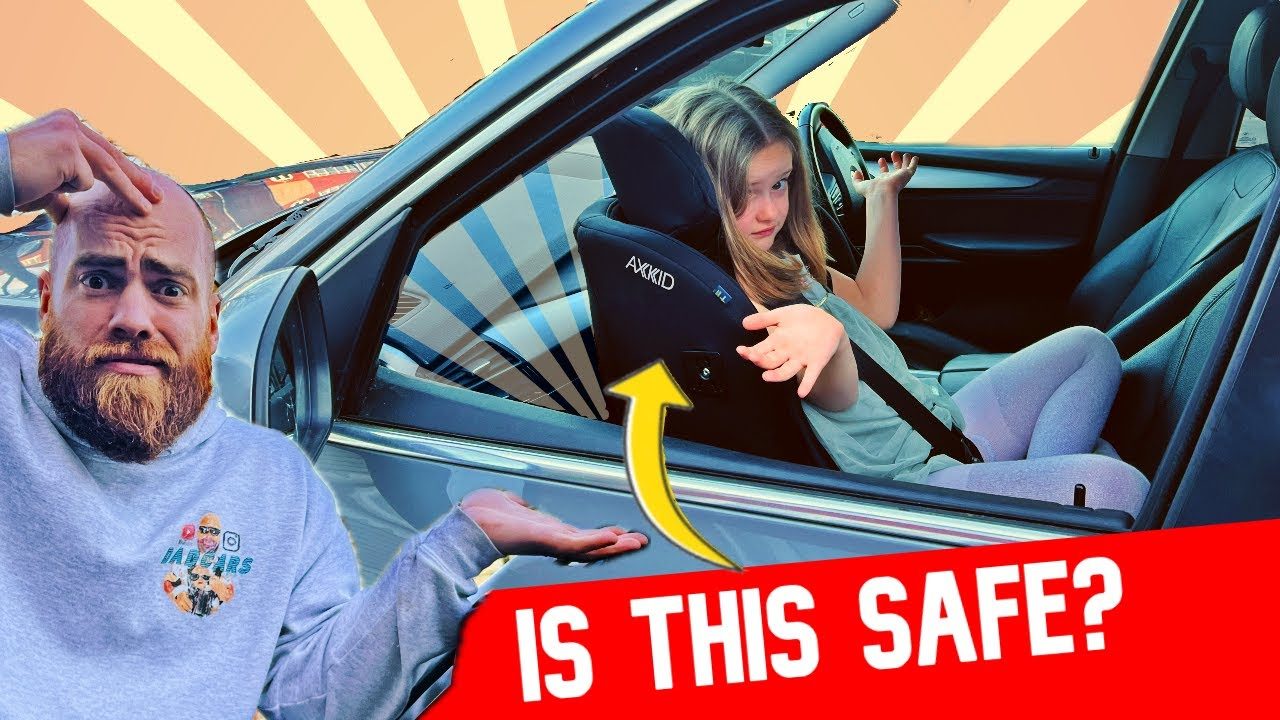
The biggest concern with installing a child seat in the front is the passenger-side airbag. These airbags are designed to protect adult-sized occupants, and they inflate extremely quickly during a crash. A child sitting close to the dashboard can be seriously injured by the force of deployment.
The risk is particularly severe with rear-facing child seats. If a front airbag deploys against the back of a rear-facing seat, it can strike the area immediately behind the child's head with potentially fatal force. That's why a rear-facing child seat must never be installed in front of an active passenger airbag.
Modern vehicles may have advanced airbag systems that detect smaller occupants and automatically suppress deployment in certain circumstances. However, parents shouldn't assume that the system will always recognize a child seat correctly or eliminate the danger. NHTSA continues to recommend that children under 13 sit in the rear, as does the US Centers for Disease Control and Prevention (CDC).
Does It Matter Which Type Of Child Seat You Use?
Yes. Children need different restraints as they grow, and the appropriate seat depends on their height, weight, and development. A child who has outgrown one type of seat shouldn't automatically move to the next stage simply because of age. The general progression recommended by US safety authorities is:
- Rear-facing seat: Keep infants and toddlers rear-facing for as long as possible, until they reach the seat's height or weight limit.
- Forward-facing seat: Once a child outgrows the rear-facing seat, use a forward-facing seat with a harness and top tether for as long as the seat's limits allow.
- Booster seat: After outgrowing the forward-facing seat, use a belt-positioning booster until the vehicle's seat belt fits properly.
- Seat belt: A child can use the vehicle's seat belt without a booster when the lap belt sits across the upper thighs and the shoulder belt crosses the chest and shoulder, rather than the stomach, neck, or face.
These are general stages, not rigid age cutoffs. Always follow the child seat manufacturer's height and weight limits, along with the vehicle owner's manual. The AAP recommends delaying each transition until the child has outgrown the previous restraint.
What If The Front Passenger Seat Is Your Only Option?
There may be situations where a child has to ride in the front, such as in a vehicle without a rear seat or one with insufficient room for the required child restraint. But this doesn't mean any child seat can simply be installed there.
A rear-facing seat should never be placed in front of an active passenger airbag. If the vehicle has no rear seat, check the owner's manual and the child seat manufacturer's instructions before transporting a child. Some vehicles have a passenger-airbag deactivation system, but parents should never assume that switching off the airbag is permitted or appropriate.
In the US, NHTSA can authorize an airbag on-off switch in limited circumstances, including when a rear-facing restraint must be used in a vehicle without a suitable rear seat. This is not a general recommendation to deactivate airbags whenever a child rides up front.
If an older child must travel in the front, the AAP advises using a forward-facing child seat with a harness when appropriate and moving the passenger seat as far back from the dashboard as possible. The child must still be secured according to the vehicle and restraint manufacturers' instructions.
What Are Parents Saying About Front-Seat Child Seats?
Parents on r/NewParents have discussed putting a rear-facing infant seat in the front of a two-door convertible, particularly when there's no practical rear-seat option. The discussion highlights a common question: whether switching off the passenger airbag makes front-seat installation safe.
A similar debate on r/UKParenting involved a parent whose toddler disliked sitting in the back. Commenters discussed airbag deactivation, vehicle compatibility, and the importance of checking the manufacturer's instructions before considering the front seat.
Meanwhile, an r/Parenting discussion explored whether a nine-year-old should ride in the front. The responses reflected an important distinction: something may be legally permitted without being the safest choice.
Check The Law And Your Vehicle's Manual
Safety recommendations and legal requirements aren't necessarily the same thing. In the US, child passenger laws vary by state, including the ages, heights, and weights at which children must use particular restraints. Some jurisdictions also have specific rules about front-seat travel.
Before installing a child seat in the front, check your state's current requirements, the vehicle owner's manual, and the instructions supplied with the restraint. Pay particular attention to airbag warnings, approved seating positions, installation methods, and any restrictions on using a child seat in the front passenger position.
What do you think?
View
Comments
It's also worth remembering that a correctly installed car seat is only part of the equation. The harness must fit snugly, the seat must be secured using an approved installation method, and the restraint must be suitable for the child's current size.
Ultimately, the safest choice is straightforward: keep children in an appropriate child restraint in the back seat until they're at least 13. A front passenger seat may be unavoidable in certain vehicles or circumstances, but convenience alone is not a good reason to move a child there.
More From Motor101
 Why Some Automatics Have More Gears Than Others
No, Premium Gas Doesn't Automatically Make Your Car Faster
Why America Is Obsessed With Building Giant Roadside Attractions
Your Brakes Don't Always Need A Mechanical Connection
We want your opinion!
What would you like to see on Motor1.com?
Take our 3 minute survey.
- The Motor1.com Team
Share this Story
- (https://twitter.com/intent/tweet?url=https%3A%2F%2Fwww.motor1.com%2Ffeatures%2F814961%2Fchild-seat-front-passenger-seat-safety%2F&text=Before%20Putting%20Your%20Child%20In%20The%20Front%20Seat%2C%20There%27s%20Something%20You%20Need%20To%20Know&via=motor1com)
- copy
GO TO COMMENTS
(
)
Got a tip for us? Email: tips@motor1.com
View all comments ( )
Popular
Toyota's Cheaper Sports Car Is Reportedly Back On The Menu
Ford Showed Us Its Secret Car Vault Filled With Hundreds Of Hidden Gems
BMW Has 10 New Models Coming In 2027. Here's All Of Them
The 25-Year Car Import Rule Can Be Complicated. Here's How It Works
Audi Tells Us Why The Nuvolari Costs $300,000 More Than Temerario
Latest Stories
- Before Putting Your Child In The Front Seat, There's Something You Need To Know Nov 14 - Motor101 -
- Ford Showed Us Its Secret Car Vault Filled With Hundreds Of Hidden Gems Nov 14 - Lifestyle -
- Remember The Fire-Damaged Corvette Z06? Now It Actually Runs Nov 14 - Aftermarket / Tuning -
- You Can't Drive Cars In These 5 Places Across America Nov 14 - Motor101 -
- The 25-Year Car Import Rule Can Be Complicated. Here's How It Works Nov 13 - Motor101 -
- Porsche’s New Supercar Already Spotted At The Nürburgring Nov 13 - Spy Shots -
- BMW Has 10 New Models Coming In 2027. Here's All Of Them Nov 13 - Industry -
RECOMMENDED FOR YOU
You Can't Drive Cars In These 5 Places Across America
Ford Showed Us Its Secret Car Vault Filled With Hundreds Of Hidden Gems
The 25-Year Car Import Rule Can Be Complicated. Here's How It Works
Remember The Fire-Damaged Corvette Z06? Now It Actually Runs
You Can Own A Kei Car In The US. But You Might Not Be Able To Drive It
Porsche’s New Supercar Already Spotted At The Nürburgring
Not All Gas Engines Work The Same. Here's What Makes Them Different