Home
Features
Motor101
There's A Reason White Cars Are Everywhere
Why are so many cars white? There’s more behind the world’s most common car color than simple buyer preference.
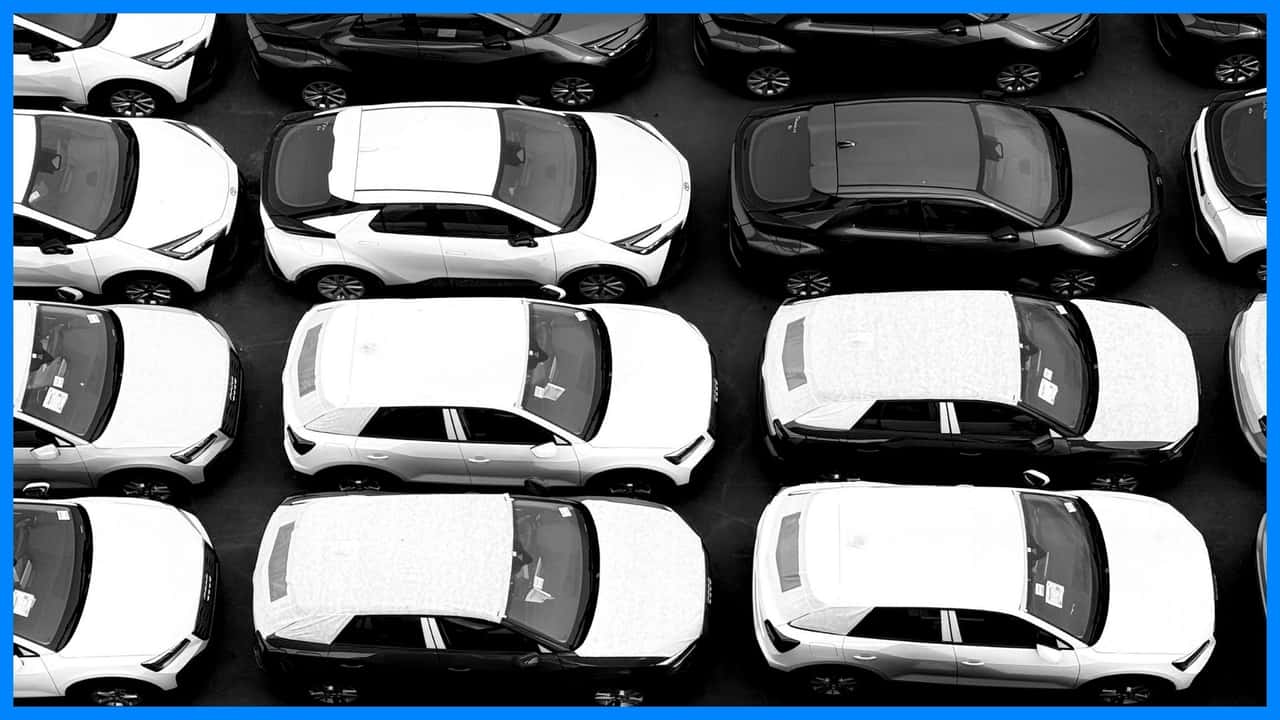
Photo by: Pexels
Dan Mihalascu 
By: Dan Mihalascu
Oct 4, at 7:00am ET
Add Motor1.com as a preferred source in Google
- (https://twitter.com/intent/tweet?url=https%3A%2F%2Fwww.motor1.com%2Ffeatures%2F810567%2Fwhy-is-white-paint-so-common-on-cars%2F&text=There%27s%20A%20Reason%20White%20Cars%20Are%20Everywhere&via=motor1com)
- copy
Share
Comment
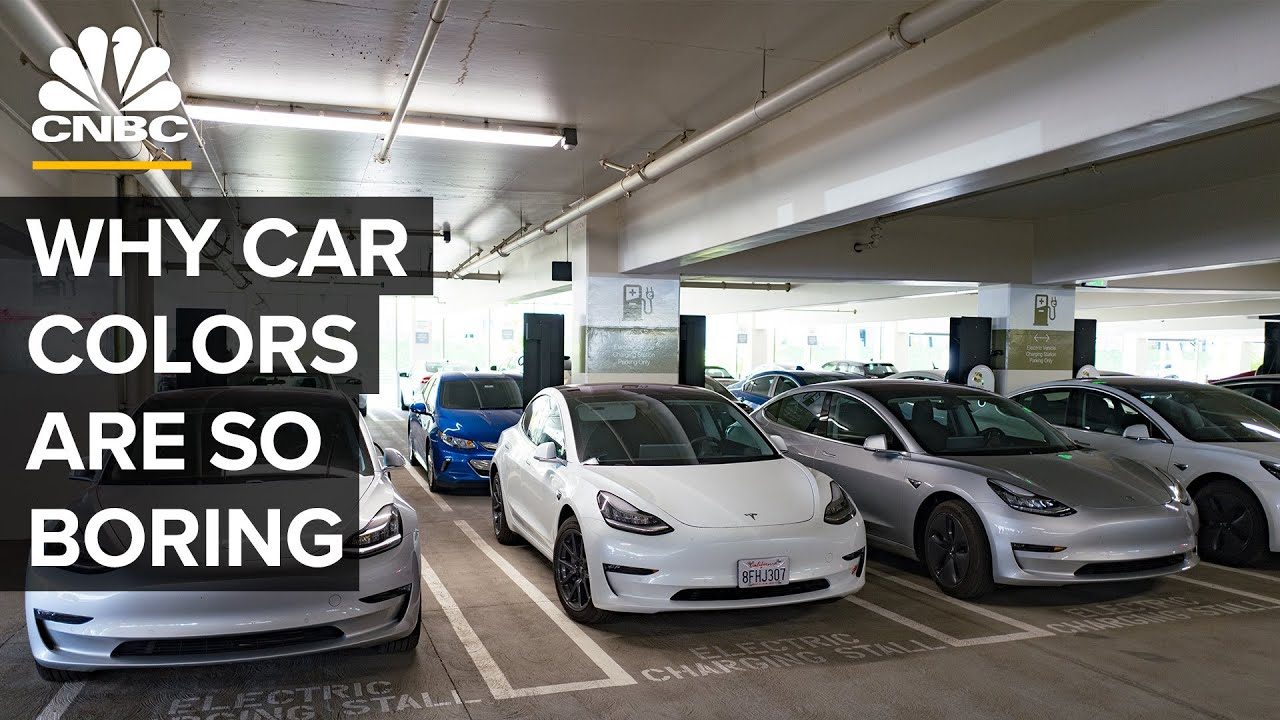
Walk through almost any parking lot, and you'll notice the same thing: a sea of white, black, gray, and silver cars. But white has a particularly strong presence on today's roads, from inexpensive hatchbacks to luxury SUVs and high-end sports cars.
So why is white paint so common on cars?
The answer is not simply that automakers think it looks good. Cost, manufacturing, resale, climate, safety, and changing consumer tastes have all helped make white one of the automotive industry's most enduring colors.
White Paint Is Relatively Simple To Produce
One reason white is so widespread is that it can be comparatively straightforward for automakers to produce consistently. White paints generally rely on pigments such as titanium dioxide, which provides strong opacity and helps create a uniform finish.
That doesn't mean every white car is cheap to paint. Modern automotive finishes can involve multiple layers, special effects, and different levels of gloss. Pearl and metallic whites, for example, can be considerably more complicated than a basic solid white.
Still, a simple white finish can be easier to standardize across large-scale production than some highly specialized colors. Automakers producing thousands of vehicles need finishes that can be applied consistently while maintaining quality and controlling costs.
White also provides a relatively neutral foundation for commercial vehicles. That's one reason white vans, trucks, and fleet vehicles are so common: a simple white finish is easy to recognize, maintain, and brand with graphics or decals.
White Cars Can Be Practical In The Real World
There's a practical reason white can make sense for drivers, too: it tends to show less heat than darker colors when sitting in direct sunlight.
A car's exterior absorbs solar radiation, and darker surfaces generally become hotter than lighter ones. White reflects more of the incoming visible light, which can help keep the vehicle's exterior surfaces cooler. Some of the main practical reasons white remains popular include:
- Heat management: Light-colored surfaces generally absorb less solar energy than dark ones.
- Broad appeal: White works across everything from small hatchbacks to luxury SUVs.
- Visibility: A white vehicle can provide strong contrast against darker surroundings in many daytime conditions.
- Light Reflection: White paint reflects sunlight and ambient light, making the surfaces look wider and more expansive, thus making a car seem larger.
- Maintenance: Certain types of dust and minor imperfections may be less noticeable than they are on dark, highly glossy paint.
- Commercial use: White provides a clean background for company logos, graphics, and fleet branding.
That doesn't mean choosing a white car will dramatically reduce fuel consumption or transform the cabin temperature. Modern vehicles have insulation, tinted glass, air conditioning, and other systems that affect interior temperatures. But exterior color can still play a role.
White Is A Safe, Neutral Choice For Buyers
Color is subjective, but white has one major advantage: it's difficult to find a market where it looks completely out of place.
That's important to automakers because a vehicle's color can influence how easily it sells. A bold orange, purple, or bright green might appeal strongly to some buyers while turning off others. White, by comparison, has broad appeal.
That can matter when a vehicle eventually enters the used-car market. A buyer shopping for a secondhand vehicle may have a specific preference, but neutral colors are generally less polarizing than unusual finishes.
White also works across almost every type of vehicle. It can look at home on a city car, family crossover, pickup truck, luxury sedan, or performance car. That versatility makes it a relatively safe choice for both manufacturers and customers.
White Became A Major Automotive Color
White's popularity is not a recent development. Automakers have used white finishes for generations, although its popularity has risen and fallen alongside broader automotive color trends.
Early cars were often limited by the paint technologies and manufacturing methods available at the time. As automotive production became more sophisticated, manufacturers gained the ability to offer increasingly diverse colors and finishes.
Despite those choices, white repeatedly remained popular because it combines a clean appearance with broad market appeal.
Its popularity has also been reinforced by commercial vehicles. White fleet cars and vans are common around the world, giving the color an enormous presence on the road even when private buyers choose something else.
Why Do Drivers Think White Cars Are Everywhere?
Online car communities have noticed the same monochrome trend.
In a 2026 r/carsales discussion about a Hyundai dealership stocking dozens of white Elantras, commenters pointed to white's popularity and its broad appeal to buyers. One commenter argued that white cars are relatively easy to produce, can be easier to resell, and are less polarizing than brighter colors. Those are individual opinions, but they reflect one reason neutral colors remain common in dealership inventories.
Dealership inventory comes up repeatedly in older Reddit discussions, too. In a 2020 r/askcarsales thread about the most popular car colors, industry commenters explained that customers looking for neutral colors can often be persuaded to choose another neutral color that's already sitting on the lot, while buyers specifically seeking something unusual may be less willing to compromise.
Why Is White Still So Common?
Ultimately, there is not one reason that explains the popularity of white cars. It's the result of several factors working together.
White is practical, versatile, relatively easy to standardize, and widely accepted by buyers. It can help keep a vehicle's exterior cooler in the sun, works well for commercial branding, and doesn't commit an owner to an especially unusual color.
There are also cultural and design factors. Modern vehicles often feature sharp body lines, large grilles, contrasting trim, and complicated lighting signatures. A white exterior can provide a clean backdrop that makes those design elements stand out.
What do you think?
View
Comments
So the next time you see a parking lot filled with white cars, remember that you're looking at more than a simple color trend. White has remained popular because it sits at the intersection of manufacturing practicality, everyday usability, and broad consumer appeal.
And as automakers continue experimenting with matte finishes, color-shifting paints, and increasingly elaborate metallic and pearlescent effects, the humble white car is not disappearing anytime soon.
More From Motor101
 Why Does Your Car Door Have A Tiny Hole At The Bottom?
Cars Used To Have Huge Rubber Bumpers. Why Did They Disappear?
Those Old Ribbed Mercedes Taillights Weren’t Just For Looks
How Does Your Car Know The Weather?
We want your opinion!
What would you like to see on Motor1.com?
Take our 3 minute survey.
- The Motor1.com Team
Share this Story
- (https://twitter.com/intent/tweet?url=https%3A%2F%2Fwww.motor1.com%2Ffeatures%2F810567%2Fwhy-is-white-paint-so-common-on-cars%2F&text=There%27s%20A%20Reason%20White%20Cars%20Are%20Everywhere&via=motor1com)
- copy
GO TO COMMENTS
(
)
Got a tip for us? Email: tips@motor1.com
View all comments ( )
Popular
BYD's Boxy SUV Banned In The EU After Land Rover Defender Copycat Ruling
Honda Debuts New Three-Row SUV With Next-Gen Hybrid Technology
What If Koenigsegg Had A Sterrato Fighter? Meet The Jesko Terrang
Audi Has 7 New Models Coming In 2027. Here's All Of Them
Latest Stories
- Most Drivers Have No Idea What The Little Switch Under Their Rearview Mirror Does Nov 21 - Motor101 -
- BYD's Boxy SUV Banned In The EU After Land Rover Defender Copycat Ruling Nov 21 - Corporate / Financial -
- Ram CEO: New Dakota Will Do 'Some Serious Fun Things' Nov 20 - Manufacturing / Production -
- Can You Drive An American Car In Europe? Yes, But It's Complicated Nov 20 - Motor101 -
- Hyundai Sonata Dead In Australia, But America Still Wants Sedans Nov 20 - Manufacturing / Production -
- Waymo Just Paused Driverless Freeway Rides Across The US (Update) Nov 20 - Autonomous Vehicles -
- Hyundai's Supercar Dream Is (Probably) Dead Nov 20 - Manufacturing / Production -
RECOMMENDED FOR YOU
Most Drivers Have No Idea What The Little Switch Under Their Rearview Mirror Does
BYD's Boxy SUV Banned In The EU After Land Rover Defender Copycat Ruling
Can You Drive An American Car In Europe? Yes, But It's Complicated
Ram CEO: New Dakota Will Do 'Some Serious Fun Things'
How Does A Head-Up Display Actually Work?
Hyundai Sonata Dead In Australia, But America Still Wants Sedans
The Underside Of Your Car Can Make A Big Difference In Performance