Home
Mercedes-Benz
Features
Those Old Ribbed Mercedes Taillights Weren’t Just For Looks
Those strange grooves weren't just classic Mercedes styling; they were a clever trick to keep the taillights visible.
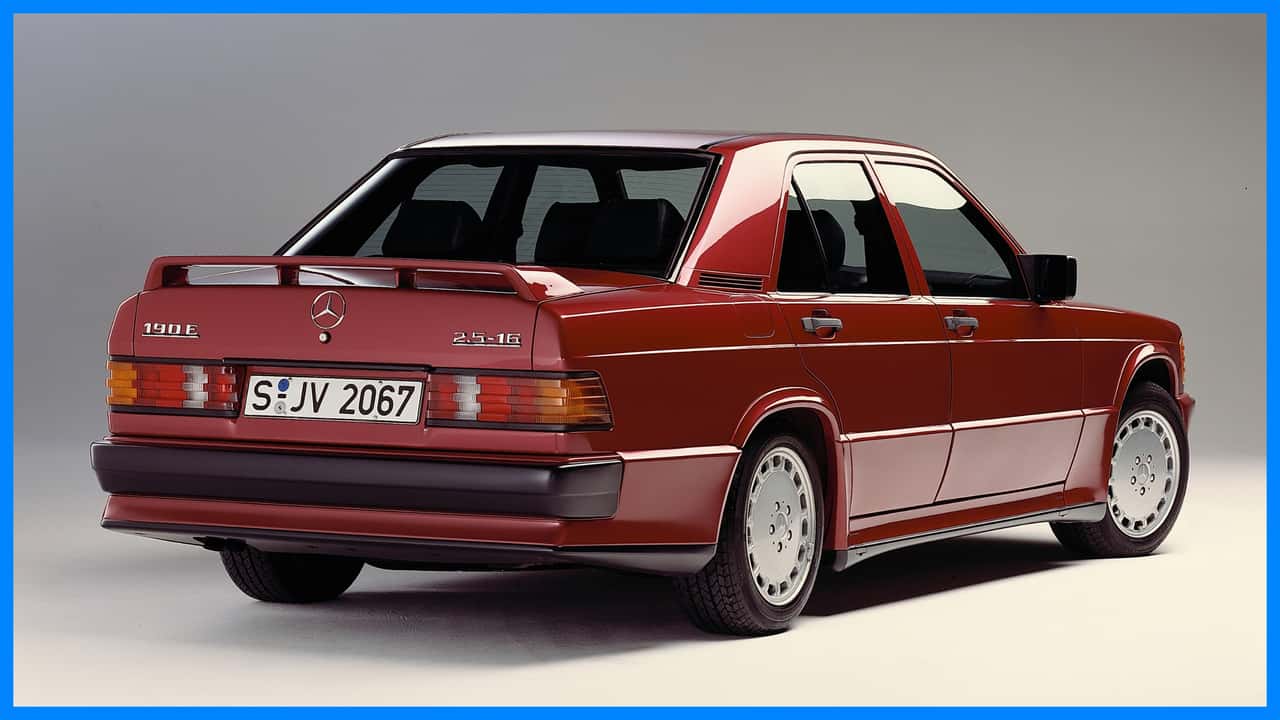
Photo by: Mercedes-Benz
Dan Mihalascu 
By: Dan Mihalascu
Oct 1, at 11:00am ET
Add Motor1.com as a preferred source in Google
- (https://twitter.com/intent/tweet?url=https%3A%2F%2Fwww.motor1.com%2Ffeatures%2F810460%2Fwhy-old-mercedes-had-ribbed-taillights%2F&text=Those%20Old%20Ribbed%20Mercedes%20Taillights%20Weren%E2%80%99t%20Just%20For%20Looks&via=motor1com)
- copy
Share
Comment
Have you ever looked at an old Mercedes-Benz and wondered: Why do the taillights have those distinctive horizontal ribs? You're not alone.
The feature became one of the most recognizable details on Mercedes cars from the 1970s through the 1990s. They were on everything from the W116 (the first S-Class generation) to the W126 S-Class and R107 SL.
It's easy to assume the ribs were simply part of Mercedes' design language. But there was a much more practical reason.
The Ribs Were About More Than Looks
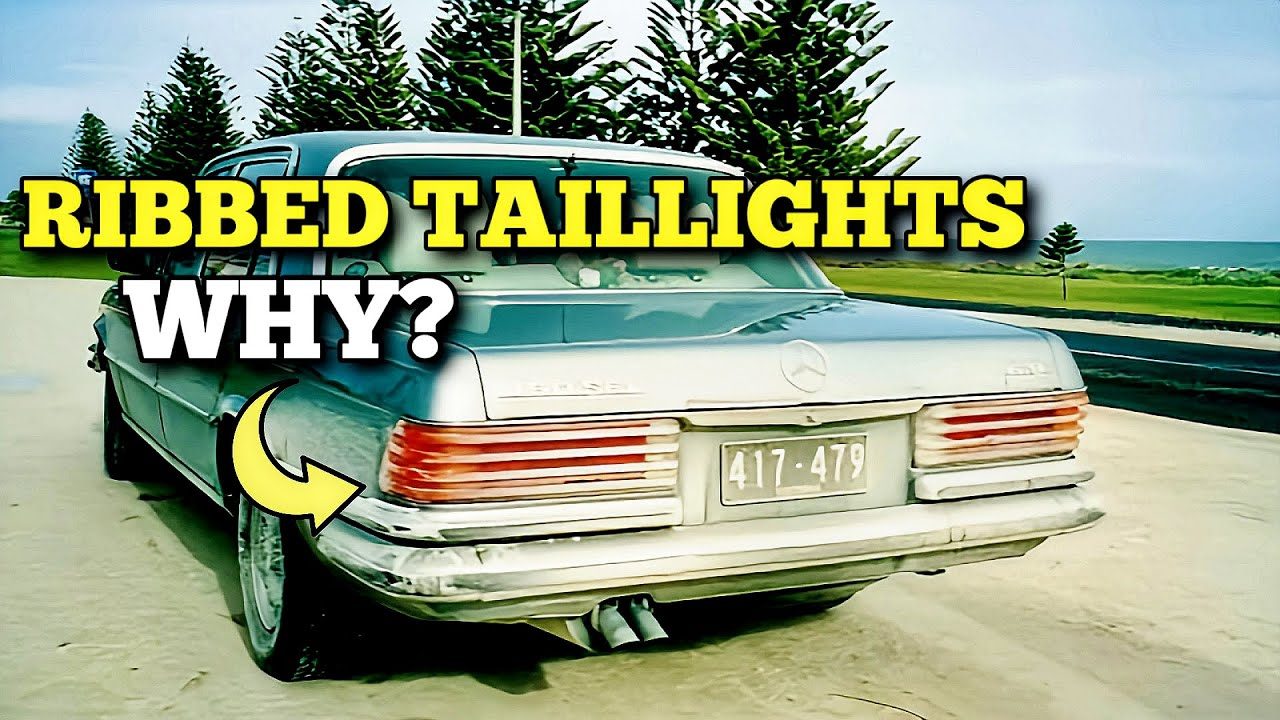
The ridges were designed to help keep the taillights visible when the car was dirty.
Mercedes adopted the distinctive ribbed lenses across much of its lineup in the 1970s. The R107 SL, introduced in 1971, was among the early Mercedes models to feature the characteristic fluted taillights. The idea was rooted in safety: a car's rear lights need to remain visible even when the vehicle is being driven through rain, mud, snow, and road grime.
A smooth taillight lens can become coated in a relatively uniform layer of dirt. The more of the lens that gets covered, the harder it can become for following drivers to see the illuminated light.
The ribbed design offered a simple solution. The grooves created recessed channels where dirt could collect while leaving portions of the lens exposed. Mercedes effectively used the shape of the lens to reduce the chance of the entire lighting surface becoming obscured.
The feature was especially useful on cars driven in the kind of wet and dirty conditions that were common on European roads.
How The Ribbed Design Worked
The basic principle was surprisingly simple. Instead of making the lens one flat surface, Mercedes molded a series of vertical and horizontal ridges into it, depending on the application. Those grooves disrupted the way road grime could spread across the lamp.
The design also had an optical benefit, helping distribute the light across the lens and making the illuminated area visible from different angles.
The important thing is that the ribs weren't originally intended to be a styling gimmick. They were an example of Mercedes' broader approach to automotive engineering, in which a practical solution could also become a recognizable design element. That philosophy can be seen across several classic Mercedes models:
- R107 SL: One of the most recognizable applications, combining the ribbed lenses with the SL's low, wide rear design.
- W116 S-Class: The first-generation S-Class adopted the longitudinal ribbed taillights that would become a staple of Mercedes-Benz sedan design over more than two decades.
- W123: The popular sedan, wagon, and coupe used the ribbed-lens treatment as part of its distinctive rear-end design.
- W126 S-Class: Mercedes carried the idea into its flagship sedan, where the large taillights became a defining visual feature.
- W124: The next-generation midsize Mercedes continued the familiar treatment while incorporating it into a more aerodynamic body.
- W201: The 190 E (or the "Baby Benz" as it was known) inherited the ribbed taillight design from its larger sedan siblings.
- G-Class: The boxy off-roader also retained variations of the ribbed-lens concept long after smoother taillight designs became common elsewhere in the lineup.
How A Safety Feature Became A Mercedes Signature
The clever part was that Mercedes didn't just use the concept on one model. The ribbed lenses became a consistent visual cue across the company's lineup.
That gave different Mercedes models a family resemblance from the rear. A W123, W126 or R107 could look completely different from the others, yet their taillights immediately identified them as products of the same company.
The feature also fit the understated styling philosophy of Mercedes during the period. There were few unnecessary flourishes. Even a seemingly decorative detail often had an engineering explanation behind it.
Over time, however, the ribbed taillight became recognizable enough that enthusiasts began to associate it with classic Mercedes regardless of its original purpose.
Why Did Mercedes Stop Using Ribbed Taillights?
Eventually, the automotive industry moved toward smoother bodywork and more sophisticated lighting technology.
Modern LEDs allow designers to precisely control where and how light is emitted without relying on the same kind of large, fluted lens. Computer-designed optics, smaller lighting elements, and increasingly complex lamp shapes gave designers far more freedom.
Mercedes gradually moved away from the deeply ribbed appearance as its cars adopted newer design languages.
The change wasn't simply about abandoning an old idea. The technology had evolved, and the reasons for using a heavily fluted lens had become less important.
Mercedes Enthusiasts Still Love The Ribbed Taillights
Mercedes enthusiasts have long been fascinated by the company's ribbed taillights.
In a 2024 r/mercedes_benz thread asking which production model was the last to use the design, commenters traced the feature through cars including the W123, W124, W140, R129 and G-Class. One commenter specifically noted that the ribs allowed brake lights to remain visible even when the lenses were covered in road mud.
A separate r/namethatcar discussion about a Mercedes W116 also touched on the subject, with a commenter describing the model's ribbed lenses and wraparound turn signals as part of the safety-focused design of the era. The thread is a useful reminder that the feature wasn't confined to one Mercedes model or class.
A Small Detail With A Big Purpose
The old Mercedes-Benz taillight design remains one of those fascinating automotive details that had a practical purpose before becoming a styling signature.
What do you think?
View
Comments
When you see a classic Mercedes with those familiar ribbed taillights, you should know you're looking at more than a piece of retro design.
Those grooves were there to help keep the lights doing their job even when the rest of the car was covered in road grime. A simple yet effective idea that also happened to look really cool when implemented in real life.
More From Motor101
 Your Car Has Another Way To Slow Down. What Is Engine Braking?
How Does Your Car Know The Weather?
What's The Worst Car Of All Time? It's Complicated
Why Does Your Car's A/C Get Colder When You Start Driving?
We want your opinion!
What would you like to see on Motor1.com?
Take our 3 minute survey.
- The Motor1.com Team
Share this Story
- (https://twitter.com/intent/tweet?url=https%3A%2F%2Fwww.motor1.com%2Ffeatures%2F810460%2Fwhy-old-mercedes-had-ribbed-taillights%2F&text=Those%20Old%20Ribbed%20Mercedes%20Taillights%20Weren%E2%80%99t%20Just%20For%20Looks&via=motor1com)
- copy
GO TO COMMENTS
(
)
Got a tip for us? Email: tips@motor1.com
View all comments ( )
Popular
Driven: The New Audi A2 Is Proof Small Cars Still Make Sense
12 Cars That Should Easily Make It To 250,000 Miles
Nissan Reveals One Key Design Detail About The Next GT-R
Toyota's New Small Truck Is A Corolla Cross With A Bed
Inspiring The Next Generation Of Mechanics
Latest Stories
- Toyota's New Small Truck Is A Corolla Cross With A Bed Nov 18 - Official -
- What Actually Happens When You Press Your Car's Brake Pedal? Nov 18 - Motor101 -
- 12 Cars That Should Easily Make It To 250,000 Miles Nov 18 - Lists -
- Driven: Subaru Forester Wilderness Hybrid Feels Like Déjà Vu Nov 18 - First Drives -
- Ken Miles’ Shelby Cobra Could Cross The $25 Million Mark Nov 18 - For Sale -
- Rolls-Royce Turns Backgammon Into A Luxury Work Of Art Nov 18 - Toys -
- This One-Owner Toyota MR2 Has Covered 421,000 Miles On Its Original Engine Nov 18 - Classics -
RECOMMENDED FOR YOU
Mercedes Is Auctioning A Rare C 111 Supercar With A Rotary Engine
Tesla Bets $3.3 Billion On Cybercab Production At Giga Berlin
I Tried Mercedes' New Hands-Free Driving Tech. It Nearly Drove Me Everywhere
Waymo Is Banned From California Freeways After A Series Of Incidents
Mercedes Previews New SL: Boss Källenius Shares First Details
Kia's Future Lineup Could Include A Hydrogen Minivan: Report
12 Crossovers That Are Surprisingly Good At Off-Roading