Home
Lucid
Air
Features
Why Does Your Car's A/C Get Colder When You Start Driving?
Your car's A/C is not necessarily broken. There's a simple reason it can feel noticeably colder once you're moving.
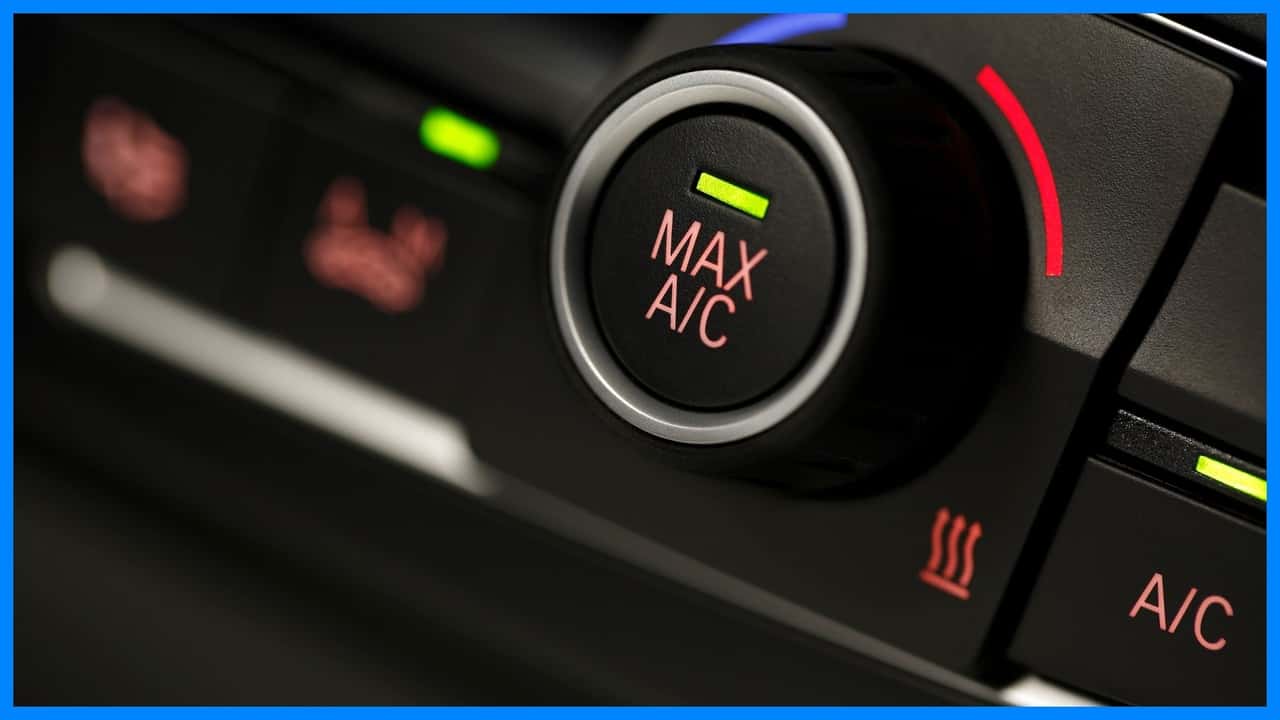
Photo by: Getty Images
Dan Mihalascu 
By: Dan Mihalascu
Sep 30, at 4:00pm ET
Add Motor1.com as a preferred source in Google
- (https://twitter.com/intent/tweet?url=https%3A%2F%2Fwww.motor1.com%2Ffeatures%2F810248%2Fwhy-car-ac-gets-colder-when-driv%2F&text=Why%20Does%20Your%20Car%27s%20A%2FC%20Get%20Colder%20When%20You%20Start%20Driving%3F&via=motor1com)
- copy
Share
Comment
You've probably noticed it on a hot day. You start the car, turn the air conditioning all the way down, and wait. The vents are blowing cool air, but it's not exactly cold air. Then you pull out of the parking lot and start driving. A few minutes later, the cabin suddenly feels much colder.
So what's going on? It's tempting to think the air conditioner simply works better when the engine is revving higher. There's some truth to that, but it's not quite that simple.
Your car's cooling system is affected by engine speed, airflow, condenser temperature, and the amount of heat the cabin is dumping into the HVAC system. And once the car is moving, several things start working in the A/C system's favor.
Your A/C Is Working Hardest When The Car Is Sitting Still
A car's air-conditioning system has to get rid of heat before it can deliver cold air into the cabin. One of the most important components involved is the condenser, which sits at the front of the vehicle and releases heat from the refrigerant.
When you're parked or sitting in traffic, the condenser doesn't have much natural airflow passing through it. That's why cars have electric or mechanically driven cooling fans. They pull air through the radiator and condenser even when the vehicle is not moving.
Once you start driving, though, the situation changes. Air is naturally forced through the front grille and across the condenser. At road speed, there's considerably more airflow available to carry heat away. That can help the A/C system operate more efficiently and lower the temperature of the refrigerant before it reaches the next stage of the cooling cycle.
In other words, your A/C doesn't necessarily become more powerful when you're moving. It gets better airflow.
Engine Speed Can Help, Too
There's another reason the A/C can feel stronger once you're driving: the compressor. On many gasoline-powered cars, the air-conditioning compressor is driven by the engine, either directly through a belt or through an electronically controlled system connected to the engine's accessory drive.
When the engine is idling, the compressor may be turning relatively slowly. Increase engine speed, and a belt-driven compressor generally spins faster as well. That can allow the compressor to move more refrigerant through the system, although modern A/C systems are more complicated than simply “more RPM equals more cold.”
The compressor's output is controlled by the vehicle's HVAC system, and many modern cars use variable-displacement or electronically controlled compressors. These systems adjust cooling capacity based on what the car actually needs.
So driving can help, but the difference is not simply because the compressor is spinning faster.
There's Also More Air Moving Through The Condenser
The condenser is where driving can make an especially noticeable difference. Think of it as a heat exchanger. Hot, high-pressure refrigerant arrives at the condenser after leaving the compressor. The condenser transfers that heat into the surrounding air, allowing the refrigerant to change state and continue through the A/C system.
When the car is stationary, the cooling fan has to do most of the work. When the car is moving, the grille is effectively pushing outside air through the condenser. At higher road speeds, that airflow can become substantial. That means the system can reject heat more effectively. Several things change once you're moving:
- More airflow: Outside air is forced through the condenser instead of relying primarily on the cooling fan.
- Better heat rejection: The condenser can dump heat more effectively when there's a steady stream of air passing through it.
- Different compressor speed: With a belt-driven system, engine RPM generally rises as you accelerate, increasing compressor speed.
- Lower refrigerant temperature: More effective heat rejection can improve the conditions throughout the A/C cycle.
- Less cabin heat over time: The longer the system runs, the more heat it removes from the interior.
If you've ever noticed that your A/C feels particularly weak while sitting in a parking lot but improves once you're moving, condenser airflow is one of the biggest pieces of the puzzle.
Why Your Cabin Also Feels Colder After A Few Minutes
There is another factor that has nothing to do with the compressor: the cabin itself takes time to cool down. On a sunny summer day, the dashboard, seats, glass, door panels, and other interior surfaces can become extremely hot. The air inside the vehicle may be hot, too.
Your A/C is not just cooling the air coming out of the vents. It has to remove heat from the entire cabin. That's why the first few minutes can feel disappointing.
As the interior surfaces cool, the A/C doesn't have to fight as much heat. Recirculation can help even more because the system is repeatedly cooling the already-cooled cabin air instead of constantly bringing in hot outside air.
This is also why opening the windows briefly at the beginning of a very hot drive can sometimes help. It lets some of the trapped hot air escape before the A/C has to do all the work.
Drivers Notice The Same A/C Quirk
Reddit has plenty of drivers asking why their A/C seems to come alive once they start moving. In a 2020 r/MechanicAdvice thread, a Kia Optima owner reported that the A/C blew hot at stops and below 40 mph but became cold on the highway. Commenters pointed to possible condenser airflow or fan issues, which fits the basic explanation for why moving air can make such a difference.
A 2023 r/MechanicAdvice discussion described a similar situation: the A/C became cold while driving but stopped cooling properly at idle. One commenter specifically explained that if the system works while moving but not when stationary, airflow across the condenser is something worth investigating, including the cooling fan and debris blocking the condenser.
Does Driving Actually Make Your A/C Colder?
Usually, yes—but not because your car suddenly gets a stronger air conditioner.
Driving changes the conditions in which the system operates. The condenser gets more airflow, a belt-driven compressor may turn faster, and the cabin has more time to shed the heat it accumulated while sitting in the sun.
What do you think?
View
Comments
There are limits, though. If your A/C is dramatically colder at speed than it is at idle, that can sometimes point to a problem rather than normal behavior. A weak cooling fan, low refrigerant charge, restricted airflow or a problem with the compressor or condenser can make the difference much more noticeable. A properly functioning system should still provide cold air while the car is stationary.
So if your A/C suddenly feels much better after you pull away from the curb, there's no mystery involved. Your car is simply giving its air-conditioning system better conditions to dump heat, which can make a surprisingly big difference.
More From Motor101
 How Does Google Maps Know There's Traffic When You Can't See It?
Why More Horsepower Doesn't Always Make A Car Faster
What Are Those Lines On Your Rear Window? Here’s What They Actually Do
Your Car's VIN Isn't Random. Here's What Those 17 Characters Really Mean
We want your opinion!
What would you like to see on Motor1.com?
Take our 3 minute survey.
- The Motor1.com Team
Share this Story
- (https://twitter.com/intent/tweet?url=https%3A%2F%2Fwww.motor1.com%2Ffeatures%2F810248%2Fwhy-car-ac-gets-colder-when-driv%2F&text=Why%20Does%20Your%20Car%27s%20A%2FC%20Get%20Colder%20When%20You%20Start%20Driving%3F&via=motor1com)
- copy
GO TO COMMENTS
(
)
Got a tip for us? Email: tips@motor1.com
View all comments ( )
Popular
Driven: The New Audi A2 Is Proof Small Cars Still Make Sense
Aston Martin Is Taking Its Call Of Duty Off-Roader To Dakar
Ford Will Sell The Dark Horse SC's V8 And DCT, Minus The Mustang
Ford Maverick Buyers Can Get The 300-HP SV300T Package Before Taking Delivery
Inspiring The Next Generation Of Mechanics
Latest Stories
- Chrysler Is Giving The 2027 Pacifica A Copper Makeover At LA Auto Show Nov 18 - Official -
- Nissan Reveals One Key Design Detail About The Next GT-R Nov 18 - Design -
- Tesla Bets $3.3 Billion On Cybercab Production At Giga Berlin Nov 18 - Manufacturing / Production -
- Waymo Is Banned From California Freeways After A Series Of Incidents Nov 18 - Autonomous Vehicles -
- Kia's Future Lineup Could Include A Hydrogen Minivan: Report Nov 18 - Rumors -
- Toyota Wants Enthusiasts To 'Enjoy The Speculation' About The GR Celica Nov 18 - Motorsport -
- Mercedes Is Auctioning A Rare C 111 Supercar With A Rotary Engine Nov 18 - Sales -
RECOMMENDED FOR YOU
The Lucid Gravity Grand Touring Is a Minivan-Shaped Supercar: Driven
Tesla Bets $3.3 Billion On Cybercab Production At Giga Berlin
Lucid's Sub-$50,000 SUV Comes Into Focus In New Teaser
Waymo Is Banned From California Freeways After A Series Of Incidents
Cupholders In Cars Weren't Always A Thing
Kia's Future Lineup Could Include A Hydrogen Minivan: Report
As Hybrid Sales Climb, Here's What Drivers Should Know About Their Gas Engines