Home
Features
Automotive History
How F1 Technology Makes Your Local Supermarket Fridge Even Better
A shelf-edge 'airfoil' developed with Williams Advanced Engineering helps stop cold air spilling from open cabinets.

Photo by: Williams F1
Alex Harrington 
By: Alex Harrington
Jan 4, at 9:00am ET
Add Motor1.com as a preferred source in Google
- (https://twitter.com/intent/tweet?url=https%3A%2F%2Fwww.motor1.com%2Ffeatures%2F783270%2Fhow-williams-f1-innovated-fridge%2F&text=How%20F1%20Technology%20Makes%20Your%20Local%20Supermarket%20Fridge%20Even%20Better&via=motor1com)
- copy
Share
Comment
Not all Formula 1 innovations end up in supercars. Some of them end up in some of the most ordinary places imaginable. In this case, it's the chilled aisle of your local supermarket. The open-fronted cabinets that make it easy to reach in and grab a bottle of soda have some of F1's most innovative aerodynamic technology, sold to the company by none other than the Williams F1 team.
In theory, cooled air is pumped from the top of the cabinet to the bottom, where it's captured for recirculation, but a significant amount of it will leak into the ambient air, lowering the efficiency of the unit and making the condenser work overtime. Fortunately, thanks to a fix that borrows from a rear wing, this is no longer an issue.
The Airfoil of the Chilled Aisle
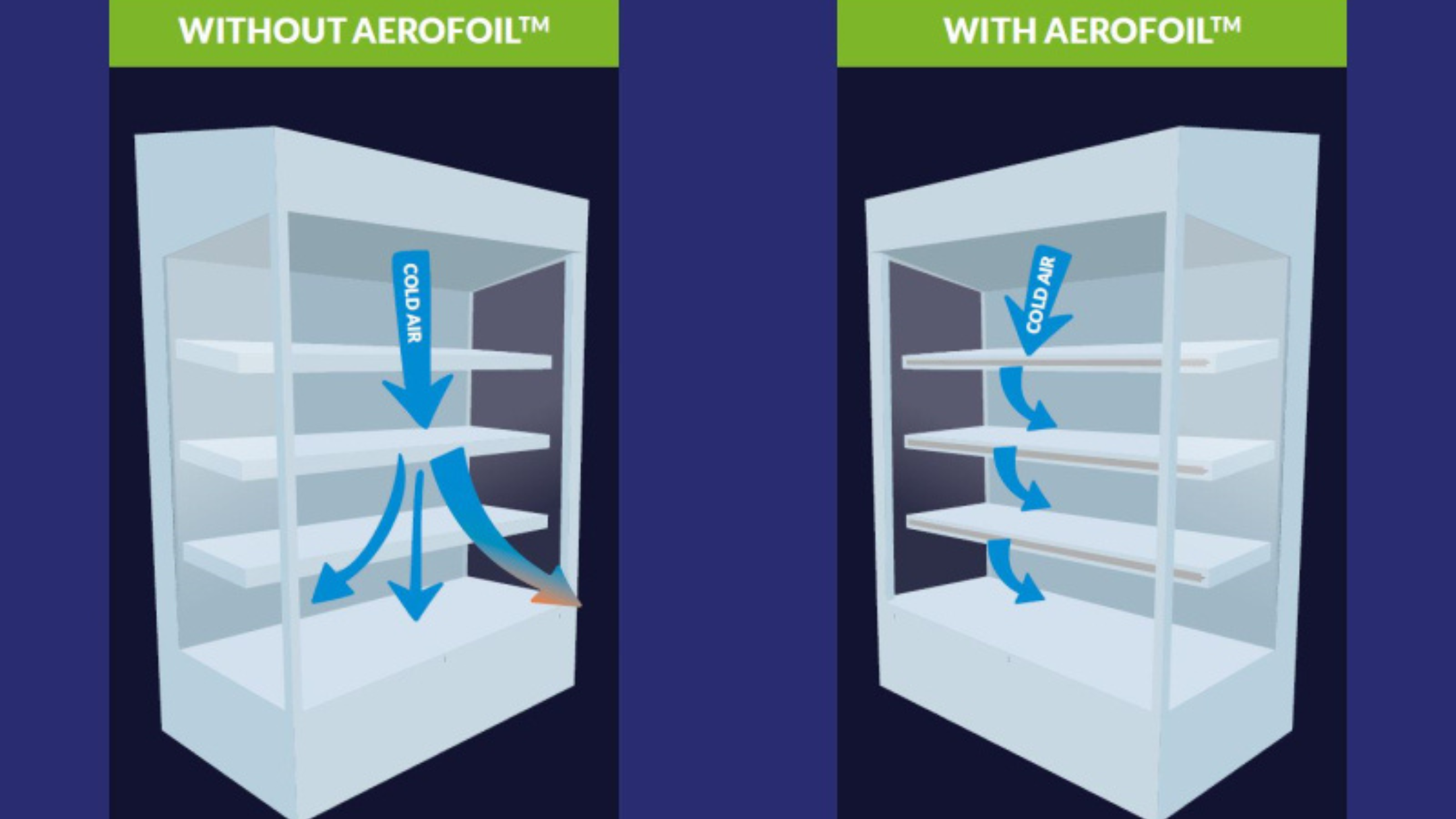
Photo by: Formula 1
I'm specifically talking about the airfoil: a blade-like strip that attaches to the front of each shelf of the refrigerator cabinet. It was developed by UK firm Aerofoil Energy using technology built by Williams Advanced Engineering, which was at the time an orbiting part of the Williams F1 Group organization, and is shaped to stop the cool air from leaking out into the aisle.
Formula 1 is in the air business, and armed with millions of dollars' worth of fluid dynamics hardware and technology, they're pretty good at it. In 2025, the cars were able to create their own weight (approximately 1,760 pounds) in downforce at just 150 miles per hour, so it's no surprise that the technology developed here started to trickle out of the paddock.
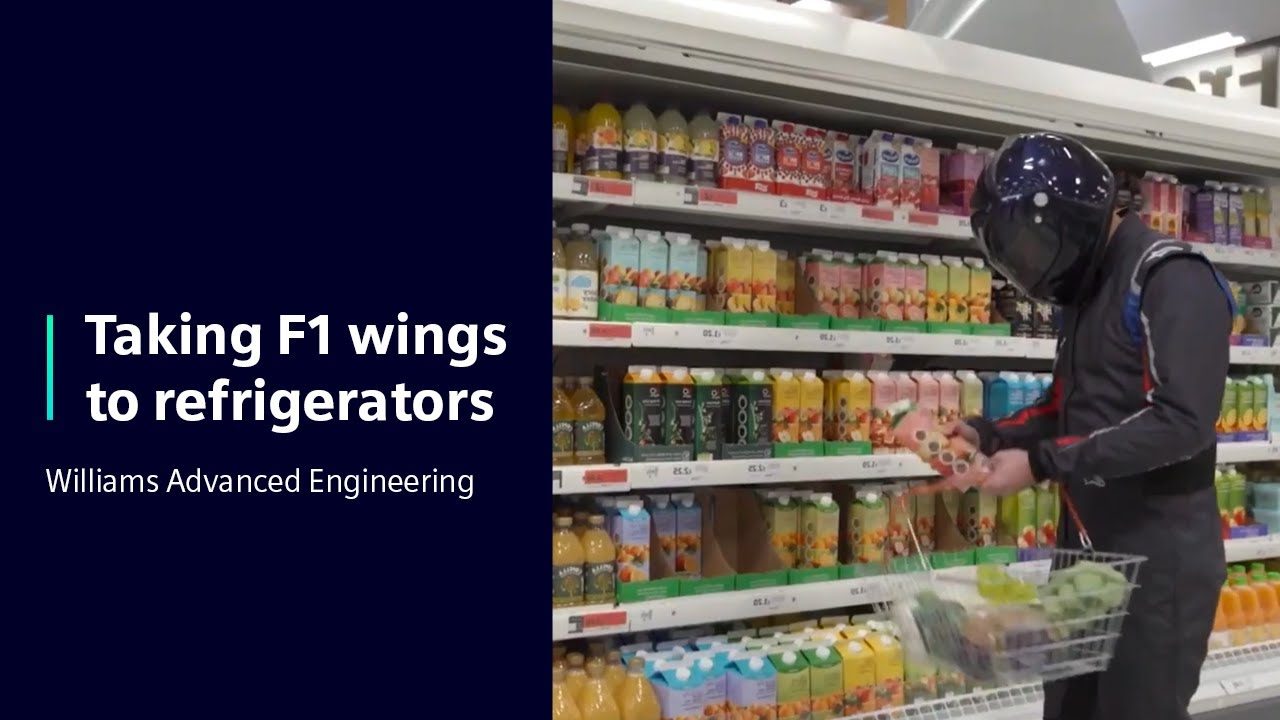
The Royal Academy of Engineering's magazine, Ingenia, described the process by which the prototypes came to be. While Paul McAndrew, CEO of Aerofoil Energy, almost put the phone down when Williams approached him with the idea, he was quickly won over.
"We have what we believe is possibly the most aerodynamically perfect piece of equipment that you can move air around a fridge with," he told the magazine. "It was worth the partnership just for that."
It was soon established that this technology, when mounted on the refrigerators, could save up to 30 percent in energy costs. And saving further costs, it could be installed quickly and easily with no need to shut any stores.
How and Why it Works

Toyota GR86 Rear Wing
An airfoil is a wing that can create lift. When turned upside down, it creates downforce through two surfaces: one curved and one flat. Air passing over the shape goes faster over the curved section, meaning the slower-moving air creates higher pressure.
On an F1 car, this creates downforce, but in this case, it can guide the air inwards.
Williams put the shape through its suite of CFD tools, changing the geometry to work on lower air speeds and then making sure it could be produced and implemented cheaply and efficiently. When fitted, the aluminium blades would help channel the cold air curtain blown down and over the opening of the refrigerator back into where the products are stored.
In fact, initial tests went so well that they weren't believed, with the outfit opting to run more tests to verify.
According to Ingenia, the chilled aisles account for more than half the energy costs of a supermarket, making even a small percentage saving a massive win. When news got out about the strides that had been made, it was adopted by some of the largest businesses in the world. Sainsbury's, M&S, Tesco, and ASDA have all bought into the technology in the UK, and according to McAndrew, will make their investment back in less than a year.
What do you think?
View
Comments
This simple technology was nominated for the MacRobert Award in 2018.
We gearheads love trickle-down technology. Carbon ceramic brakes, paddle shifters, and a KERS system can make our hair stand on end, but often the most powerful innovations come from the mundane. Still cool, though.
More Explainers
How McLaren's F1 Team Accidentally Helped Invent Torque Vectoring
Why McLaren's Headquarters Keeps Showing Up in Hit Movies
We want your opinion!
What would you like to see on Motor1.com?
Take our 3 minute survey.
- The Motor1.com Team
Share this Story
- (https://twitter.com/intent/tweet?url=https%3A%2F%2Fwww.motor1.com%2Ffeatures%2F783270%2Fhow-williams-f1-innovated-fridge%2F&text=How%20F1%20Technology%20Makes%20Your%20Local%20Supermarket%20Fridge%20Even%20Better&via=motor1com)
- copy
GO TO COMMENTS
(
)
Got a tip for us? Email: tips@motor1.com
View all comments ( )
Popular
New York Bans Car Subscriptions For Features Your Car Already Has, With Exceptions
I Drove Porsche's Electric Boxster Prototype. It's Still A Driver's Car
12 Underrated Performance Cars That Nobody Bought
Toyota's Baby Land Cruiser Goes Full Off-Road Mode
Toyota Isn't Even Halfway Done Developing Its Mid-Engined Coupe
Latest Stories
- How Does A Turbocharger Actually Make More Power? Nov 24 - Motor101 -
- Ineos Will Build Its Rugged Off-Roader In America Starting In 2028 Nov 24 - Manufacturing / Production -
- Your Engine Can't Do Its Job Without A Transmission Nov 24 - Motor101 -
- Toyota's Baby Land Cruiser Goes Full Off-Road Mode Nov 24 - Aftermarket / Tuning -
- The Next VW Golf R Could Have Two Types Of Boost Nov 24 - Manufacturing / Production -
- I Drove Porsche's Electric Boxster Prototype. It's Still A Driver's Car Nov 24 - First Drives -
- No, BMW's Logo Isn't Actually An Airplane Propeller Nov 24 - Motor101 -
RECOMMENDED FOR YOU
History Of The Lamborghini Logo: How The Raging Bull Came To Life
How Does A Turbocharger Actually Make More Power?
These Are The Most Spectacular Car Museums
Ineos Will Build Its Rugged Off-Roader In America Starting In 2028
Five Things You Probably Never Knew About Alfa Romeo
Your Engine Can't Do Its Job Without A Transmission
Before Bugatti, Volkswagen Built A Record-Breaking Supercar