Home
Ford
News
Woman Parks Car. Then She Sees A Sign That Says No Parking for Ford, Lincoln Push-To-Start Vehicles
"Me and my 04 Corolla just keep on winning."
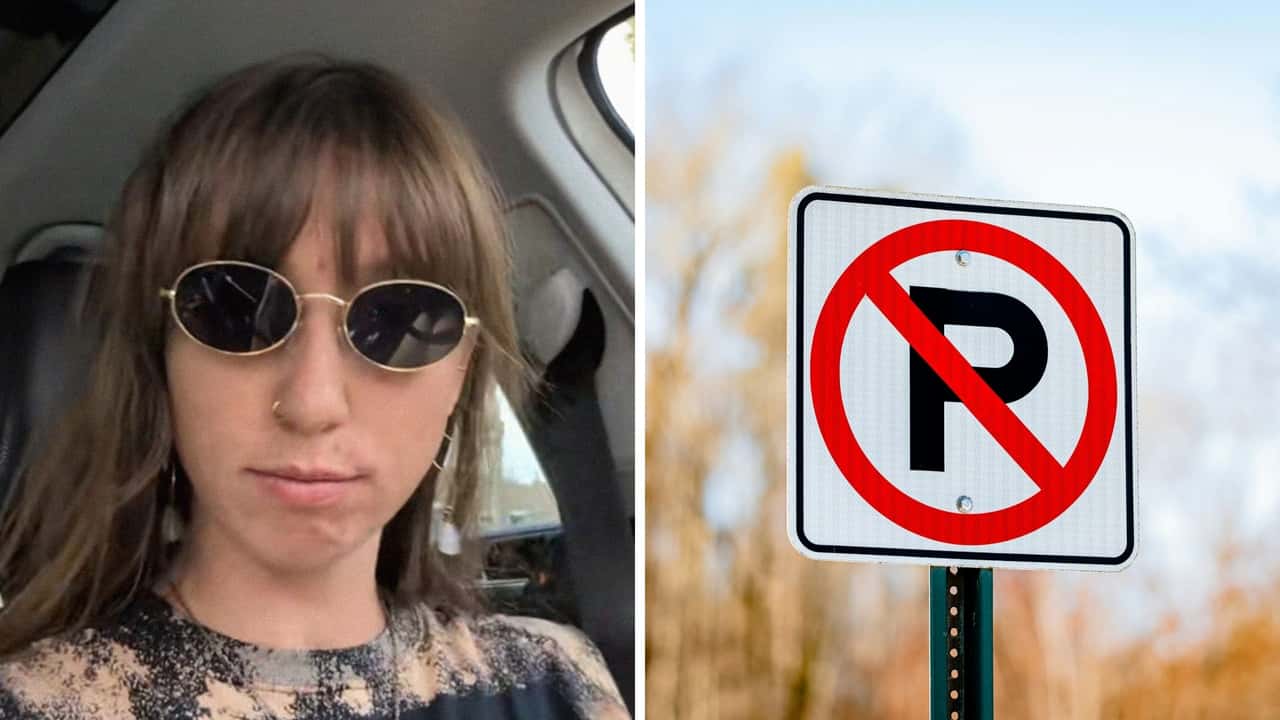
Photo by: Unsplash.com
Chad Swiatecki 
By: Chad Swiatecki
Jan 25, at 4:00pm ET
Add Motor1.com as a preferred source in Google
- (https://twitter.com/intent/tweet?url=https%3A%2F%2Fwww.motor1.com%2Fnews%2F785186%2Fno-parking-ford-lincoln-push-start%2F&text=Woman%20Parks%20Car.%20Then%20She%20Sees%20A%20Sign%20That%20Says%20No%20Parking%20for%20Ford%2C%20Lincoln%20Push-To-Start%20Vehicles&via=motor1com)
- copy
Share
Comment
Push-to-start was a vehicle upgrade that was supposed to make driving easier. But one oddly specific parking sign in a recent viral TikTok clip suggests that, in the wrong place, that same convenience can turn your car into a very expensive paperweight.
The clip from creator Grace (@untamedera) captures her reading a mysterious sign posted in the window of an unidentified business. It tells owners of Ford and Lincoln vehicles with push-to-start functionality not to park nearby. There’s no explanation for the warning, which prompted commenters to flood the post with their own hypotheses.
Grace, for her part, was bemused by the warning: “My car is too old to even think about having a push start,” she wrote in the caption of the clip, which has been viewed more than 135,000 times. “I don't even have a spare key.”
Why Would Push-To-Start Fords And Lincolns Not Be Allowed?
Without a broader context, prospective parkers and viewers had to fill in the blanks, turning the post into a magnet for speculation, with commenters proposing everything from faulty vehicle design to deliberate signal interference within the building.
Some viewers immediately zeroed in on radio frequency interference, or RFI, a phenomenon that can disrupt wireless communication systems in confined areas. Other possible concerns included high-voltage electrical equipment used inside, sensitive security systems, or the presence of medical or imaging equipment. A few joked that Ford vehicles simply break down too often to be trusted near storefronts.
Grace later added that the business appeared to be a coin-and-jewelry store, leading several viewers to speculate that heavy security systems or shielding could be in place.
How Push-To-start Systems Actually Work
Modern push-to-start systems rely on continuous communication between a vehicle and its key fob, not just at the moment the engine starts. The car periodically checks for the presence of the fob using low-frequency and radio-frequency signals to confirm that an authorized key remains inside the vehicle. Any disruption to the signal can trigger a warning for no key being detected. This can also cause a refusal to start or a complete shutdown after being turned off.
Keyless ignition systems use a combination of short-range radio signals and encrypted authentication to prevent unauthorized vehicle access. To prevent motorists from being stranded, automakers explain these systems in owner manuals and provide fallback procedures for instances when the vehicle cannot detect the key fob.
Instances of push-to-start interference vary from one manufacturer to another, but owners of certain Ford and Lincoln vehicles have reported issues in environments with high levels of radio frequency noise. Automotive engineers have previously noted that Ford’s authentication systems operate within relatively narrow frequency tolerances, which can make them more sensitive to interference in specific locations.
Instances of interference can be seen as a kind of “cost of doing business” because they result from the design trade-off between security, reliability, and regulatory compliance. As vehicles have added more wireless systems over the past decade, including remote start, proximity unlocking, and passive anti-theft features, the environments they encounter have become just as complex. Parking near buildings with powerful transmitters can introduce heavily wired, always-on systems into environments where all of that interconnectedness can become a problem.
What Might Be Causing the Interference
Regarding the viral sign, commenters focused on the likelihood that something inside the building was either emitting or blocking radio signals. Jewelry and coin stores often employ layered security measures, including RF shielding, alarm systems, and secure storage designed to prevent wireless intrusion.
High-voltage electrical equipment, nearby radio antennas, and certain commercial security installations are all known sources of radio frequency interference. While most modern devices comply with Federal Communications Commission standards, proximity still matters, particularly for systems designed to work only within a few feet of the vehicle.
Many Ford models provide the option to start the vehicle by placing the fob in a designated location inside the cabin that’s less exposed to outside interference.
Drivers who receive “No Key Detected” warnings are often advised not to keep the vehicle running until they are certain it will restart. If the problem occurs regularly in the same location, it may be worth avoiding that spot altogether.
What do you think?
View
Comments
The oddly specific warning caught attention because, as cars become more technologically sophisticated, they also become more dependent on invisible systems that don’t always behave predictably in the real world. In that light, the sign reads less like a joke or a jab at Ford owners and more like a legit warning to avoid a hard-earned lesson.
Motor1 reached out to Grace via direct message and commented on the clip. We’ll update this if they respond.
We want your opinion!
What would you like to see on Motor1.com?
Take our 3 minute survey.
- The Motor1.com Team
Share this Story
- (https://twitter.com/intent/tweet?url=https%3A%2F%2Fwww.motor1.com%2Fnews%2F785186%2Fno-parking-ford-lincoln-push-start%2F&text=Woman%20Parks%20Car.%20Then%20She%20Sees%20A%20Sign%20That%20Says%20No%20Parking%20for%20Ford%2C%20Lincoln%20Push-To-Start%20Vehicles&via=motor1com)
- copy
GO TO COMMENTS
(
)
Got a tip for us? Email: tips@motor1.com
View all comments ( )
Popular

Bugatti Restores One-Off Veyron With A Mirror-Like Aluminum Body
BMW Kept This Hatchback A Secret For Decades
Skoda Wants You To 3D Print Pieces Of Your Car At Home
The Gas BMW M3 Isn't Dead: Next-Gen Prototype Roars
latest articles
- The Ford Ranger Is Getting A Bigger V6 For 2027: Report Oct 20 - Rumors -
- BMW Already Has A Deal On The New i3. But It's Not Cheap Oct 20 - Pricing -
- Remember The Ford Flex? This Weird SUV Is Now A Great Used Buy Oct 20 - Why Buy? -
- Mercedes Isn't Sold On Extended-Range EVs: 'Would You Really Switch?' Oct 20 - Interview -
- Cadillac Driver Is Fed Up With Auto Stop. Then She Buys A $9 Item On Amazon To Disable It Oct 20 - Trending -
- Bugatti Restores One-Off Veyron With A Mirror-Like Aluminum Body Oct 20 - Supercars -
- Lexus NX Goes Hybrid Only For 2027 Oct 20 - Official -
RECOMMENDED FOR YOU
Only 50 Of These 870-HP Mustangs Will Be Built Per Year
Mercedes Isn't Sold On Extended-Range EVs: 'Would You Really Switch?'
Woman Drives 2024 Ford. The She Drives A 2025 Ford—And Misses A New Design Change Going 40 Miles An Hour
Cadillac Driver Is Fed Up With Auto Stop. Then She Buys A $9 Item On Amazon To Disable It
Ford Reclaimed The Nürburgring Record, But Corvette Won't Fight Back
Bugatti Restores One-Off Veyron With A Mirror-Like Aluminum Body
2027 Ford Bronco Gets The Raptor’s V6, Plus Two New Trims