Home
News
Trending
'Easier To Drive During Winter:' Man Uses WD-40 On His Tires for Protection. Then Mechanics Warn Him
"That works for snow blower chutes."
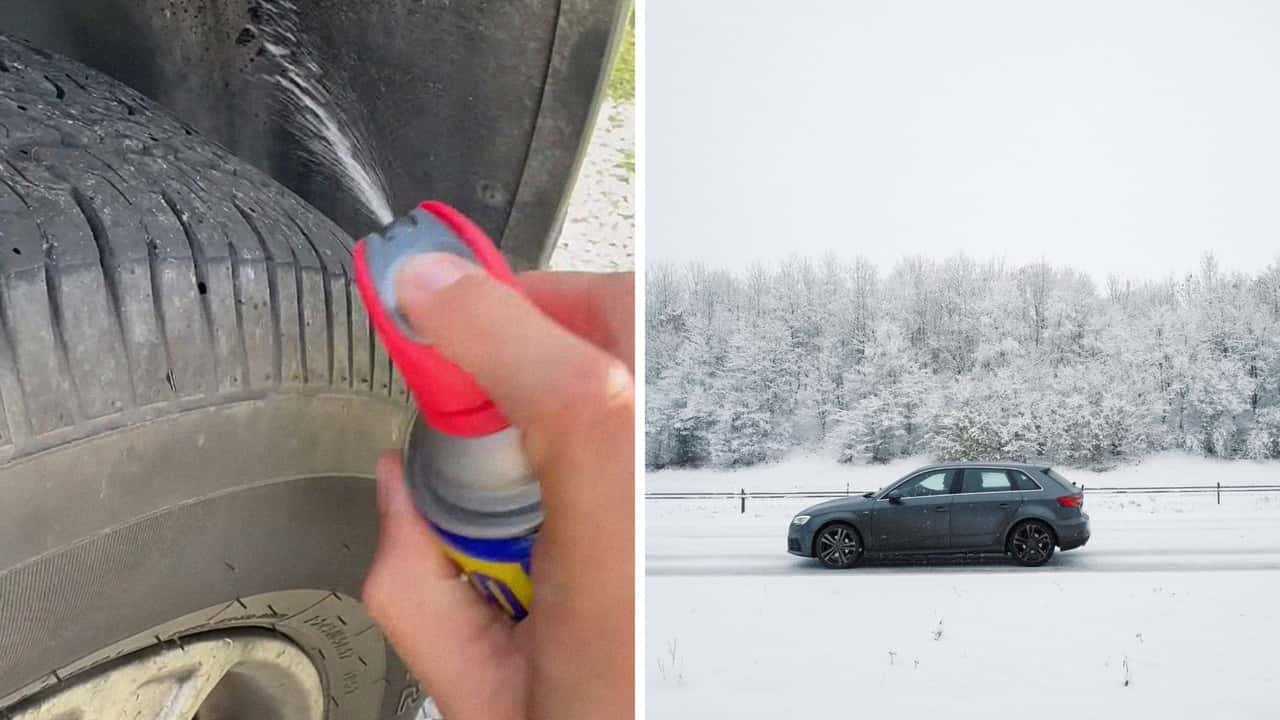
Photo by: Ceith Griffith & Ottr Dan
Chad Swiatecki 
By: Chad Swiatecki
Nov 19, 2025 at 2:00pm ET
Add Motor1.com as a preferred source in Google
- (https://twitter.com/intent/tweet?url=https%3A%2F%2Fwww.motor1.com%2Fnews%2F779325%2Fwd40-on-tires%2F&text=%27Easier%20To%20Drive%20During%20Winter%3A%27%20Man%20Uses%20WD-40%20On%20His%20Tires%20for%20Protection.%20Then%20Mechanics%20Warn%20Him&via=motor1com)
- copy
Share
Comment
Every winter driver knows the "thud-thud-thud" sound of frozen slush stuck in their wheel wells. One man thinks he’s found the perfect solution: WD-40. A few sprays, he claims, and the ice just slides right off. But mechanics say that’s not the only thing that might slip.
In a Facebook Reel from automotive-minded creator Ceith Griffith we see him advising motorists that a liberal coating of WD-40 can be a sort of magical repellent for all the winter mess that accumulates during cold weather driving. To less informed drivers, it may seem like worthwhile advice. Still, a look at the comments section of the video, which has been viewed more than 1.6 million times, shows plenty of people clowning Griffith for a recommendation that they say won’t do anything close to what he promised.
"Spray extra on the tires so the snow doesn’t stick as you drive on the road," one commenter wrote, apparently with tongue in cheek. Another offered a sharper take: "If WD-40 spray gets on tire tread, you’re going to be spinning even in the rain, let alone the ice and snow lol."
These responses highlight the fact that snow and ice building up in wheel wells is a nuisance. But the community is almost unanimous in viewing this particular hack as, at best, misguided and, at worst, risky.
What He’s Claiming
Griffith’s premise is simple: ice and slush that accumulate in the wheel well during winter driving can interfere with tire clearance, add weight, and potentially affect balance or handling. His solution is to apply a slick lubricant to the wheel well liner before or during winter driving to prevent adhesion and allow the debris to slide off rather than freeze solid and build up.
On paper, the idea has an intuitive appeal. It could keep the surface slippery, reducing sticking and buildup. But the leap from "that works for snow blower chutes," where similar sprays are occasionally recommended, to "safe for wheel wells at highway speed" isn’t trivial.
A deeper look into the mechanics backs caution. For example, a Cars.com feature notes that while snow and ice buildup inside wheel wells is common—"drive on packed snow, and it will cake up in your wheel wells in short order"—automakers confirm that their vehicles are designed to operate safely even with moderate buildup. The bigger issue is that if accumulation becomes extreme, with hard ice packed tightly behind a tire, you can feel it through vibration, imbalance, or contact.
Meanwhile, DIY forums warn against using WD-40 or similar lubricants in wheel wells. A post on Cartalk sums it up. "Petrol-based WD-40 should not be used around any plastics or rubber," it says in part. "There are a lot of those parts under the wheel well. It could make matters worse."
Another thread reiterates, "Spraying anything in wheel well does not work. Been there. Done that."
Beyond lubricants, winter maintenance blogs remind drivers that the real risks from wheel well buildup are corrosion from salt and trapped moisture, as well as mechanical interference, not just reduced traction. One industry blog states, "When snow and ice melt on your car … salty water gets into small cracks, causing rust on metal parts like the undercarriage, wheel wells, and brakes."
Gallery: Driving a Snow Plow

11






Source: Scania
The Science of Ice, Wheel Wells & Risk
Let’s unpack why the simple "spray it slick and snow falls off" logic is incomplete.
Water-slush-salt mixtures entering wheel wells can freeze against metal liners, trapping dirt and road salt. This package then acts as unwanted weight, or, in the worst-case scenario, contacts the tire or liner, causing vibrations or tire rubbing.
Additionally, wheel wells are typically lined with plastic or composite materials, and many contain hidden sensors, wiring, aero-packaging, and brake-line paths. A chemical lubricant applied there may not stay in place, may migrate, or may interfere with other components. Any lubricant that ends up on the tire tread, sidewall, or brake rotor poses a safety concern, as it can reduce traction or impair braking.
So yes, keeping wheel wells clear is sensible. But simply spraying a general-purpose lubricant and calling it a day opens a new set of risks.
Drivers tempted by Griffith’s viral hack should proceed with caution. The idea taps into the real pain point of wheel well buildup in winter, and the concept of "make it slick and it won’t stick" has merit. But the execution matters. The risks of unintended tire/rotor contamination, permanent chemical interaction with liners, and migration of lubricant into brake or suspension zones outweigh the unproven benefit.
A safer approach is to inspect your wheel wells during winter, manually remove built-up ice or snow as needed, use a professional undercarriage wash, especially if you live in an area where salt is used, and consider using winter tires and adopting proper winter driving habits. As one commenter put it, "Most people just get out and kick the stuff off … Haven’t run across these kinds of problems in 50 years of driving in Minnesota."
What do you think?
View
Comments
In short, save the WD-40 for squeaky hinges and metal-to-metal sticking parts, and keep those wheel wells clear the old-fashioned way. Kicking off the ice may not be glamorous, but it is the safest route.
Motor1 reached out to Griffith via direct message and comment on the clip. We’ll be sure to update this if he responds.
More From Motor1
‘Lmfao Y’all Sanding Your Windshield:’ Man Shares Windshield Cleaning Hack. But Does It Work?
'Noo Way:' Mechanic Shares Hack for Getting Behind Serpentine Belt. But Does It Work?
We want your opinion!
What would you like to see on Motor1.com?
Take our 3 minute survey.
- The Motor1.com Team
Share this Story
- (https://twitter.com/intent/tweet?url=https%3A%2F%2Fwww.motor1.com%2Fnews%2F779325%2Fwd40-on-tires%2F&text=%27Easier%20To%20Drive%20During%20Winter%3A%27%20Man%20Uses%20WD-40%20On%20His%20Tires%20for%20Protection.%20Then%20Mechanics%20Warn%20Him&via=motor1com)
- copy
GO TO COMMENTS
(
)
Got a tip for us? Email: tips@motor1.com
View all comments ( )
Popular
BYD's Boxy SUV Banned In The EU After Land Rover Defender Copycat Ruling
Honda Debuts New Three-Row SUV With Next-Gen Hybrid Technology
What If Koenigsegg Had A Sterrato Fighter? Meet The Jesko Terrang
Audi Has 7 New Models Coming In 2027. Here's All Of Them
Latest Stories
- Most Drivers Have No Idea What The Little Switch Under Their Rearview Mirror Does Nov 21 - Motor101 -
- BYD's Boxy SUV Banned In The EU After Land Rover Defender Copycat Ruling Nov 21 - Corporate / Financial -
- Ram CEO: New Dakota Will Do 'Some Serious Fun Things' Nov 20 - Manufacturing / Production -
- Can You Drive An American Car In Europe? Yes, But It's Complicated Nov 20 - Motor101 -
- Hyundai Sonata Dead In Australia, But America Still Wants Sedans Nov 20 - Manufacturing / Production -
- Waymo Just Paused Driverless Freeway Rides Across The US (Update) Nov 20 - Autonomous Vehicles -
- Hyundai's Supercar Dream Is (Probably) Dead Nov 20 - Manufacturing / Production -
RECOMMENDED FOR YOU
BYD's Boxy SUV Banned In The EU After Land Rover Defender Copycat Ruling
Ram CEO: New Dakota Will Do 'Some Serious Fun Things'
Can You Drive An American Car In Europe? Yes, But It's Complicated
Hyundai Sonata Dead In Australia, But America Still Wants Sedans
Waymo Just Paused Driverless Freeway Rides Across The US (Update)
Hyundai's Supercar Dream Is (Probably) Dead
Koenigsegg Is Now Worth $1.4 Billion After New Investment