Home
News
Trending
'It’s True:' Mechanic Says This Is the ‘Real Reason’ Gen Z Doesn’t Want to Work In His Industry
"The real reason kids aren't staying in autobody."
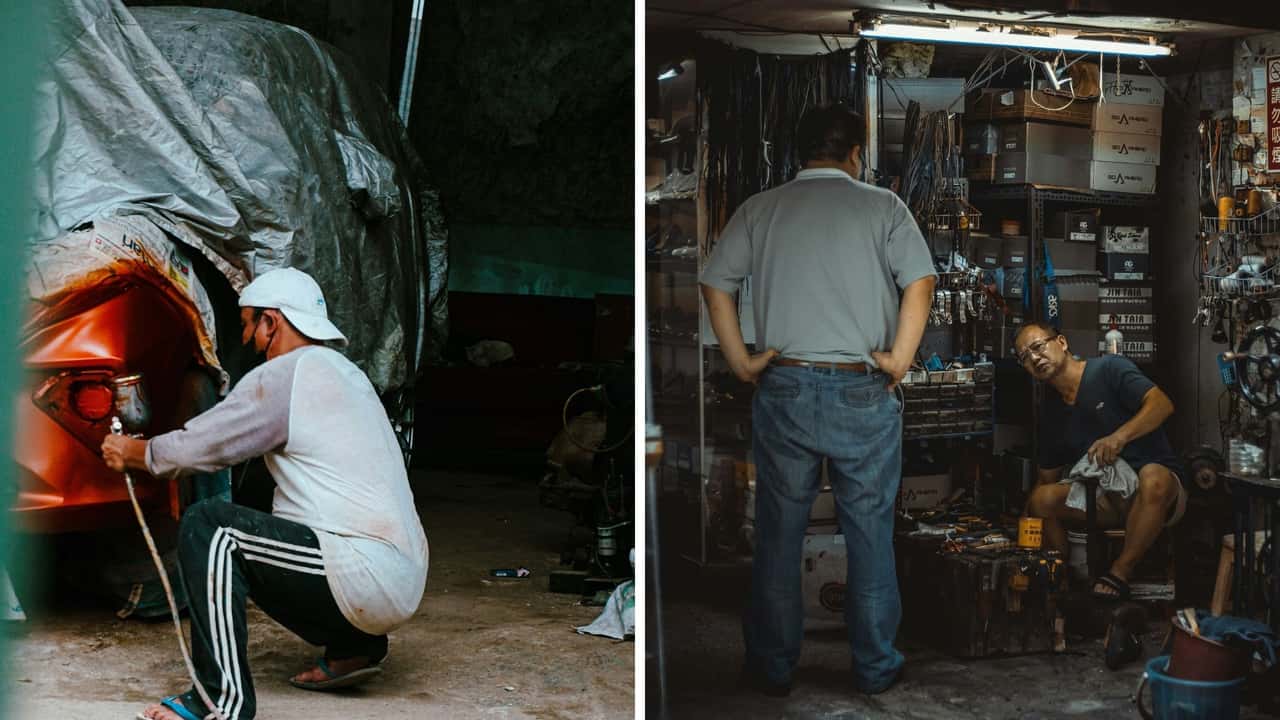
Photo by: uma dantara & Teng Yuhong
Chad Swiatecki 
By: Chad Swiatecki
Sep 26, 2025 at 2:00pm ET
Add Motor1.com as a preferred source in Google
- (https://twitter.com/intent/tweet?url=https%3A%2F%2Fwww.motor1.com%2Fnews%2F773828%2Fgen-z-mechanic%2F&text=%27It%E2%80%99s%20True%3A%27%20Mechanic%20Says%20This%20Is%20the%20%E2%80%98Real%20Reason%E2%80%99%20Gen%20Z%20Doesn%E2%80%99t%20Want%20to%20Work%20In%20His%20Industry&via=motor1com)
- copy
Share
Comment
The joke was supposed to be Peter Griffin smacking some sense into a teenager. The punchline, though, was thousands of commenters arguing over who’s really to blame for the auto body talent crisis: lazy kids, stubborn veterans, or an industry stuck in the past.
The viral Facebook Reel from autobody technician Stefan (@stefanfesche) uses a Family Guy clip to set a battle line between veteran techs and new entrants, but beneath the meme lies a more urgent question: can the collision repair business sustain itself when the next generation is scarce and underpaid?
The collision repair sector is not small. In 2024, the global automotive collision repair market was estimated at more than $200 billion, with projected growth at a compound annual growth rate of about 1.9% through 2032. In North America, the market was valued at approximately $65 billion in 2024 and is projected to reach $78.5 billion by 2033.
Yet while the market is growing, growth is modest. This slow expansion places even more pressure on margins and efficiency. As vehicle complexity increases, with the addition of more ADAS systems, aluminum and carbon-fiber panels, and composite materials, the average cost, time, and skill required per repair rise. Shops must do more with fewer hands, not less.
The Workforce Crunch
The heart of the crisis is in the workforce gap:
- The TechForce Foundation’s 2023 Technician Supply & Demand Report estimates that over the next five years (2023–2027), the industry will require 795,000 new technicians across automotive, diesel, collision repair, aviation, and avionics. Out of that, 110,000 of those are in collision repair alone.
- The same report notes that there are 6.7 collision repair jobs for every graduate. This ratio is significantly higher than in more general automotive disciplines, where the competition is less severe.
- In 2021, TechForce estimated that 232,000 technicians were needed across automotive, diesel, and collision, while schools graduated only about 42,000—leaving a massive shortfall.
This mismatch of growing demand versus limited supply is the structural backdrop to debates about “who’s not pulling their weight” in comment threads.
The U.S. Bureau of Labor Statistics forecasts only 2% growth from 2024 to 2034 in the employment of automotive body and glass repairers, reflecting the mature nature of the market. It notes that roughly 16,000 annual job openings will come from replacements (retirements or transfers). Meanwhile, automotive service technicians and mechanics are projected to grow 4% over the same period, with about 70,000 job openings per year.
Compensation is a sore point. As of May 2024:
- The median annual wage for automotive body and related repairers (collision plus body work) was approximately $50,680, or roughly $24.36/hr, with top performers or high-volume shops likely exceeding that.
- In contrast, many shops argue that rising overhead, inflation, materials, and regulatory compliance squeeze margins to the point that paying more or investing in training is unsustainable.
One pivotal industry document, the National AutoBody Research report argues strongly for labor rate increases to preserve shop viability. It recommends adjustments of 15–35% upward in labor rates (and 13–29% in paint/material rates) to offset cost increases and to free up capital for attracting and retaining skilled workers.
The problem goes deeper: under flat-rate and insurer-driven reimbursement models, time spent teaching or mentoring is time not billable. Shops already walk a tightrope with labor hours, and the margin for “non-productive” time is vanishing. Mentorship becomes a cost center, not a profit center.
Training, Recruitment & Perception Hurdles
Trending Now
 'We Were Both Devastated:' Man Surprises His Wife with New Car. Her Reaction Is Priceless
Even before a new hire shows up, the pipeline is weak:
- In a 2020 survey of current trade students aged 18–24, only 8% of males and 6% of females considering skilled trades selected collision repair. That ranked it among the least-considered trades.
- More broadly, the industry continues to battle negative stigma: “dirty,” “grimy,” “low-tech,” and overshadowed by all the buzz around EVs, software, and high-tech engineering. WrenchWay cited concerns that automotive trades are undervalued socially, discouraging youth from considering them.
Compounding this, some vocational and community colleges struggle to find instructors for collision/auto body programs, limiting enrollment capacity. According to Repairer Driven News, some schools “have been struggling to fill instructor roles for years.”
Geographically, many shops exist in suburban or rural locations, making commute or relocation a barrier for young workers. Entry-level wages often aren’t enough to offset that inconvenience.
Once someone joins, retention becomes the next hurdle. Complaints in the real world echo many of the Facebook commenters:
- Lack of mentoring or skill development leads to frustration.
- Toxic culture, where “you’re on your phone” or “don’t expect help,” pushes many out before they find footing.
- Some younger workers look elsewhere, citing more welcoming environments or less archaic management styles.
Shops that invest in structured career paths, pair new hires with mentors, or offer incremental pay increases as competence rises can buck the trends. Industry observers argue that solving the collision repair labor shortage will require structural changes, not just culture shifts. Without changes to flat-rate reimbursement structures that prioritize speed over training, many shops view time spent teaching as lost revenue. Analysts also highlight the need for insurers to reform reimbursement models so training and quality are incentivized rather than penalized.
At the same time, workforce advocates stress the importance of reshaping the trade’s image and pipeline. The TechForce Foundation notes that collision repair jobs outnumber graduates nearly seven to one, underscoring the urgency of outreach to high schoolers, scholarships, and public-private partnerships. Research from Body Shop Business and other trade outlets emphasizes retention strategies such as clear career paths, respect in shop culture, and continuous learning opportunities as key to preventing attrition.
What do you think?
View
Comments
So while that Family Guy meme sparked a comment war over stereotypes and gatekeeping, the real battle is far more urgent. The memes and the jabs mask a more existential question: can auto body and collision repair reinvent itself fast enough that the next generation wants to join, and more importantly, stay?
Motor1 reached out to Stefan via direct message. We’ll be sure to update this if they respond.
More From Motor1
We want your opinion!
What would you like to see on Motor1.com?
Take our 3 minute survey.
- The Motor1.com Team
Share this Story
- (https://twitter.com/intent/tweet?url=https%3A%2F%2Fwww.motor1.com%2Fnews%2F773828%2Fgen-z-mechanic%2F&text=%27It%E2%80%99s%20True%3A%27%20Mechanic%20Says%20This%20Is%20the%20%E2%80%98Real%20Reason%E2%80%99%20Gen%20Z%20Doesn%E2%80%99t%20Want%20to%20Work%20In%20His%20Industry&via=motor1com)
- copy
GO TO COMMENTS
(
)
Got a tip for us? Email: tips@motor1.com
View all comments ( )
Popular
12 Cars With Names That Make Absolutely No Sense
BMW Kept This Hatchback A Secret For Decades
Bugatti Restores One-Off Veyron With A Mirror-Like Aluminum Body
The Gas BMW M3 Isn't Dead: Next-Gen Prototype Roars
latest articles
- Driver Goes Through Car Wash With Full Truck Bed—Then He Learns The Hard Way Why You Shouldn't Do That Oct 20 - Trending -
- Every Rolls-Royce Has A Hidden Feature Most People Don't Know About Oct 20 - Motor101 -
- Subaru Built A 510-HP Electric Wagon Without Toyota's Help Oct 20 - Official -
- The Strange Reason The Golf GTI Had A Golf Ball Shifter Oct 20 - Motor101 -
- Photos: Porsche's Mission S Concept Takes Over New York City Oct 20 - Design -
- The 2027 Honda Passport TrailSport Looks Noticeably Taller Next To Last Year's Model Oct 20 - Off-Road -
- 12 Cars With Names That Make Absolutely No Sense Oct 20 - Lists -
RECOMMENDED FOR YOU
Cadillac Driver Is Fed Up With Auto Stop. Then She Buys A $9 Item On Amazon To Disable It
Every Rolls-Royce Has A Hidden Feature Most People Don't Know About
Woman Buys A Tahoe. Then Her Chevrolet Dealer Calls Her A Week Later And Says She Owes $4,200
Subaru Built A 510-HP Electric Wagon Without Toyota's Help
Man Gets Into New Car. Then He Tries To Shift Into Drive—And Crashes Out: 'Who Is Telling Car Manufacturers That?'
The Strange Reason The Golf GTI Had A Golf Ball Shifter
Man Buys Ferrari. Then His Fiance Takes It For A Spin: 'I Don't Know If He's Gonna Be Mad...'