Home
Features
Motor101
Your Old Car Battery Doesn't Get Thrown Away At O'Reilly
That dead battery is not headed for the trash. Here's what O'Reilly does with it and why your old battery is still valuable.
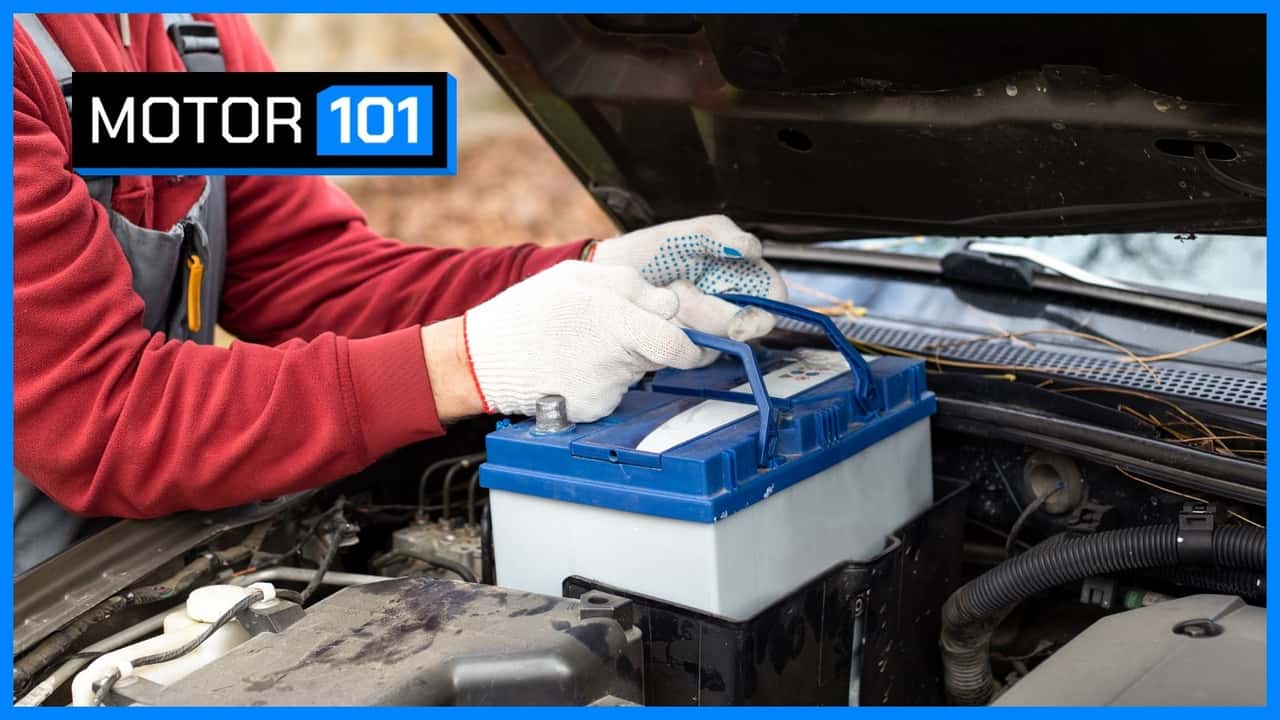
Photo by: Getty Images
Dan Mihalascu 
By: Dan Mihalascu
Sep 23, at 11:00am ET
Add Motor1.com as a preferred source in Google
- (https://twitter.com/intent/tweet?url=https%3A%2F%2Fwww.motor1.com%2Ffeatures%2F809107%2Fwhat-happens-to-old-car-battery-at-oreilly%2F&text=Your%20Old%20Car%20Battery%20Doesn%27t%20Get%20Thrown%20Away%20At%20O%27Reilly&via=motor1com)
- copy
Share
Comment
When your car battery finally gives up, you probably don't think much about what happens after you hand it over at O'Reilly Auto Parts. You get your core charge back, or possibly a gift card, and the dead battery disappears behind the counter.
But that battery is not simply thrown away. O'Reilly has a specific collection and handling process, and the old lead-acid battery eventually makes its way to a specialized recycling operation. From there, its lead, plastic, and electrolyte can be separated and recovered for another use.
O'Reilly Collects More Than Just Your Old Battery
If you're replacing a battery at O'Reilly, you'll generally encounter what's known as a core charge. It's essentially a refundable deposit designed to encourage you to bring the old battery back.
O'Reilly says all new battery purchases include a core charge, which is refunded when the old battery is returned. Customers generally have 45 days from the purchase date to return the battery for the core refund.
You don't necessarily have to buy a replacement battery, either. O'Reilly currently offers free recycling for automotive lead-acid batteries. An eligible undamaged battery that isn't a core return from a previous purchase can also qualify for a $10 O'Reilly gift card, although restrictions and daily limits apply.
There is one important caveat: O'Reilly says cracked or leaking batteries may be refused. A physically damaged battery leaking acid should instead be taken to an appropriate hazardous-waste recycling facility.
The Battery Doesn't Just Go Into A Dumpster
Once O'Reilly accepts the battery, the store has a specific procedure for handling it.
The company says its employees are trained to handle battery recycling, including marking and date-labeling batteries and placing them into covered hazardous-waste containers for isolated storage. Employees use protective equipment while inspecting the batteries, after which they're transported from stores to an O'Reilly distribution center.
From there, O'Reilly says an independent recycling vendor handles the reclamation or recycling process. In other words, the store isn't taking the battery apart in the back room.
That makes sense when you consider what's inside a conventional lead-acid car battery. It's not regular household plastic and metal. The battery contains lead components, polypropylene plastic, and sulfuric-acid electrolyte, all of which require controlled handling.
The EPA's 2026 report to Congress notes that lead-acid batteries have an established collection and recycling infrastructure in the U.S., with many auto-supply stores accepting used batteries.
Here's What Happens To The Battery's Parts
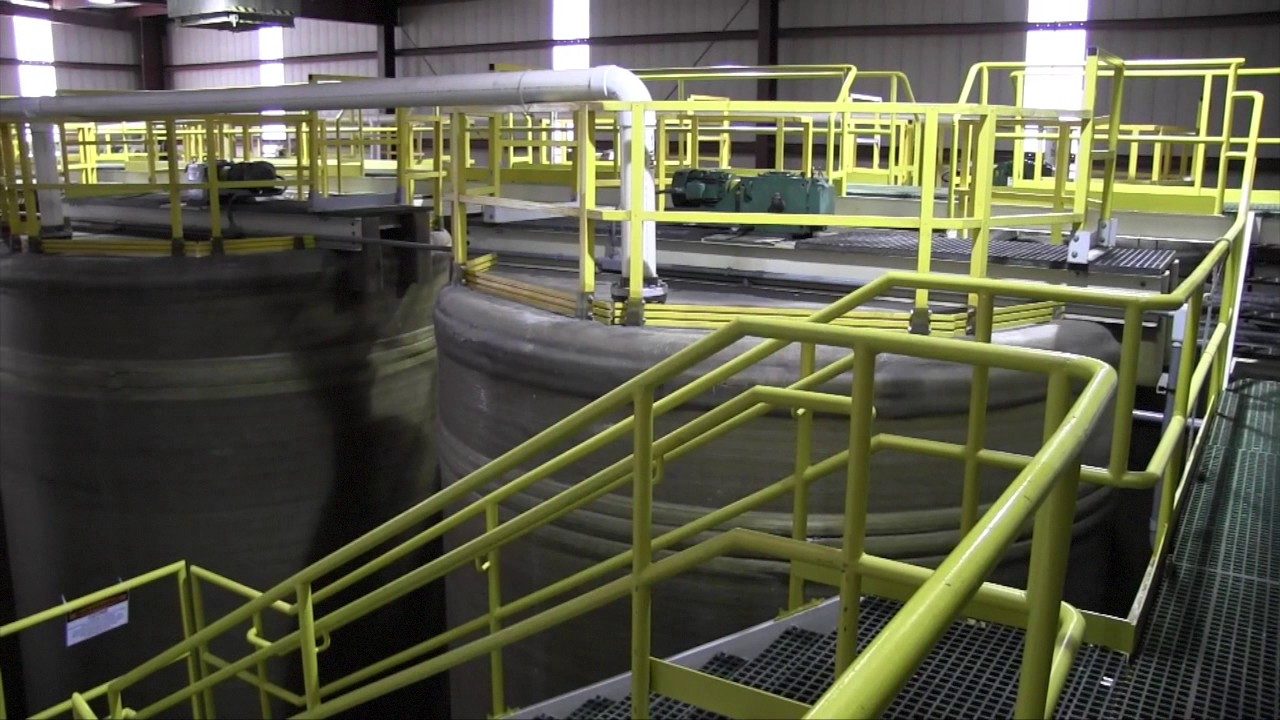
At a specialized recycling facility, the battery is broken down and its major components are separated into different material streams.
According to Battery Council International, the batteries can be broken apart in a hammer mill, after which lead, plastic, and liquid components are separated for further processing. Here's where those materials can go:
- Lead: Lead grids, lead oxide, and other lead components are cleaned and melted in furnaces before being cast into ingots. The recycled lead can then be sent to battery manufacturers to make new battery components.
- Plastic: The polypropylene battery case is washed, dried, melted, and turned into plastic pellets that can be used to make new battery cases.
- Sulfuric acid: The electrolyte can be neutralized and treated, converted into sodium sulfate for use in products such as detergents and glass, or reclaimed for use in new batteries.
So when you hand over a dead battery, you're not just getting rid of a piece of automotive junk. You're returning a package of materials that can be recovered and put back into the manufacturing process.
That's Why The Old Battery Is Worth Money
The core charge is not just a random fee that retailers invented to make your battery purchase more complicated.
It creates a financial incentive to return a battery that contains valuable, recyclable materials. The EPA's latest battery-collection report identifies refundable core charges as one of the factors helping drive lead-acid battery collection in the U.S.
And the recycling numbers are substantial. The EPA reports that 99 percent of lead and polypropylene from lead-acid batteries were recycled in 2018, with less than 1 percent of lead-acid batteries going to landfills.
Battery Council International says a typical new lead battery contains around 80 percent recycled material, illustrating how much of the old battery can ultimately find its way back into the battery supply chain.
That's also why O'Reilly is not simply paying you to take a useless object off its hands. The returned battery represents material that has value beyond its original life in your car.
Drivers Are Curious About What Happens To Old Batteries
Reddit has plenty of questions about what happens when an old car battery is handed back to an auto-parts store. In r/AskMechanics, one user asked specifically about getting the core charge refunded after bringing in an old battery with a replacement purchase. The discussion shows that the core charge is still a somewhat confusing part of the battery-buying process for many drivers.
Another r/AskMechanics thread asked where someone could take an old battery to get a core refund after buying the replacement somewhere that didn't accept the old battery. Commenters pointed toward auto-parts stores, including O'Reilly, and discussed the roughly $10 store-credit offers available for eligible batteries.
There's also a broader discussion about why core charges exist in the first place. In r/AskMechanics, commenters pointed out that batteries are a particularly good candidate for the system because they contain valuable materials and can create environmental and handling problems if they're improperly discarded.
More recently, an r/ScrapMetal discussion from August 2026 asked about stores offering money or gift cards for old batteries. One commenter specifically identified O'Reilly as a retailer offering a $10 gift card, while others discussed the value of lead-acid batteries at scrap yards.
Your Dead Battery Could Become Another Battery
The bottom line is the next time you leave an old battery at O'Reilly, there's a good chance you're not saying goodbye to all of its useful materials.
O'Reilly collects and safely stores the battery before sending it through its distribution network to an independent recycling vendor. The battery is then processed so its lead, plastic, and electrolyte can enter their respective recycling streams.
What do you think?
View
Comments
The most interesting part is what happens afterward. Recycled lead can become components for new batteries, while recycled polypropylene can be used to manufacture new battery cases. Even the electrolyte doesn't necessarily have to become waste.
So that heavy, dead battery sitting in your trunk may look like the end of the road. In reality, returning it to a proper recycling program can put much of it right back into the automotive supply chain. Your old car battery may be dead, but its materials are far from finished.
More From Motor101
 Why Every Driver Should Keep A Portable Jump Starter In The Car
Why Do EVs Make That Weird Noise At Low Speeds? It's Actually A Safety Feature
Why Do Modern Cars Have Those Giant Plastic Engine Covers?
Those Grooves In Your Tires Do A Lot More Than You Think
We want your opinion!
What would you like to see on Motor1.com?
Take our 3 minute survey.
- The Motor1.com Team
Share this Story
- (https://twitter.com/intent/tweet?url=https%3A%2F%2Fwww.motor1.com%2Ffeatures%2F809107%2Fwhat-happens-to-old-car-battery-at-oreilly%2F&text=Your%20Old%20Car%20Battery%20Doesn%27t%20Get%20Thrown%20Away%20At%20O%27Reilly&via=motor1com)
- copy
GO TO COMMENTS
(
)
Got a tip for us? Email: tips@motor1.com
View all comments ( )
Popular
From Detroit To Tokyo: Where Every Major Automaker Calls Home
Scion Is Back, And It's Bringing A Tiny Kei Truck To America
New Lotus Esprit's Engine Revealed: Twin-Turbo V8 With Nearly 700 Horsepower
12 Crossovers That Are Surprisingly Good At Off-Roading
Holy Crap: The Ford Mustang Cobra Is Coming Back
latest articles
- Your Car Has Airbags In Places You Probably Didn't Even Know Nov 11 - Motor101 -
- Lamborghini Temerario Gets Even Louder With Official Titanium Akrapovič Exhaust Nov 11 - Official -
- Land Rover Adds Six Atlas Colors To The Defender Lineup Nov 11 - Official -
- CarMax Valued This Corvette Z06 At Just $32K. The Owner Wasn't Having It Nov 11 - For Sale -
- Disney Is Testing 'Cars' Robots To Help You Find A Parking Spot Nov 11 - Technology -
- They Spent Eight Years Building A Lancia Stratos. Now They Can Finally Drive It Nov 11 - Aftermarket / Tuning -
- Honda Recalls More Than 635,000 Vehicles Over Potential Power Steering Failure Nov 11 - Recalls -
RECOMMENDED FOR YOU
Your Car Has Airbags In Places You Probably Didn't Even Know
Lamborghini Temerario Gets Even Louder With Official Titanium Akrapovič Exhaust
Paint Protection Film Costs Thousands. Is It Actually Worth It?
Land Rover Adds Six Atlas Colors To The Defender Lineup
The Physics Behind Why SUVs Are More Likely To Roll Over In A Crash
CarMax Valued This Corvette Z06 At Just $32K. The Owner Wasn't Having It
There's A Reason Your Brain Doesn't Like Driving A CVT