Home
Features
Motor101
Most Engine Cylinders Aren't The Same Size. Here's Why
Bigger isn't always better: here's why engine designers obsess over bore, stroke, and cylinder size.
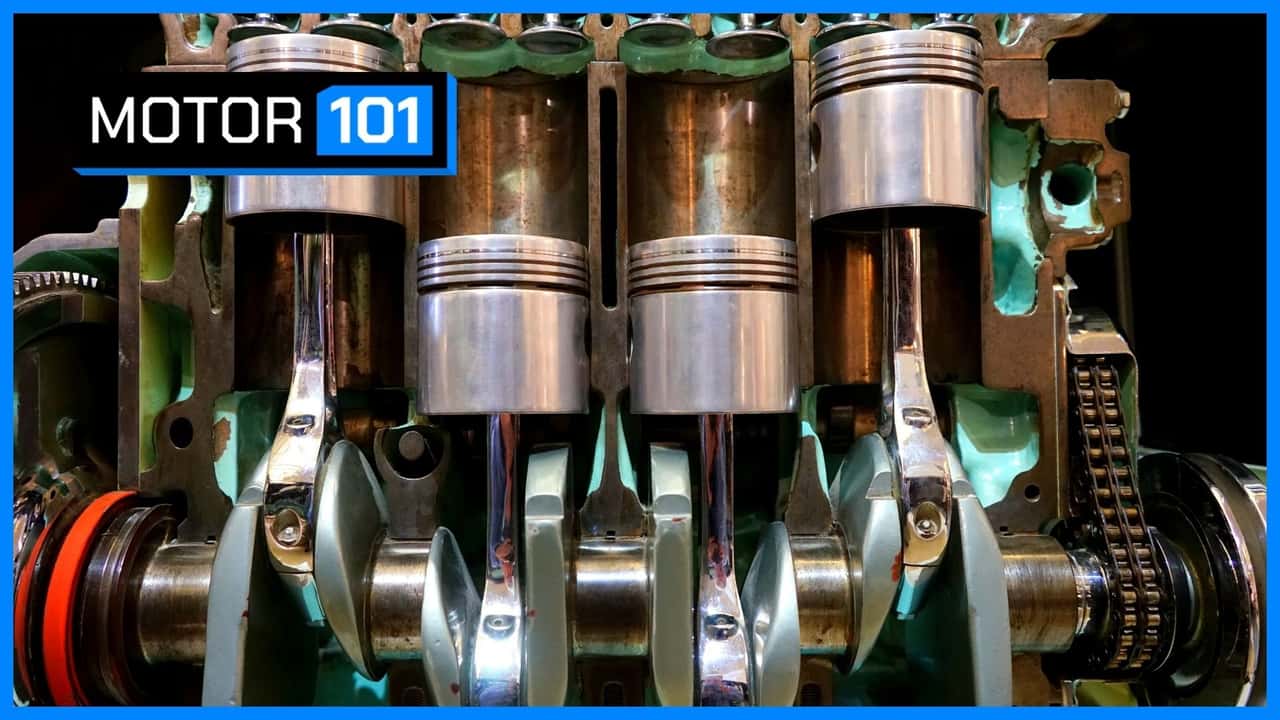
Photo by: Pexels
Dan Mihalascu 
By: Dan Mihalascu
Sep 8, at 11:00am ET
Add Motor1.com as a preferred source in Google
- (https://twitter.com/intent/tweet?url=https%3A%2F%2Fwww.motor1.com%2Ffeatures%2F807412%2Fwhy-engines-have-different-sized-cylinders%2F&text=Most%20Engine%20Cylinders%20Aren%27t%20The%20Same%20Size.%20Here%27s%20Why&via=motor1com)
- copy
Share
Comment
Open the hood of almost any gasoline-powered car, and you'll find a bunch of cylinders doing essentially the same job: sucking in air, mixing it with fuel, compressing the mixture, igniting it, and pushing the pistons back down.
So here's a question that seems simple but gets surprisingly complicated: Why aren't all engine cylinders the same size? After all, a bigger cylinder holds more air and fuel, while a smaller one holds less. Wouldn't it make sense to simply pick one ideal size and use it everywhere?
Not quite.
Cylinder Size Determines Engine Displacement
Before getting into why cylinders are different sizes, it helps to understand what "size" actually means. Engineers generally describe a cylinder using two measurements: bore and stroke. Bore is the diameter of the cylinder, while stroke is the distance the piston travels up and down inside it. Together, those dimensions determine how much volume the piston sweeps through.
Multiply that swept volume by the number of cylinders and you get the engine's total displacement. For example, an engine with eight relatively large cylinders can have the same total displacement as an engine with six smaller ones. That's why simply seeing "4.0 liters" on an engine badge doesn't tell you exactly how large each cylinder is.
There's also another important twist: two engines can have the same displacement but use completely different bore and stroke dimensions.
One could use a relatively wide cylinder with a short piston stroke, while another could use a narrower cylinder with a longer stroke. Both might displace exactly 2.0 liters, but they can have very different characteristics.
Bigger Cylinders Aren't Automatically Better
It might seem logical that bigger cylinders would always produce more power. And, all else being equal, increasing displacement gives an engine more swept volume to move air and fuel through. But bigger cylinders create tradeoffs.
A large bore can provide more room around the top of the cylinder for larger valves, which can help an engine breathe at high RPM. A shorter stroke can also allow the engine to spin faster because the piston doesn't have to travel as far with every revolution. That's one reason performance engines often favor larger bores and shorter strokes.
The opposite approach can also be useful. A smaller bore combined with a longer stroke can produce an engine that emphasizes low-speed torque and efficiency. The tradeoff is that the longer piston travel increases piston speed at a given RPM.
So there's no universally perfect cylinder size. Engineers are constantly balancing competing goals.
Why Automakers Keep Coming Back To Certain Cylinder Sizes
There actually is a fascinating pattern in modern engine design: manufacturers often gravitate toward similar per-cylinder displacement.
One well-known example is the roughly 500-cc-per-cylinder concept. That means a four-cylinder engine might displace around 2.0 liters, while a six-cylinder version could be around 3.0 liters. Why 500 cc, though?
A relatively small cylinder can help create a compact combustion chamber and reduce the distance the flame has to travel through the air-fuel mixture. That can help combustion efficiency and reduce heat losses. The tradeoff is that smaller, long-stroke cylinders generally aren't ideal for extremely high RPM.
That's why you can find a 2.0-liter four-cylinder, a 3.0-liter six-cylinder, and a 4.0-liter eight-cylinder that all work around a similar basic idea: roughly half a liter per cylinder. It's not a magic number, but it's a useful engineering target.
Bore And Stroke Change An Engine's Personality
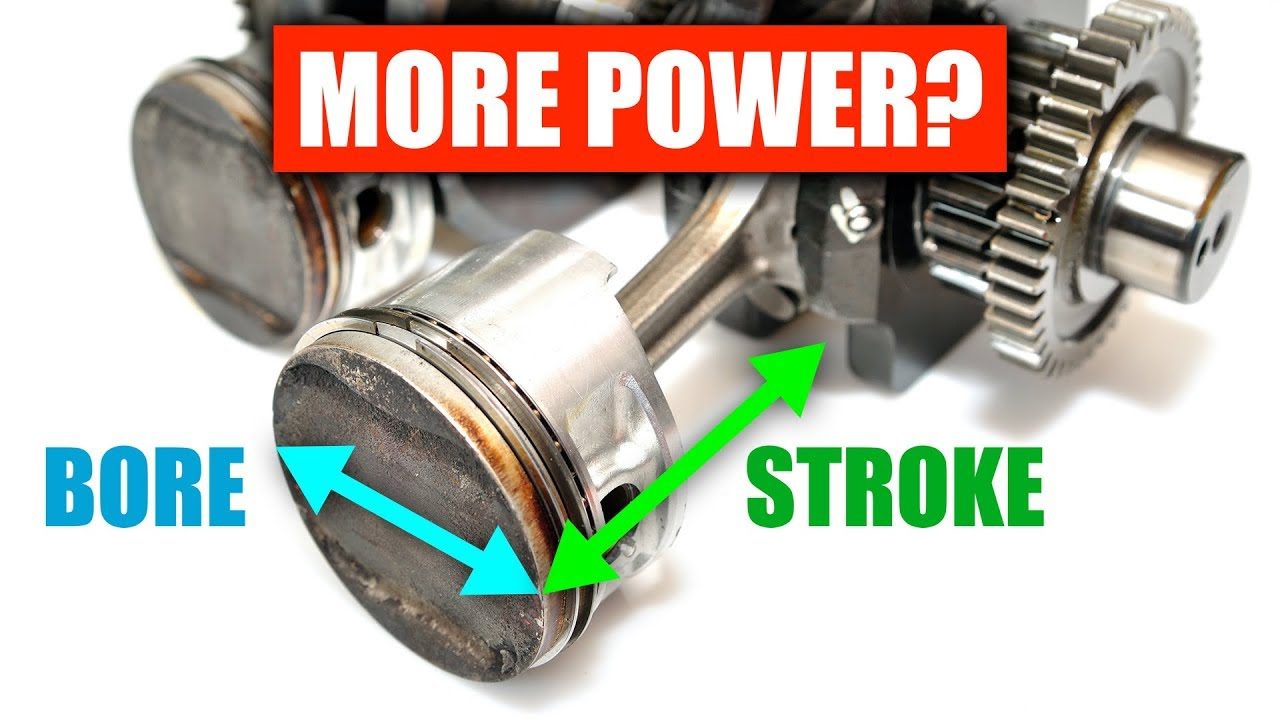
This is where things get particularly interesting. Engineers can reach the same total displacement by changing the relationship between bore and stroke. An engine with a larger bore than stroke is commonly described as oversquare. This layout can provide more room for valves and allow higher engine speeds.
An engine with a longer stroke than bore is undersquare. It can emphasize low-end torque and efficiency, although the longer piston travel can limit maximum RPM.
Consider two hypothetical 2.0-liter engines. One might use a relatively large bore and short stroke, while another uses a smaller bore and longer stroke. They have the same displacement, but they don't necessarily have the same power curve, RPM capability, fuel economy, packaging requirements, or driving feel.
That's the key reason cylinder size matters. Displacement tells you how much volume the engine has, but bore and stroke help explain how the engine uses that volume.
There Are Also Packaging And Manufacturing Limits
Engine designers can't simply make cylinders whatever size they want. The cylinder bore has to fit within the engine block, with enough material between neighboring cylinders for structural strength and cooling passages. Bore spacing also influences the overall dimensions of the engine block.
Stroke has its own limitations. Making the stroke longer changes how far the crankshaft and connecting rods move inside the engine, which can create clearance problems inside the crankcase. That's why changing an engine's bore or stroke isn't as simple as making a hole bigger or moving a piston farther. Engineers have to consider the entire engine as a package, including:
- Engine block: Cylinders need enough material between them for strength and cooling
- Crankshaft: A longer stroke requires the crankshaft to accommodate greater piston travel.
- Connecting rods: Their length and movement affect the engine's geometry and internal clearance.
- Pistons: Their size, weight, and travel influence durability and maximum RPM.
- Cylinder head: Bore size can affect how much room is available for valves and the combustion chamber.
- Cooling system: Larger or more closely packed cylinders can create additional cooling challenges.
There's also a manufacturing consideration. If an automaker already has an engine family with a particular cylinder spacing, bore, or architecture, it may be cheaper and easier to develop new engines around those existing dimensions rather than starting from scratch. Ultimately, cylinder dimensions are the result of balancing performance, efficiency, durability, packaging, cooling, and manufacturing costs.
Car Enthusiasts Have Some Interesting Takes On Cylinder Size
The question of cylinder size comes up surprisingly often on Reddit, with enthusiasts debating what engine displacement actually means and how bore and stroke change an engine's behavior.
In one r/cars discussion, a user asked what engine size actually means. The responses helped explain that displacement is the combined swept volume of the engine's cylinders. One commenter pointed out that a 2.0-liter four-cylinder works out to roughly 500 cc per cylinder.
Another r/cars discussion focused specifically on bore and stroke and how changing either dimension affects an engine's characteristics. The conversation touched on the familiar tradeoff between larger bores, shorter strokes, and higher RPM versus longer strokes and different low-speed characteristics.
Redditors have also discussed why engines with the same total displacement can behave differently depending on cylinder count. One thread comparing engines with identical displacement highlighted differences in packaging, weight, balance, vibration, and engine speed.
More recent discussions get even more specific, with enthusiasts asking how displacement relates to individual piston and cylinder dimensions. The basic formula remains the same: bore, stroke, and cylinder count determine displacement, but changing how that displacement is divided can have a major effect on the engine's character.
So, What's The "Ideal" Cylinder Size?
There's no such thing. The ideal cylinder depends on what the engine is supposed to do.
A high-revving sports car may benefit from a different bore-and-stroke combination than a pickup truck designed to produce strong low-end torque. A fuel-efficient turbocharged four-cylinder has different priorities from a massive naturally aspirated V8.
What do you think?
View
Comments
That's why engine displacement alone doesn't tell the whole story. Cylinder size is really an engineering compromise. Make the bore larger, and you can gain breathing room and RPM potential. Make the stroke longer, and you can gain displacement and potentially stronger low-speed characteristics. Make the cylinder too large, too small, too long, or too short, and another part of the engine starts fighting back.
In other words, automakers don't use different-sized cylinders because they haven't figured out the perfect size yet. They use different sizes because there is no perfect size—only the right compromise for the engine's job.
More From Motor101
 Was The DeLorean Actually A Terrible Sports Car? Yes And No
What Is The 'Death Wobble?' And Why Does It Happen?
We want your opinion!
What would you like to see on Motor1.com?
Take our 3 minute survey.
- The Motor1.com Team
Share this Story
- (https://twitter.com/intent/tweet?url=https%3A%2F%2Fwww.motor1.com%2Ffeatures%2F807412%2Fwhy-engines-have-different-sized-cylinders%2F&text=Most%20Engine%20Cylinders%20Aren%27t%20The%20Same%20Size.%20Here%27s%20Why&via=motor1com)
- copy
GO TO COMMENTS
(
)
Got a tip for us? Email: tips@motor1.com
View all comments ( )
Popular
The Rotary Engine Should Be Everywhere. Why Isn't It?
Driven: The Revuelto SV Is All Bull, No BS
Toyota's Next Mid-Engined Coupe Is Going Racing This Weekend
Alfa Romeo Has Had It With Huge Screens
Subaru Teases A New Manual WRX, But Only For Japan
latest articles
- The Legendary AMG Hammer Might Be Making a Comeback Oct 23 - Aftermarket / Tuning -
- The New Hyundai Tucson Could Be Its Most Popular Yet Oct 23 - Sales -
- How A Tire Company Created The World's Most Famous Blimp Oct 23 - Motor101 -
- Acura Just Trademarked Four New Names, Hinting At 3 New SUVs Oct 23 - Patents & Trademarks -
- Driven: The Revuelto SV Is All Bull, No BS Oct 23 - New Car Reviews -
- The Mercedes 300 SL's Gullwing Doors Weren't Just For Looks. They Solved A Problem Oct 23 - Motor101 -
- 2027 Toyota Crown Signia Adds Tech Without Changing Its Formula Oct 23 - Pricing -
RECOMMENDED FOR YOU
How A Tire Company Created The World's Most Famous Blimp
The Legendary AMG Hammer Might Be Making a Comeback
The Mercedes 300 SL's Gullwing Doors Weren't Just For Looks. They Solved A Problem
The New Hyundai Tucson Could Be Its Most Popular Yet
How Does Automatic Emergency Braking Know When To Stop?
Acura Just Trademarked Four New Names, Hinting At 3 New SUVs
Why Do Some Semi Truck Tires Look Like They're Not Touching The Ground?