Home
Features
Motor101
Why Do Some Cars Have Dual-Clutch Transmissions?
A dual-clutch transmission can shift gears almost instantly, but that speed comes with a few compromises.
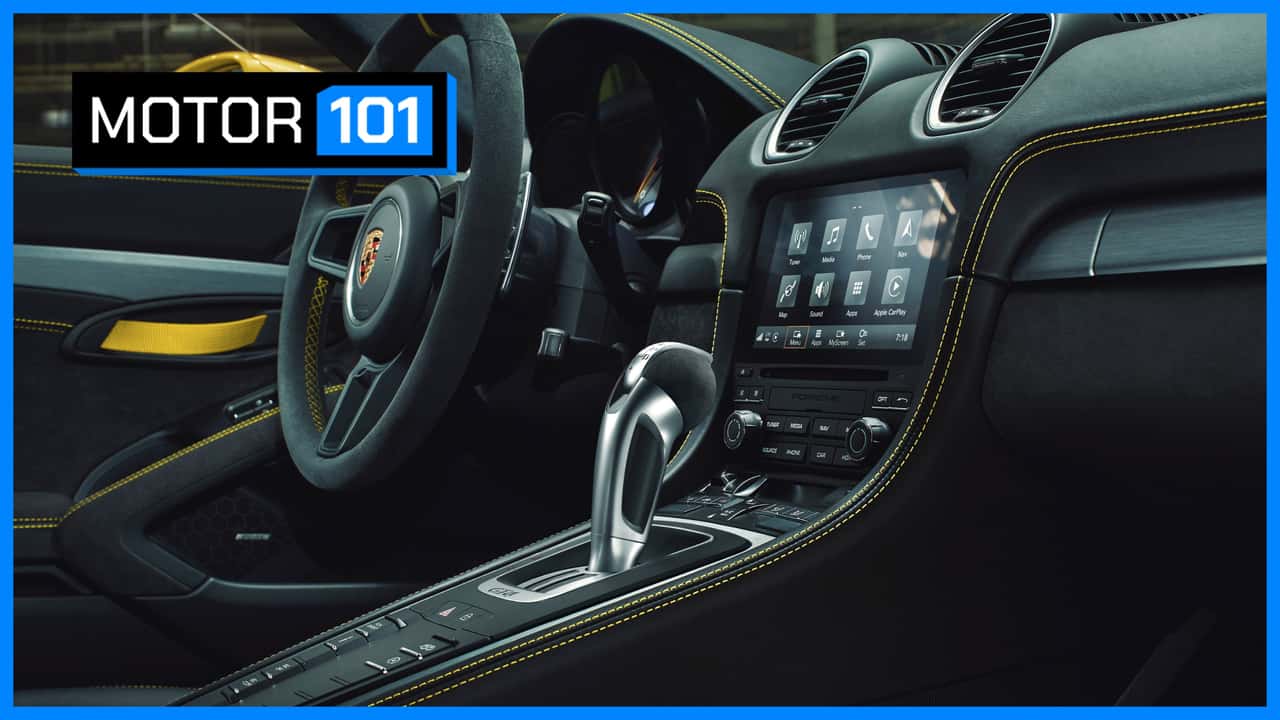
Photo by: Porsche

By: Motor1.com Team
Published by: Jeff Glucker
Sep 4, at 5:00pm ET
Add Motor1.com as a preferred source in Google
- (https://twitter.com/intent/tweet?url=https%3A%2F%2Fwww.motor1.com%2Ffeatures%2F807072%2Fwhy-cars-have-dual-clutch-transmissions%2F&text=Why%20Do%20Some%20Cars%20Have%20Dual-Clutch%20Transmissions%3F&via=motor1com)
- copy
Share
Comment
A dual-clutch transmission can shift gears almost instantly, but that speed comes with a few compromises.
If you’ve spent any time looking at the spec sheet for a Porsche, Volkswagen, Hyundai N car, or plenty of other performance models, you’ve probably encountered the phrase dual-clutch transmission.
Sometimes it’s called a DCT. Volkswagen calls its version DSG. Porsche famously calls its system PDK.
Whatever the name, the basic idea is the same: Use two clutches instead of one so the transmission can prepare the next gear before you actually need it.
The result is incredibly quick shifts, strong acceleration, and potentially better efficiency. So why doesn’t every automatic car use one?
A Dual-Clutch Is Basically Two Gearboxes Working Together
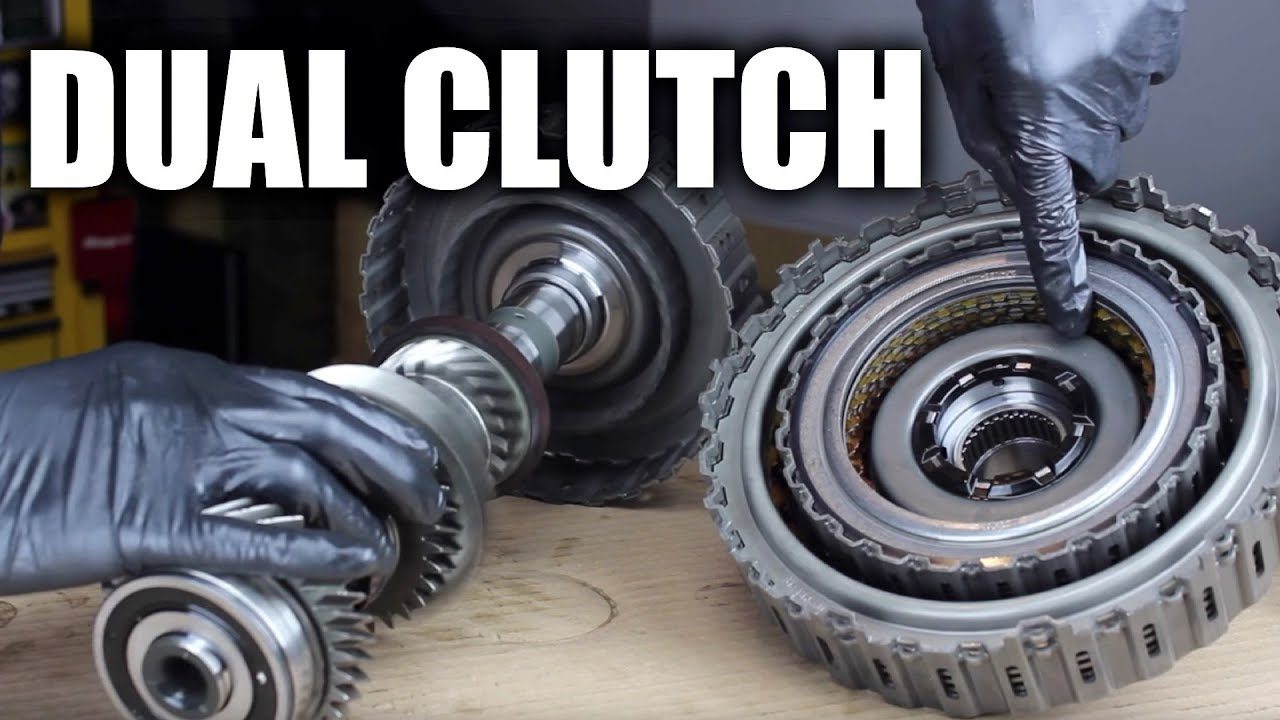
A conventional manual transmission uses a single clutch to disconnect the engine from the gearbox whenever you change gears.
A dual-clutch transmission essentially divides that job in half.
One clutch typically handles the odd-numbered gears—first, third, fifth, and so on—while the second handles the even-numbered gears. While you’re accelerating in third, for example, the transmission can already have fourth gear selected on the other side.
When it’s time to shift, the computer disengages one clutch while engaging the other.
The transmission doesn’t have to completely interrupt power while searching for the next gear because that gear is already waiting. Porsche describes its PDK system as two separate sub-transmissions that allow the upcoming gear to be preselected before the clutches swap duties. (Porsche Newsroom)
That’s the secret behind a DCT’s speed.
Why Performance Cars Love Them
Milliseconds matter when you’re trying to make a car accelerate as quickly as possible.
With a traditional manual gearbox, the driver has to lift off the accelerator, press the clutch, shift, release the clutch, and get back on the throttle.
A DCT can accomplish essentially the same process electronically in a fraction of the time.
That also means less interruption in power delivery. Porsche originally developed its PDK technology for motorsport, where the ability to shift without lifting off the throttle was particularly valuable. The company says its early production PDK could shift up to 60 percent faster than the torque-converter automatic it replaced.
That’s why dual-clutch transmissions became popular in cars where outright performance matters.
But speed isn’t their only advantage.
DCTs Can Also Improve Efficiency
A DCT behaves mechanically more like an automated manual transmission than a conventional automatic.
Traditional automatics generally use a torque converter between the engine and gearbox. Modern torque converters are extremely sophisticated and can lock up to reduce losses, but a dual-clutch gearbox can provide a much more direct mechanical connection between the engine and the wheels.
That can help improve fuel economy while still giving drivers the convenience of an automatic transmission.
It’s one reason DCTs haven’t been limited to sports cars. Automakers have installed them in everything from economy cars to crossovers and hybrids.
In fact, there’s an entire discussion on r/cars asking why seemingly ordinary sedans and SUVs sometimes receive dual-clutch transmissions while certain sports cars continue using conventional automatics.
So Why Doesn't Every Car Have One?
Because DCTs aren’t perfect.
Their biggest weakness tends to appear at very low speeds.
A normal automatic’s torque converter allows the car to creep forward smoothly in traffic. A DCT uses actual clutches that must engage and disengage, much like the clutch in a manual car.
That means inching forward in a parking lot or crawling through stop-and-go traffic can sometimes result in hesitation, vibration, or jerky engagement.
There are also questions about heat, complexity, durability, and cost, depending on the specific transmission design.
And conventional automatics have gotten dramatically better.
Modern torque-converter transmissions can shift extremely quickly while still delivering the smooth low-speed behavior buyers expect. That has reduced one of the DCT’s biggest historical advantages.
The Best Of Manual And Automatic—Sort Of
The easiest way to understand a dual-clutch transmission is to think of it as an automated manual designed to eliminate the slow part of changing gears.
You still get physical gears and clutches, but computers and hydraulics handle everything for you. And because one side of the gearbox can prepare the next gear while the other is still driving the car, shifts can happen astonishingly quickly.
For a sports car, that can mean quicker acceleration and sharper responses.
For an everyday car, it can mean improved efficiency.
What do you think?
View
Comments
But if smoothness and simplicity matter more than shaving fractions of a second off a gear change, a conventional automatic may still make more sense.
That’s why some cars have dual-clutch transmissions—and plenty of others don’t.
More Motor101
 Why Some Cars Have Different Colored Brake Calipers
What Is The 'Death Wobble?' And Why Does It Happen?
How The Ford Mustang Got Its Name
We want your opinion!
What would you like to see on Motor1.com?
Take our 3 minute survey.
- The Motor1.com Team
Share this Story
- (https://twitter.com/intent/tweet?url=https%3A%2F%2Fwww.motor1.com%2Ffeatures%2F807072%2Fwhy-cars-have-dual-clutch-transmissions%2F&text=Why%20Do%20Some%20Cars%20Have%20Dual-Clutch%20Transmissions%3F&via=motor1com)
- copy
GO TO COMMENTS
(
)
Got a tip for us? Email: tips@motor1.com
View all comments ( )
Popular
12 Cars With Names That Make Absolutely No Sense
BMW Kept This Hatchback A Secret For Decades
Bugatti Restores One-Off Veyron With A Mirror-Like Aluminum Body
The Gas BMW M3 Isn't Dead: Next-Gen Prototype Roars
latest articles
- The Strange Reason The Golf GTI Had A Golf Ball Shifter Oct 20 - Motor101 -
- Photos: Porsche's Mission S Concept Takes Over New York City Oct 20 - Design -
- The 2027 Honda Passport TrailSport Looks Noticeably Taller Next To Last Year's Model Oct 20 - Off-Road -
- 12 Cars With Names That Make Absolutely No Sense Oct 20 - Lists -
- The Ford Ranger Is Getting A Bigger V6 For 2027: Report Oct 20 - Rumors -
- BMW Already Has A Deal On The New i3. But It's Not Cheap Oct 20 - Pricing -
- Remember The Ford Flex? This Weird SUV Is Now A Great Used Buy Oct 20 - Why Buy? -
RECOMMENDED FOR YOU
Who Were The Pep Boys, Anyway?
Mercedes Isn't Sold On Extended-Range EVs: 'Would You Really Switch?'
Remember When Saab Put The Ignition Key Between The Front Seats?
Cadillac Driver Is Fed Up With Auto Stop. Then She Buys A $9 Item On Amazon To Disable It
This German City Exists Because Of Volkswagen
Bugatti Restores One-Off Veyron With A Mirror-Like Aluminum Body
What Makes Chinese Cars So Popular?